Portuguese
  Spanish


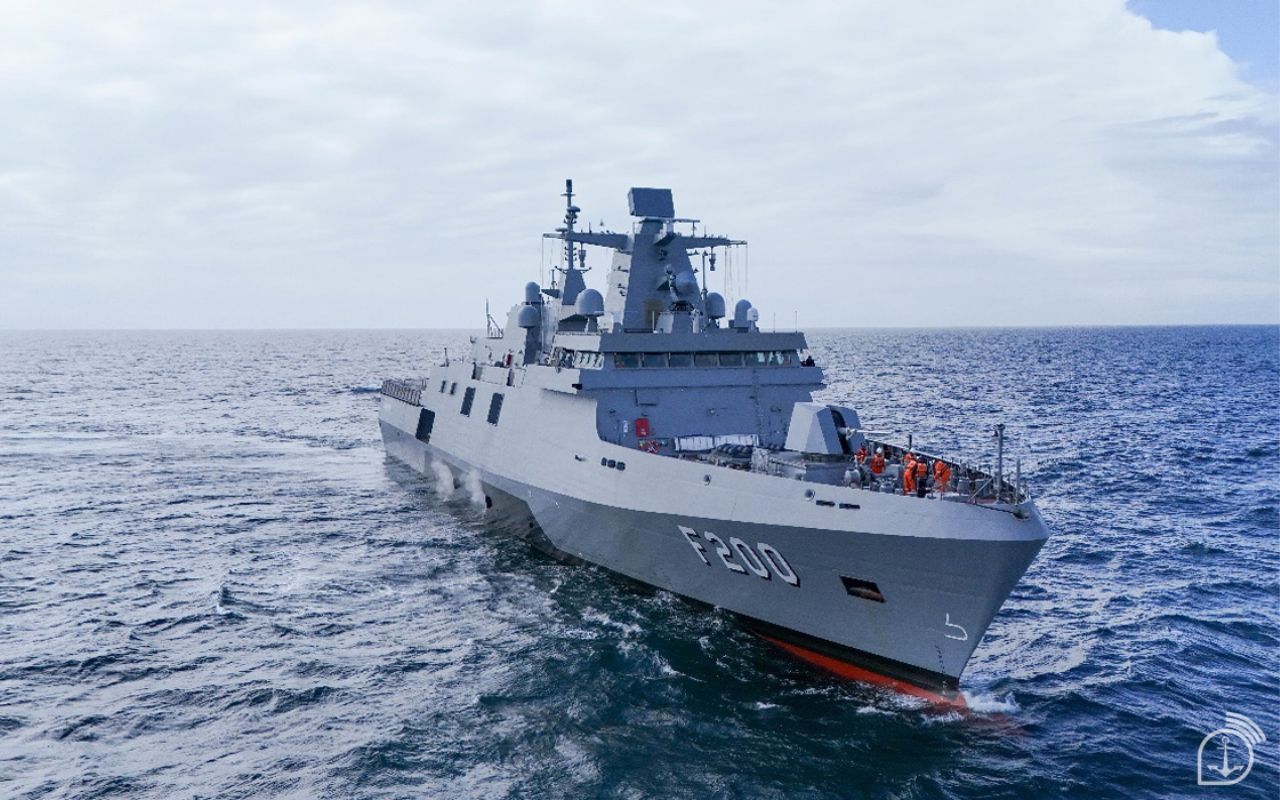


In Hanover, President Lula confirmed the expansion of the naval program. Brazil will have eight Tamandaré frigates, strengthening defense in the South Atlantic.
The strengthening of the national defense industry and the protection of Brazilian waters gained a decisive boost. During an official visit to Hanover, Germany, President Luiz Inácio Lula da Silva confirmed the expansion of the country’s naval construction program with the acquisition of four additional Tamandaré frigates.
The announcement, made during the celebrations of the entry into force of the Mercosur-European Union agreement, doubles the original project contracted in 2020.
With this measure, the Brazilian Navy’s modern escort fleet will increase from four to eight vessels, consolidating the partnership with the consortium formed by ThyssenKrupp Marine Systems and Embraer Defense & Security.
-
Brazilian Navy Demonstrates Strength in Naval Exercise with Over 20 Nations, Deploys Frigate Independência in Anti-Submarine and Air Defense Scenarios, and Joins Historic Formation with 26 Ships from 14 Allied Navies off the U.S. Coast

-
BAE Systems to Supply New Bofors 40Mk4 Cannons to the Brazilian Navy
-
Ukraine Bets on Swedish Gripen E Jets to Counter Russia, But 16 Fighters Won’t Arrive Until Late 2020s; Kiev to Use C/D Models for Pilot Training and Operations Amid Ongoing Missile and Drone Threats
-
End of an Era: US Navy’s C-2A Greyhound Makes Final Catapult Launch Before Retiring to Arizona Desert; Aircraft Supported Carriers in Wars and Humanitarian Missions for Nearly 60 Years


Technological autonomy and the national missile
One of the pillars of this new batch of Tamandaré frigates is the advancement in technological sovereignty. Unlike the first units, the new vessels will have an even greater focus on domestic production.
The federal government has set clear goals for this second phase of the program:
- Increase in local content: The participation index of the Brazilian industry will rise from 32% to 42%.
- Integration of MANSUP-ER: The frigates will leave the factory equipped with the Brazilian extended-range anti-ship missile (250 km).
- Military independence: The use of domestically produced armaments reduces the need for foreign suppliers for critical components.
- Job creation: The continuity of production at the Itajaí (SC) shipyard ensures the maintenance of qualified jobs in the naval sector.
This evolution is seen as a milestone for the Defense Industrial Base, validating years of investment in research and development of proprietary weapon systems.
Technical specifications of the Tamandaré frigate
The Tamandaré frigates are based on the German MEKO A-100 design and represent the most modern multipurpose escort ships.
Below are the main characteristics of the vessels:
- Mission capability: Anti-air, anti-submarine, and surface warfare.
- Displacement: About 3,500 tons.
- Speed and Range: 25.5 knots maximum speed and a range of 5,500 nautical miles.
- Combat Systems: CMS Atlas ANCS system and HENSOLDT TRS-4D AESA radar.
- Armament: OTO Melara 76 mm gun, Sea Ceptor missiles, and lightweight torpedoes.
Additionally, each ship has a hangar and flight deck to operate a medium-sized helicopter, significantly expanding the surveillance and attack radius of the Brazilian naval force.

Thus, the partnership with Germany not only modernizes the fleet but positions Brazil as a potential regional hub for military shipbuilding in South America.
The impact on the strategy of the Brazilian Navy
The decision to elevate the fleet to eight units responds to an urgent need for renewal. Currently, the Navy operates with assets that are nearing the end of their useful life, such as the veteran Niterói-class frigates.
Therefore, the arrival of the new Tamandaré frigates will allow for a qualitative leap in the surveillance of the South Atlantic.
With eight operational ships, the Brazilian Fleet will have the capacity to maintain at least six vessels in permanent readiness for patrols and missions, while the others undergo maintenance and training.
This ensures a constant presence in the protection of strategic assets, such as oil reserves and maritime trade routes.
“A binational consortium is building four Tamandaré-class frigates for delivery by 2028. Here in Hanover, we are advancing negotiations for the acquisition of four more units,” said President Lula.
Investment and financial viability
The financing for this expansion is anchored in the new PAC and legislative changes of 2025. The approved complementary law allowed for up to R$ 30 billion to be excluded from the fiscal framework for defense investments over six years.
This budgetary space was essential to transform the Navy’s intention into a state commitment. The first batch, consisting of four ships, had an initial investment of R$ 12 billion.
Currently, all vessels from the original contract are already at different stages of simultaneous construction in Brazil, including the Mariz e Barros frigate (F203), which began in January 2026.
Source: Naval Power