Portuguese
  Spanish


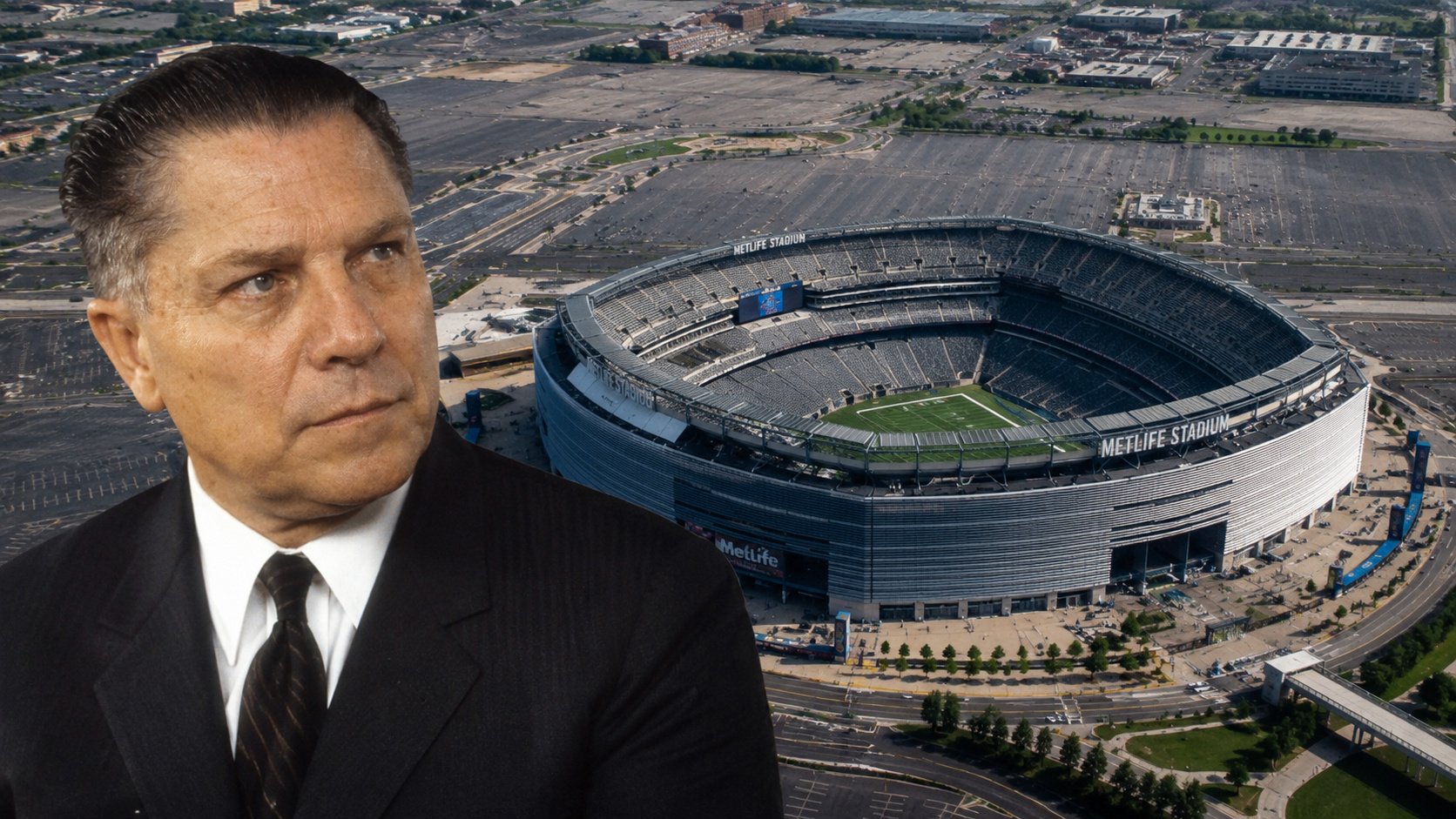

MetLife Stadium, stage of the round of 16, is in the same area linked to one of the most famous criminal stories in the United States.
The Brazilian National Team takes the field on Sunday, July 5, 2026, at 5 PM, Brasília time, to face Norway in the round of 16 of the World Cup.
The match will be played at the MetLife Stadium, in East Rutherford, New Jersey, according to FIFA information.
The game is worth a spot in the quarter-finals, but the venue also draws attention for a curious story.
-
Retired Woman Leaves French Public Housing Due to Fear, Lives in Van for Weeks, Prompting Response from Local Authorities and a Priest

-
9-Year-Old Fabio Isaac Wins Gold at Copernicus Math Olympiad in Singapore, Representing Peru Against Global Young Talents
-
Brazilian Physics Student Builds Realistic Cardboard Replica of Honda Africa Twin Using Mathematical Calculations

-
Brazilian Entrepreneur Turns Corn Cake Sales into $100,000 Annual Revenue and Plans Franchise Expansion




The stadium is located in the same region where the old Giants Stadium once stood, an arena associated for decades with an urban legend about the disappearance of Jimmy Hoffa.
The case, recorded by the FBI, remains one of the most well-known police mysteries in the United States.
Modern stadium inherited an old story
The MetLife Stadium is a modern, multi-purpose arena used for major sports and cultural events.
The current construction occupies the area that previously housed the Giants Stadium, demolished in 2010.
For this reason, the new arena ended up inheriting an old story.
For many years, there was a theory that Jimmy Hoffa’s body was hidden in the foundations of the old stadium.
This version gained traction in popular culture, although it has never been officially proven.
According to records from the FBI and reports from outlets like The New York Times and Sports Illustrated, no body was found at the site.

Who was Jimmy Hoffa?
Jimmy Hoffa was one of the most influential union leaders in the United States in the 20th century.
He led the International Brotherhood of Teamsters, a union associated with truck drivers.
In the 1950s, Hoffa helped transform the entity into a national powerhouse, with about one million members.
His career was also marked by conflicts, power struggles, and suspicions of ties with organized crime figures.
For this reason, his disappearance became one of the most emblematic episodes in American crime chronicles.
Disappearance marks over five decades
Jimmy Hoffa disappeared on July 30, 1975.
On that day, at 62 years old, he left his country house in Lake Orion, near Detroit, in the state of Michigan.
The union leader had a meeting scheduled for 2 PM at the Machus Red Fox Restaurant in Bloomfield Hills.
According to investigative reports, the meeting would involve Anthony “Tony Pro” Provenzano, linked to the Genovese family.
The meeting was also said to be related to Anthony “Tony Jack” Giacalone, associated with Detroit organized crime.
Hoffa was trying to regain influence within the Teamsters.
After that appointment, he was never seen again.

Urban legend reached the old Giants Stadium
Over the years, various theories emerged about Hoffa’s fate.
One of the most famous versions said that his body was taken to New Jersey.
According to this hypothesis, the remains were placed in the foundations of the Giants Stadium, during the construction of the arena in the 1970s.
The hypothesis became part of the American popular imagination.
The demolition of the stadium, however, did not confirm the version.
Even without confirmation, the legend remained linked to the location and resurfaced with the hosting of major games at the MetLife Stadium.
What does this have to do with Brazil vs. Norway?
On the field, the history does not change the duel between Brazil and Norway.
The match remains a decisive clash for a spot in the quarter-finals of the 2026 World Cup.
Even so, the scenario arouses curiosity.
The Brazilian National Team will play in a modern stadium, but built in an area associated with one of the greatest criminal mysteries in the United States.
The MetLife Stadium comes into play not only as a sports venue.
The arena also appears as part of a legend that spans generations and continues to raise unanswered questions.
Sources consulted
The information in this article was based on records from Fifa, the FBI, reports from The New York Times and Sports Illustrated, as well as historical references about the old Giants Stadium and the disappearance of Jimmy Hoffa.
Do you believe that urban legends like this increase curiosity about major stadiums or end up diverting focus from the sporting event? Leave your opinion!