Portuguese
  Spanish


Ana’s Pamonharia started as extra income to pay for college, went viral on social media, and reached a revenue of R$ 552 thousand in 2025.
Videos of pamonhas stuffed with shredded rib, cheese, and guava paste helped a small family business in Anápolis, Goiás, achieve millions of views and transform the store’s activity. With a monthly production of between 3,200 and 4,000 units, Ana’s Pamonharia earned R$ 552 thousand in 2025 and aims to close 2026 with revenue between R$ 500 thousand and R$ 600 thousand.
The company is run by Ana Paula Rodrigues, 36, who started selling pamonhas to colleagues at a pharmaceutical company while studying Pharmacy. What began as a weekend activity to help pay for college grew until it led her to leave a job she had held for 12 years.
Today, the expansion of the business is linked to the combination of three elements: professional promotion on Instagram, creation of uncommon flavors, and direct family involvement in production and customer service.
-
Norwegian Fans Turn Stadium into “Viking Ship” with Collective Rowing at World Cup, Leaving Everyone Curious About the Unique Scene

-
Nepal’s Flag: The World’s Only Non-Rectangular National Flag Preserved by Tradition and Constitution

-
Archaeologists Discover 1,600-Year-Old Church with Colorful Mosaics and Ancient Christian Worship Site in Italy
-
Humanoid Robots and AI Take Over Texas Park in Apptronik’s Apollo 2 Training for Factory and Logistics Work



Ana’s Pamonharia turns videos into sales peaks
The digital strategy has taken a central position in the company’s growth. Ana Paula decided to invest in professional videos showing the preparation of the recipes, the texture of the fillings, and the kitchen’s behind-the-scenes. Ana’s Pamonharia’s Instagram profile gathers more than 17.3 thousand followers.
The effect of the posts is not limited to social media. On days when new content is released, the team increases kitchen preparation because they already expect higher demand in the store.
“When the videos are released, we already prepare in the kitchen because we know demand will increase,” explains the founder.
One of the biggest results came from a post made on February 1st. The video showed the assembly of the Romeo and Juliet pamonha, prepared with cheese and guava paste, and exceeded 1.3 million views.
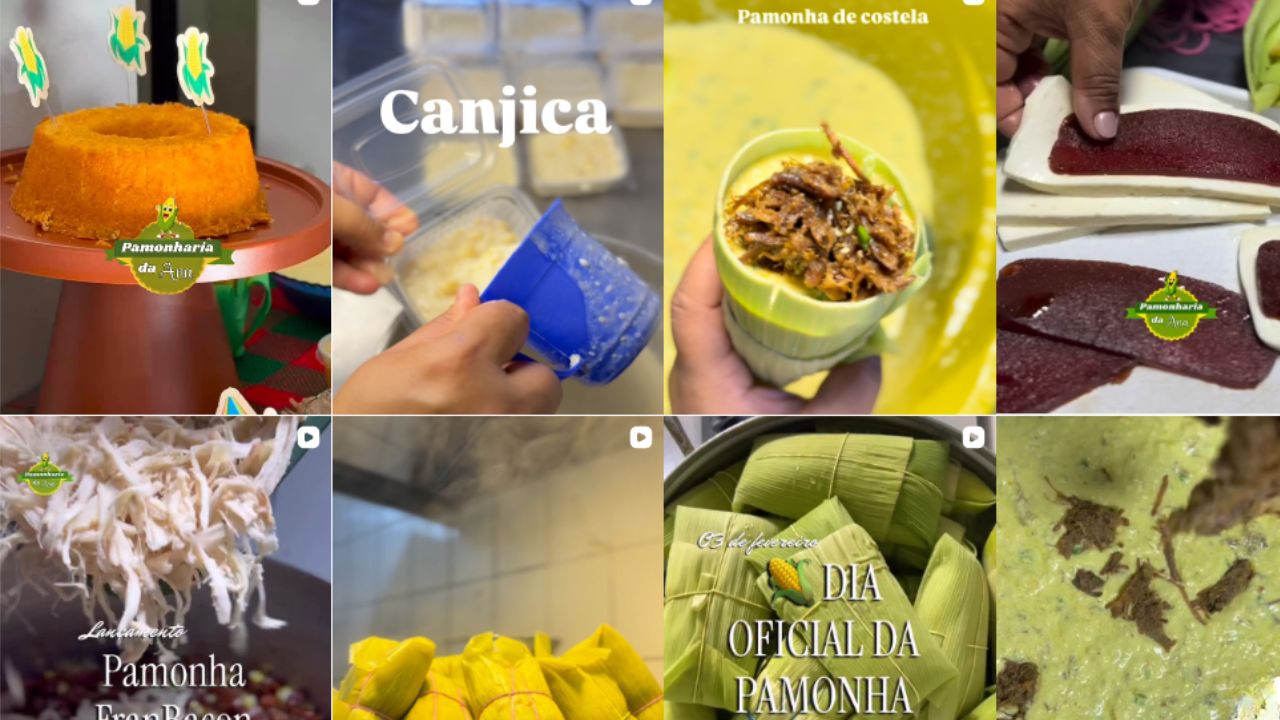
Another recording, published on June 21st, featured the version stuffed with shredded beef rib and surpassed 1.2 million accesses.
For Ana Paula, digital exposure is responsible for bringing the audience to the company, but it alone does not guarantee the continuity of sales. “I understood that no matter how good the product is, it needs to be seen. Advertising opens the doors, but it’s the quality that makes the customer return,” she states.
Business serves about 2,000 customers per month
The operation registers approximately 2,000 consumers monthly and works with an average ticket of R$ 18.90. At this pace, the production of Ana’s Pamonharia varies between 3,200 and 4,000 pamonhas each month. The quantity increases during periods of higher demand, especially during the cold and rainy months.
In the Midwest Region, these weather conditions favor the consumption of pamonhas and broths. In certain periods, the volume sold can double.
Current numbers of the business
- Monthly production: between 3,200 and 4,000 pamonhas;
- customers served per month: approximately 2,000;
- average ticket: R$ 18.90;
- revenue in 2025: R$ 552,000;
- goal for 2026: between R$ 500,000 and R$ 600,000;
- followers on Instagram: more than 17,300;
- time of operation at the physical location: three years.
The results show how an initially informal production gained scale without abandoning the family structure.
Shredded rib became the main differentiator of the menu
The flavor that became a sales highlight did not arise from formal market research. Ana Paula was preparing a rib that would be used in a broth when she noticed the texture of the shredded meat and decided to test it as a pamonha filling.
“One day, while I was preparing a rib to make broth, I saw that well-shredded meat and decided to test it inside a pamonha,” she recalls.
Before offering the novelty to the public, she sent a unit to a frequent customer, known for evaluating products frankly. The approval served as validation to put the recipe on the menu.
The rib pamonha began to differentiate the brand in a region where savory fillings usually use dried meat. The recipe’s performance in sales and on social media showed that innovation in the menu could become a positioning tool for Ana’s Pamonharia.
Flavors provoke praise and discussions on the internet
The combinations presented in the videos evoke reactions ranging from enthusiasm to rejection. Some users lament that the store is far from their cities. Among the comments posted are phrases like “I got depressed when I saw it wasn’t in my city” and “please, don’t go viral in São Paulo.”
Others question the existence of savory versions or mixtures that deviate from the more traditional recipe. “For me, pamonha is sweet and that’s the end of it, savory pamonha is for those who have nothing better to do and keep inventing trends,” wrote a follower.
The criticism generated responses and debate in the post. At the same time, consumers who have already tried the products began to defend the recipes. “This pamonha with guava paste is the best I’ve ever had in my life,” stated a customer.
Even when there is disagreement, the discussion broadens the reach of the content and keeps the brand’s flavors circulating on social media.
Ana’s Pamonharia started to help pay for college
In 2020, Ana Paula was 30 years old and faced a routine divided between formal work and college. She was an employee of a pharmaceutical company and was studying Pharmacy in Anápolis. To supplement her income and help pay the tuition fees, she started making pamonhas on weekends.
The first buyers were her own coworkers. As orders increased, production ceased to be merely occasional. For two years, the entrepreneur maintained both activities. On one side, she fulfilled her duties in the industry; on the other, she prepared and sold pamonhas.
The growth in demand led Ana Paula to end the professional relationship she had maintained for 12 years and focus her efforts on opening a physical store. The decision transformed an alternative to fund her studies into her main source of income.
The whole family participates in the operation
The business operation depends on the division of tasks among relatives. Ana Paula works in the kitchen alongside her mother and husband. The children and sister-in-law handle customer service and salon organization.
This structure keeps the operation under family control, from the preparation of recipes to customer interaction.
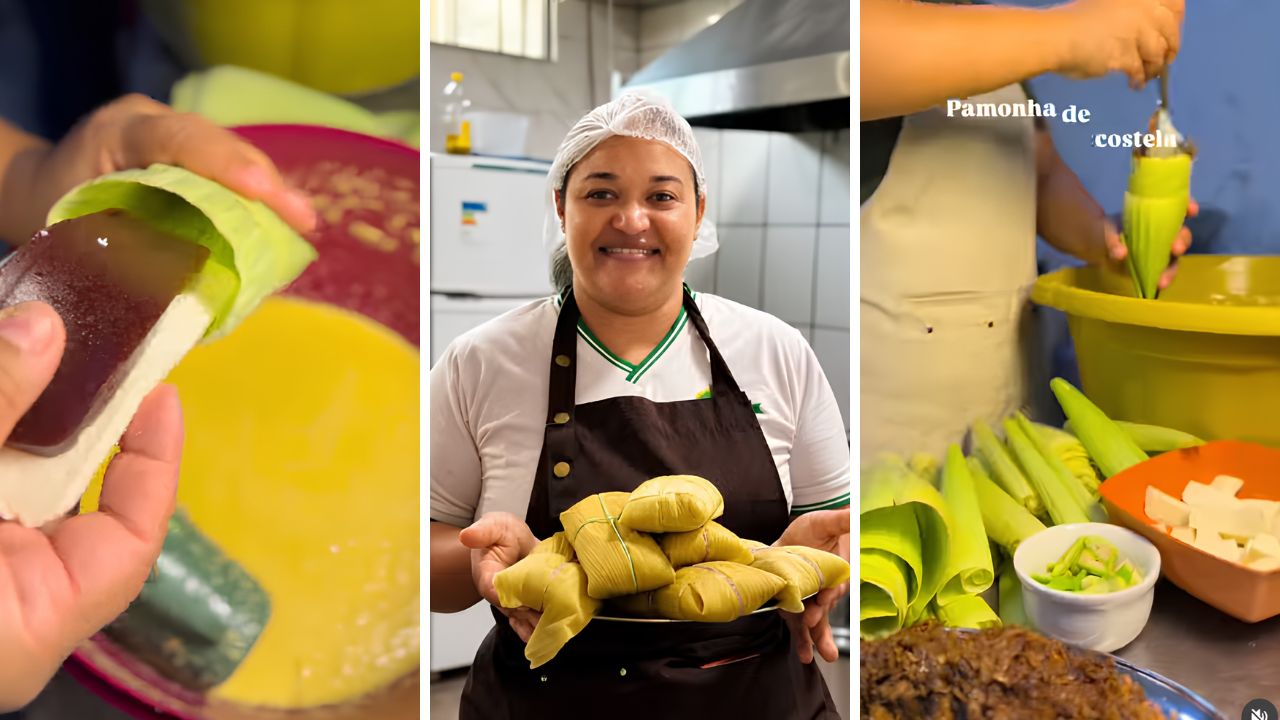
Group production also becomes important when videos suddenly increase the number of orders. As the impact of the posts can be felt in the store, family members need to adjust the work according to demand.
How activities are divided
- Ana Paula, the mother, and the husband: kitchen production;
- children and sister-in-law: service and management of the salon;
- founder: flavor development, promotion, and business administration.
Collective participation has accompanied the company’s journey since the period when sales were still conducted informally.
Revenue with pamonha reached R$ 552 thousand in 2025
With three years of activity at the physical location, Pamonharia da Ana achieved a revenue of R$ 552 thousand in 2025. For 2026, the expectation is to end the year within a range between R$ 500 thousand and R$ 600 thousand.
The fluctuation is related to the seasonality of the business and the sales behavior during different times of the year. Consumption increases especially when temperatures drop and rains increase. During these periods, customers seek both the pamonhas and the broths sold by the company.
The digital strategy helps generate movement outside the traditional peaks, especially when a post reaches an audience far exceeding the profile’s number of followers. Videos with more than 1 million views demonstrate that content can bring the brand to consumers who do not yet know the store.
Menu should gain new combinations
After the performance of the rib pamonha and the Romeo and Juliet version, Ana Paula intends to continue developing recipes. The creation of new flavors is part of the company’s medium and long-term planning.
The strategy allows renewing consumer interest and, at the same time, producing new content for social media. Each launch can become a topic for a video, generate comments, and provoke new peaks in demand.
The experience with the rib also created a testing model: develop the recipe, submit it for evaluation, and only then include it definitively on the menu. This process reduces the possibility of launching a combination without acceptance and preserves the quality standard defended by the founder.
Pamonharia da Ana looks at branches and franchise model
The next steps include increasing production capacity and opening new units. Ana Paula intends to prepare the business to operate beyond the current location in Anápolis. For this, it will be necessary to organize processes that can be repeated without compromising the product.
The ultimate goal is to transform Pamonharia da Ana into a franchise network and take the brand beyond Goiás.
Expansion plans
- increase production quantity;
- develop new flavors;
- open branches;
- standardize company operations;
- structure a franchise system;
- expand the brand to other states.
The response to the videos indicates that there is already interest from consumers located outside the city. Comments from users lamenting the distance serve as a sign of the national reach achieved by the content.
Extra income turned into a national expansion project
The company’s story began with sales made to coworkers and an immediate need: to supplement the amount used to pay for college.
Six years after production began, Ana Paula manages a business that manufactures thousands of units per month, gathers millions of views on some content, and considers the possibility of growing through franchises.
The result also shows that innovation was not limited to the filling of the pamonhas. The entrepreneur combined a traditional recipe with professional promotion, product testing, and family participation.
With a turnover of R$ 552,000 in 2025 and a target of up to R$ 600,000 in 2026, Pamonharia da Ana is now preparing to transform the recognition achieved on the internet into expansion beyond the state of Goiás.
With information from Revista PEGN