Portuguese
  Spanish


Global flow changes direction and repositions Brazil among the most watched destinations by international investors, with rising commodities, currency appreciation, and high interest rates driving foreign capital inflow and reinforcing the country’s role amid geopolitical uncertainties.
Brazil returned to the spotlight of foreign investors in 2026, driven by the combination of a significant rise in oil prices, appreciation of the real, high interest rates, and improved economic projections.
According to BBC Brasil, the movement gained momentum after the International Monetary Fund revised the country’s growth upwards, while global banks began to highlight the Brazilian market as one of the most attractive among emerging markets.
The new IMF estimate raised the Gross Domestic Product growth from 1.6% to 1.9%, reflecting the perception that the country tends to benefit, albeit moderately, from the current global energy crisis.
-
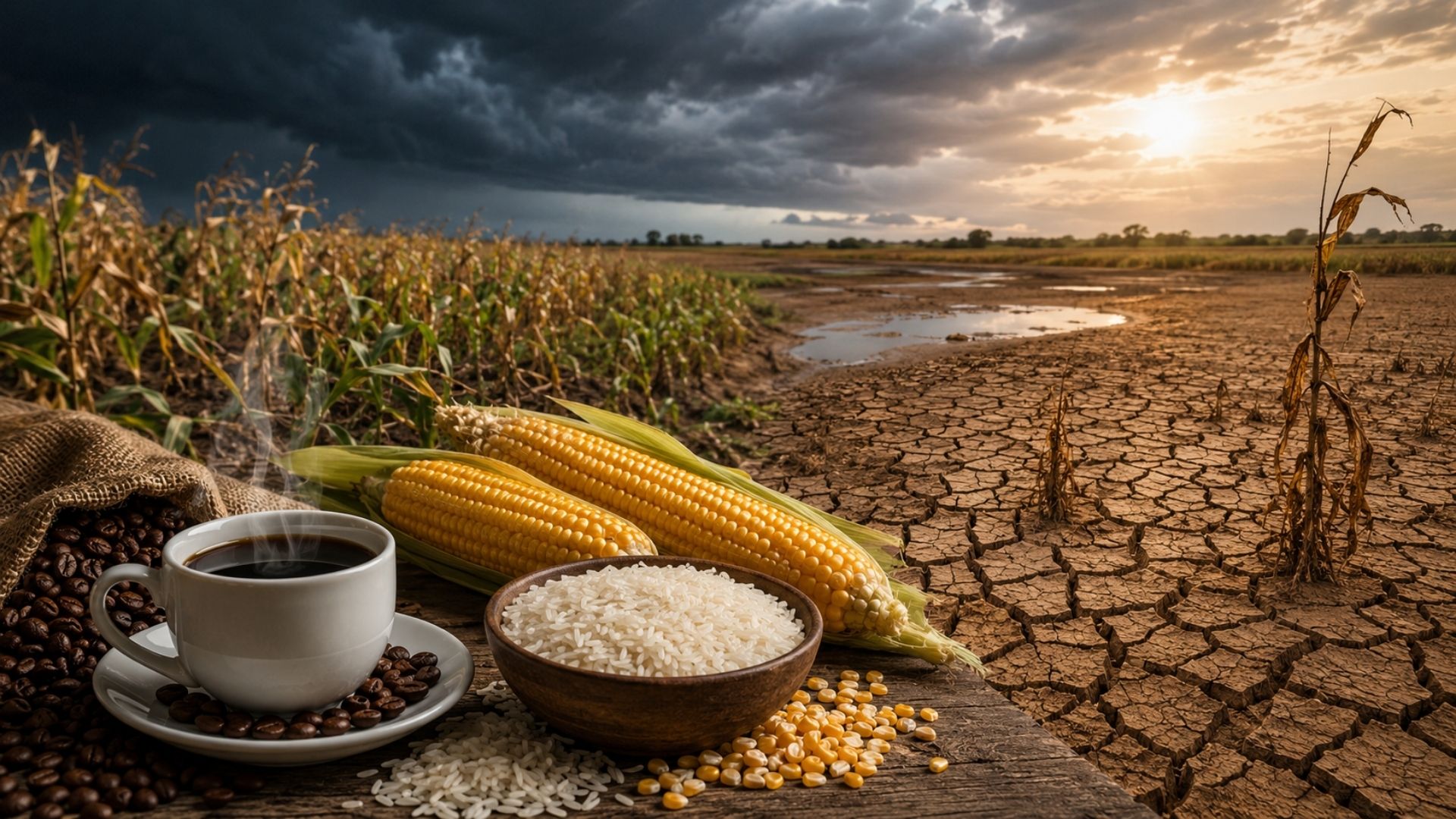
El Niño Threatens Brazilian Food Production, Economists Predict Rising Prices for Coffee, Corn, and Rice

-
Brazil’s First Freight Railway Built from Scratch, EF-118 Connecting Espírito Santo to Rio de Janeiro, Goes to Auction in October Attracting Chinese Giant in Multi-Billion Dollar Bid for Southeast Rail Network

-
Audit in Rio de Janeiro’s State Government Uncovers Ghost Employees Across All 77 Departments, Leading to Over 4,000 Dismissals and Significant Cost Savings

-
Audit Reveals 80% of Ghost Employees in Rio Government Departments, Leading to Over 4,000 Dismissals and Saving the State $3.3 Million Monthly


Brazil is considered a net energy exporter, a condition that differentiates it from economies more vulnerable to rising international prices.
Oil rise repositions Brazilian economy
The more than 30% surge in oil prices since the end of February has altered the balance between producer and importer countries, especially after the escalation of tensions in the Middle East and uncertainties involving the Strait of Hormuz.
In this context, economies dependent on energy imports face inflationary pressure, currency deterioration, and income loss.
In contrast, exporting countries, like Brazil, start to record an increase in external revenues, favoring their external accounts and the flow of dollars.
The IMF assesses that this effect should result in a net positive impact on the Brazilian economy, with an estimated gain of about 0.2 percentage points in growth.
Moreover, the significant weight of renewable energies in Brazil’s energy matrix acts as an additional protection factor against global volatility.
Record foreign capital inflow in B3
The external appetite for Brazilian assets was directly reflected in the performance of B3.
By April 22, foreign investors had invested R$ 64.42 billion in the stock exchange, more than double the total recorded throughout the previous year.
This volume represents approximately 61.2% of all financial flow directed to the Brazilian stock market in 2026, consolidating a trend of increasing international participation initiated in recent years.
Reports from institutions like Bank of America and Goldman Sachs indicate that Brazil has characteristics considered rare in the current environment: exposure to valued commodities, high interest rates, and assets traded at relatively discounted prices.
The prevailing view among global managers is that, even amid recent stock market turbulence, the country maintains fundamentals capable of sustaining foreign interest in the medium term.
Real stands out among global currencies in 2026
The Brazilian currency also began to reflect this new scenario.
By mid-April, the real had accumulated an appreciation of 10.4% against the dollar, marking one of the best global performances in the period.
The movement is supported by the consistent inflow of external resources, increased export revenues, and the interest rate differential, which remains high compared to other significant economies.
Experts also point out that the real tends to react more intensely to global risk cycles, a behavior that historically amplifies both appreciation and depreciation movements.
Despite this, the recent appreciation is seen as a direct consequence of the increased external liquidity directed to the country, driven by the international context and the search for higher returns.
High interest rates maintain Brazil’s attractiveness
Another central element in this scenario is monetary policy.
The Selic rate remains at a high level, which increases the attractiveness of fixed-income investments and sustains the interest of foreign investors.
At the same time, the start of the interest rate cut cycle introduces an additional variable.
Although gradual reductions can stimulate the domestic economy, they can also diminish part of the differential that currently favors the inflow of foreign capital.
The market expectation is for new cuts throughout the year, albeit at a moderate pace, in light of inflationary pressures associated with rising oil prices and global uncertainties.
Gains from oil increase dollar inflows
Estimates from the Institute of International Finance indicate that each $10 increase in oil prices can generate up to $4 billion additional in dollar inflows for Brazil.
This amount is equivalent to about 0.2% of GDP, contributing to strengthening the balance of payments and increasing the availability of foreign currency in the country.
The positive impact also extends to economic growth, as the increase in commodity exports tends to stimulate sectors linked to the energy and mining production chain.
Diversified economy reduces impact of external shocks
The Brazilian economy has characteristics that help explain its resilience in the current scenario.
Besides being a commodity exporter, the country has a large domestic market that is relatively less exposed to external shocks than other emerging economies.
Another relevant factor is the diversification of the export portfolio, which includes not only oil but also agricultural and mineral products, reducing dependence on a single sector.
This combination has reinforced the perception that Brazil can navigate periods of global instability with more limited impacts, maintaining moderate growth even in adverse scenarios.
Fiscal, political, and agricultural risks remain on the radar
Despite the favorable moment, analysts highlight that the scenario still involves significant risks.
Fiscal policy continues to be pointed out as a sensitive issue, given uncertainties about the control of public accounts.
The electoral environment also tends to influence risk perception, especially as the presidential elections approach.
Changes in the conduct of economic policy can alter investor confidence levels. Additionally, the cost of fertilizers emerges as a factor of concern.
Brazil depends on imports of these inputs, and a sharp increase can pressure agribusiness and impact food prices.
The Middle East, responsible for a significant part of the global supply of nitrogen fertilizers, remains at the center of geopolitical tensions, which increases uncertainty about production costs in the agricultural sector.
Oil gains prominence in Brazilian exports
In recent years, Brazil has undergone a significant transformation in the energy sector.
The country has transitioned from being a net energy importer to establishing itself as a crude oil exporter, increasing its participation in international trade.
In 2024, oil became the main product exported by the country, surpassing soybeans, a trend that was repeated later and consolidated this new position.
This structural advancement helps explain why Brazil has been identified as one of the main beneficiaries of the current global commodities dynamic, especially during periods of rising international prices.
The combination of this new export profile, increasing foreign capital inflow, and stable macroeconomic fundamentals supports the perception that the country has regained a strategic position among emerging markets.