Portuguese
  Spanish


Jajja’s House, a rural dwelling designed for women in rural Uganda, with local materials, adobe, and rainwater harvesting
A Brazilian proposal for social architecture has gained international attention. Architect Mariana Montag, a recent graduate from Universidade Presbiteriana Mackenzie, created a house designed to be built by women and for women in rural Uganda.
Named Jajja’s House, the project was designed to cater to older women, who, in many cases, are the main breadwinners in the region.
The initiative received the German award Beyond Bauhaus – Prototyping the Future, created to recognize projects in design, innovation, and social inclusion.
-
Singapore Constructs Massive Waste Island with 7 km Dike to Combat Space Shortage

-
Australia’s Massive 5.5 km Iron Mine Visible from Space Fuels Global Industry with Giant Trains

-
Brazil Unveils Innovative Monitoring System to Prevent Abandonment of Public Works, Boosting Efficiency and Reducing Waste in Infrastructure Projects
-
India Begins Drilling Massive Twin Tunnel Under National Park to Cut Mumbai Commute by 12 km and Save Up to 1 Hour



Get to Know Jajja’s House
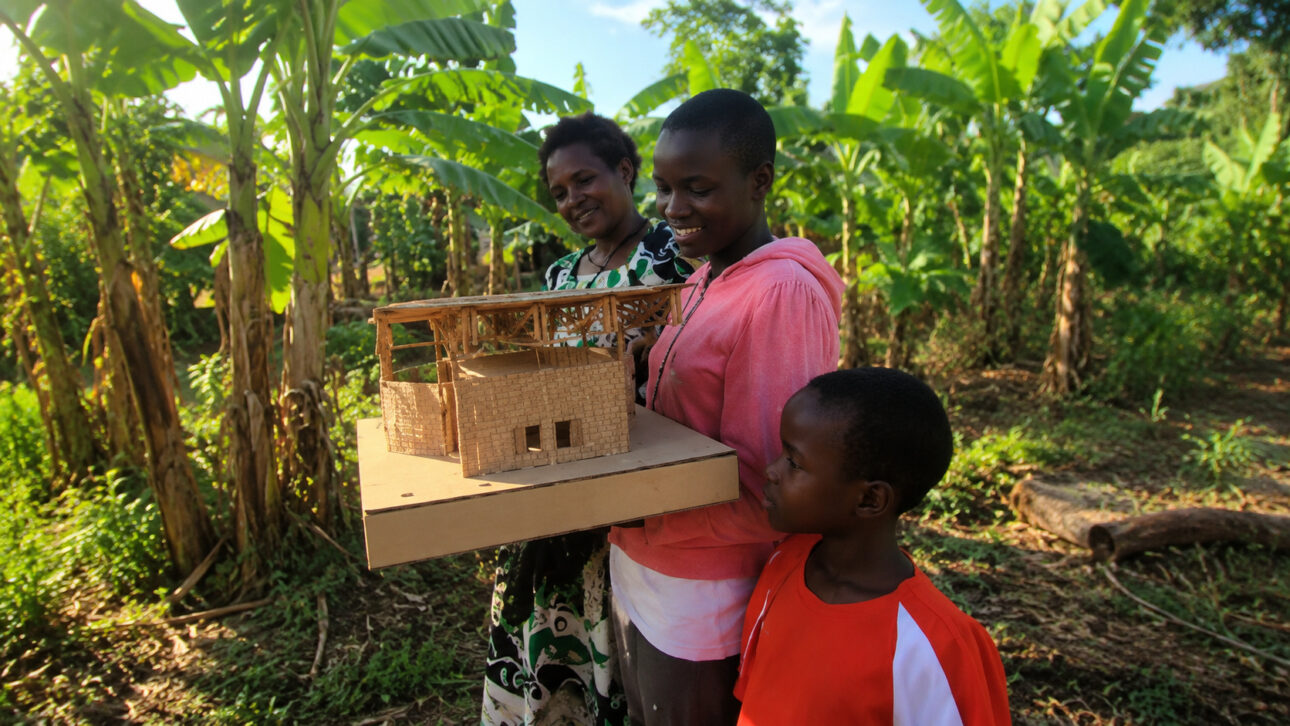
The first dwelling was designed for Jajja Nonnono Imaculate, 75 years old, and her two granddaughters, Rose, 14, and Gift, 6.
The project’s name refers to the word “jajja”, which means grandmother in Luganda, one of the languages spoken in Uganda.
The house was planned for the village of Kikajjo, located 16 kilometers from Kampala, the capital of the African country.
The proposal includes the use of materials found within a maximum of one kilometer from the construction site.
With this, the project aims to facilitate the execution of the work and reduce dependence on distant or expensive materials.
The dwelling features closed bedrooms with adobe bricks, a horizontal kitchen in the central part, and a living room integrated through pivoting panels.
These panels allow the space to be fully open, partially open, or completely closed.
In this way, the residence encourages the relationship between the indoor and outdoor environments, something important for the routine of rural families.
How the house can be built by women
The focus of Casa de Jajja goes beyond providing an individual dwelling.
Mariana Montag’s intention is to create a model capable of expanding female autonomy in rural areas.
Therefore, the structure was designed considering the physical, social, and economic possibilities of the older women in the region.
The independent roof is also one of the central points of the project.
The lattice roof was developed to capture rainwater, which can help with household routines and impact family income.
The model can be replicated in other rural areas of the world with similar climatic zones.
Thus, Casa de Jajja functions as a simple, adaptable housing proposal linked to local conditions.

Project also seeks to rethink civil construction
To make the first unit feasible, Mariana created a crowdfunding campaign with a goal of R$ 60,000.
The amount would be used for purchasing the land and building the house.
Donations were planned until July 18, according to the original proposal.
In the long term, the architect intends for the project to help question how civil construction views the female body.
According to Mariana, if women are traditionally the ones who take care of the home, they should also participate in the creation and planning of this space.
Thus, Casa de Jajja transforms a basic need into a larger discussion about housing, female autonomy, rural architecture, and social inclusion.