Portuguese
  Spanish


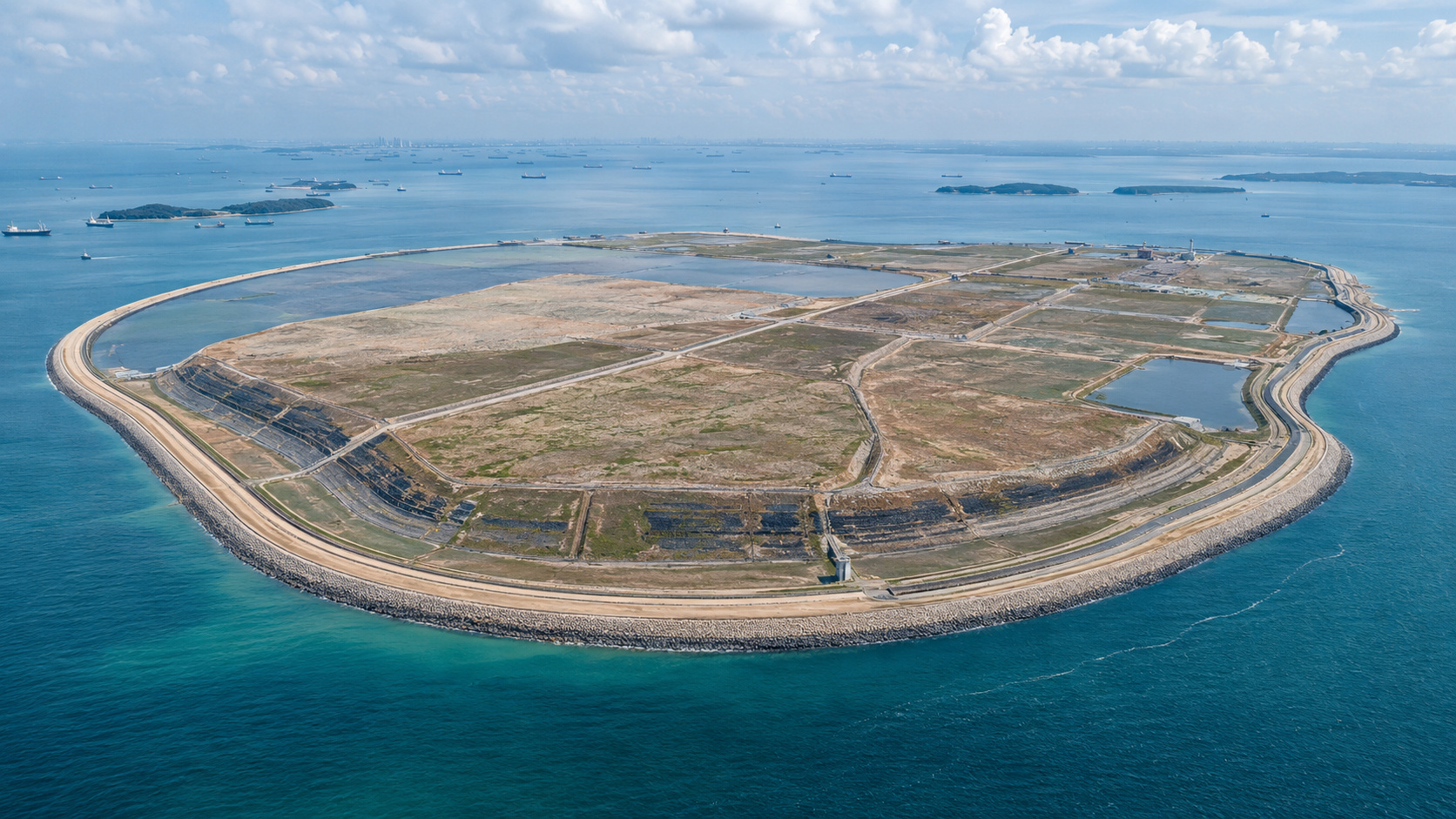

Singapore created an artificial island of waste in the sea with a 7 km dike, 350 hectares, and capacity for millions of tons of waste.
For a country that has only 734 km² of territory, finding space to dispose of waste has become one of Singapore’s biggest strategic challenges. Without available areas for new landfills on the mainland, the city-state decided to do something that few countries have even considered: build a massive waste dump in the middle of the ocean. The result was the Semakau Landfill, considered by the National Environment Agency (NEA) to be Singapore’s only sanitary landfill and one of the most unusual environmental projects on the planet.
Located about 8 kilometers south of the main island, the project transformed a maritime area into a gigantic structure intended to receive incinerated waste produced by nearly six million inhabitants.
A 7-kilometer dike closed off part of the sea and created an artificial island intended to store waste for decades
According to the National Environment Agency, the construction required the implementation of a perimeter dike approximately 7 kilometers long, built between the islands of Pulau Semakau and Pulau Sakeng. This rocky barrier isolated a portion of the ocean to form the space intended for the landfill.
-
Australia’s Massive 5.5 km Iron Mine Visible from Space Fuels Global Industry with Giant Trains

-
Brazil Unveils Innovative Monitoring System to Prevent Abandonment of Public Works, Boosting Efficiency and Reducing Waste in Infrastructure Projects

-
India Begins Drilling Massive Twin Tunnel Under National Park to Cut Mumbai Commute by 12 km and Save Up to 1 Hour

-
Detroit Microhouse Village Offers Former Homeless Residents Ownership After 7 Years: First 3 Tenants Receive Deeds


The NEA reports that the dike received a lining composed of impermeable membrane and marine clay layer, designed to prevent contaminated liquids from escaping into the ocean environment. The system was designed to contain leachate and protect marine ecosystems near the site.
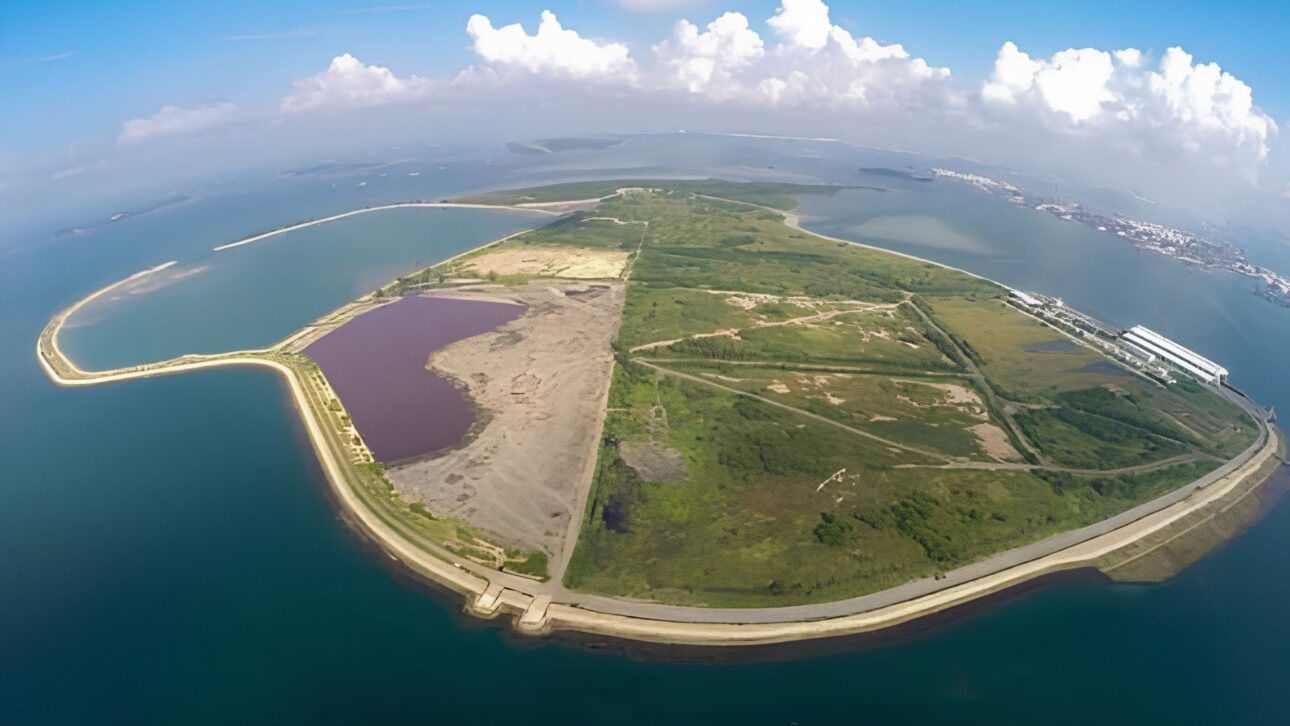
According to information about the project, Semakau currently occupies about 350 hectares, equivalent to an area larger than 650 football fields, making it one of the largest waste management infrastructures ever built over the sea.
The island receives thousands of tons of ash daily produced by Singapore’s incineration plants
Unlike conventional landfills, Semakau does not receive raw household waste. According to the NEA, practically all of Singapore’s urban waste first goes through incineration plants, a process that reduces the original volume by approximately 90%. Only the ashes resulting from the burning, in addition to non-incinerable waste, are sent to the artificial island.


A report by Channel News Asia states that more than 2,000 tons of ashes and non-incinerable waste arrive daily at the landfill via special vessels.
According to official estimates, the total capacity of the enterprise reaches about 63 million cubic meters, an amount sufficient to store waste equivalent to approximately 11,200 Olympic swimming pools.
The landfill began operating in 1999 and may reach its maximum capacity around 2035
The first phase of the project began operations on April 1, 1999. According to the NEA, the initial phase offered a capacity of 13.6 million cubic meters, while the second phase, inaugurated in 2015, added another 14.5 million cubic meters to the system.
Even so, time is running out. Singapore’s environmental agency estimates that, maintaining the current disposal rate, Semakau could reach its operational limit around 2035, turning waste management into a national security issue for the country.
Because of this, researchers are studying alternatives to reuse materials already buried at the site. According to the Singapore Economic Development Board, there is a future possibility of recovering some of the deposited ashes for use in infrastructure works, extending the landfill’s lifespan.
The most surprising thing is that the landfill island also hosts mangroves, fish, and marine biodiversity
The idea of building a landfill over the sea generated strong resistance when it was announced in the late 1980s. Environmental groups feared irreversible impacts on coral reefs, mangrove areas, and coastal habitats.
According to the Centre for Liveable Cities of Singapore, during construction, measures were implemented to reduce environmental damage, including sediment containment screens, mangrove replanting, and constant water quality monitoring.
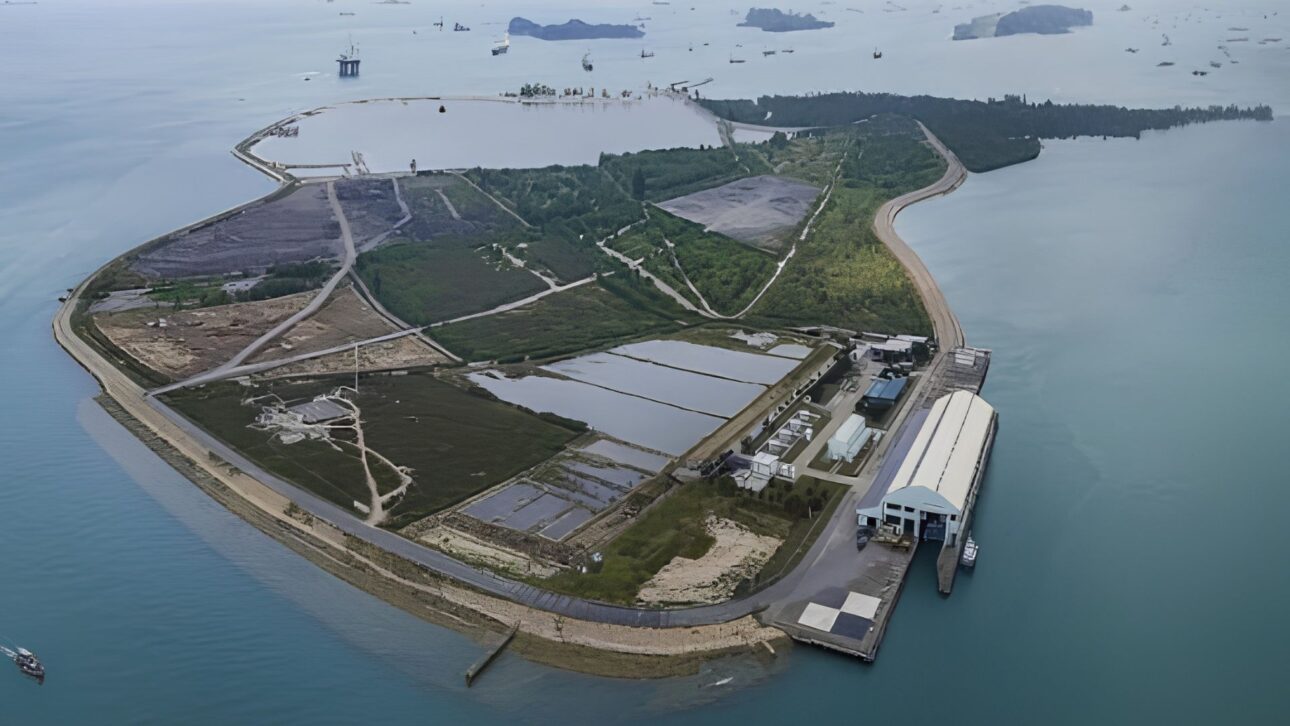
Today, the site is also used for controlled recreational activities, bird watching, and educational visits.
The NEA itself highlights that Semakau has ended up becoming a unique example of coexistence between heavy waste infrastructure and preserved natural areas.
The artificial island shows how far a country can go when there is simply no more space to throw garbage away
Few places in the world face such a severe territorial limitation as Singapore. While other countries expand landfills to remote regions, the city-state literally had to build a new portion of territory to store what remains from the consumption of millions of people. Semakau has become a kind of environmental clock.

Each discarded ton brings the country closer to the limit of its only garbage island. And the inevitable question remains: when even the ocean no longer offers space to hide our waste, what will be the next destination for the garbage produced by the megacities of the 21st century?