Portuguese
  Spanish


Understand the nutritional composition, the molding process, and the aromatic notes of Taiada Cheese, an innovative recipe that combines cheese and ants.
The combination may seem unusual to many consumers, but it is gaining ground in the market. Made with cheese and içá ants, Taiada Cheese has recorded good commercial acceptance and has become one of the most curious products of Brazilian artisanal gastronomy. Currently, each 450-gram piece is sold for R$ 90, a price that exceeds R$ 200 per kilo.
According to cheese master Camila Almeida, owner of Estância Silvânia, demand tends to increase on commemorative dates like Mother’s Day and Father’s Day, when consumers seek products linked to tradition, emotional memory, and regional culture.
Insect consumption gains ground in food
The use of insects in human food is not new. In several Asian countries, this practice has been occurring for centuries and is valued for the high nutritional value of the ingredients.
-
Brazilian Family’s Cheese, Started with One Cow in 1984, Named Best in the World, Beating 2,700 Competitors from 30 Countries

-
Brazilian Ranchers Use Satellites to Optimize Pasture Management and Prevent Feed Loss in Cattle Farms

-
Russia Follows China in Recognizing Brazil as Free from Foot-and-Mouth Disease Without Vaccination, Boosting Meat Exports and Agribusiness Potential

-
23-Year-Old Brazilian Turns Beekeeping into College Tuition, Harvesting Honey Twice a Year from 50 Hives




According to Camila Almeida, the Brazilian market is also starting to follow this trend, including producers specialized in breeding insects for human consumption.
The main nutritional justification lies in the high concentration of proteins, which can exceed 80% in certain species.
The idea of creating Taiada Cheese was born in 2021 with the aim of valuing regional gastronomic traditions and boosting rural tourism.
The choice of the içá ant, also known as tanajura, was inspired by a cultural habit quite present in Caçapava, in the interior of São Paulo.
According to the producer, the consumption of içá is part of the local identity, especially in traditional recipes like tanajura farofa.
The project also aimed to create a product capable of attracting visitors to properties focused on rural tourism.
How the cheese is produced
The recipe uses A2 milk from Gir dairy cows, raised exclusively on pasture and milked with the calf at foot.
The base of the cheese consists only of milk, rennet, and salt. The inclusion of ants occurs at a specific stage of the production process.
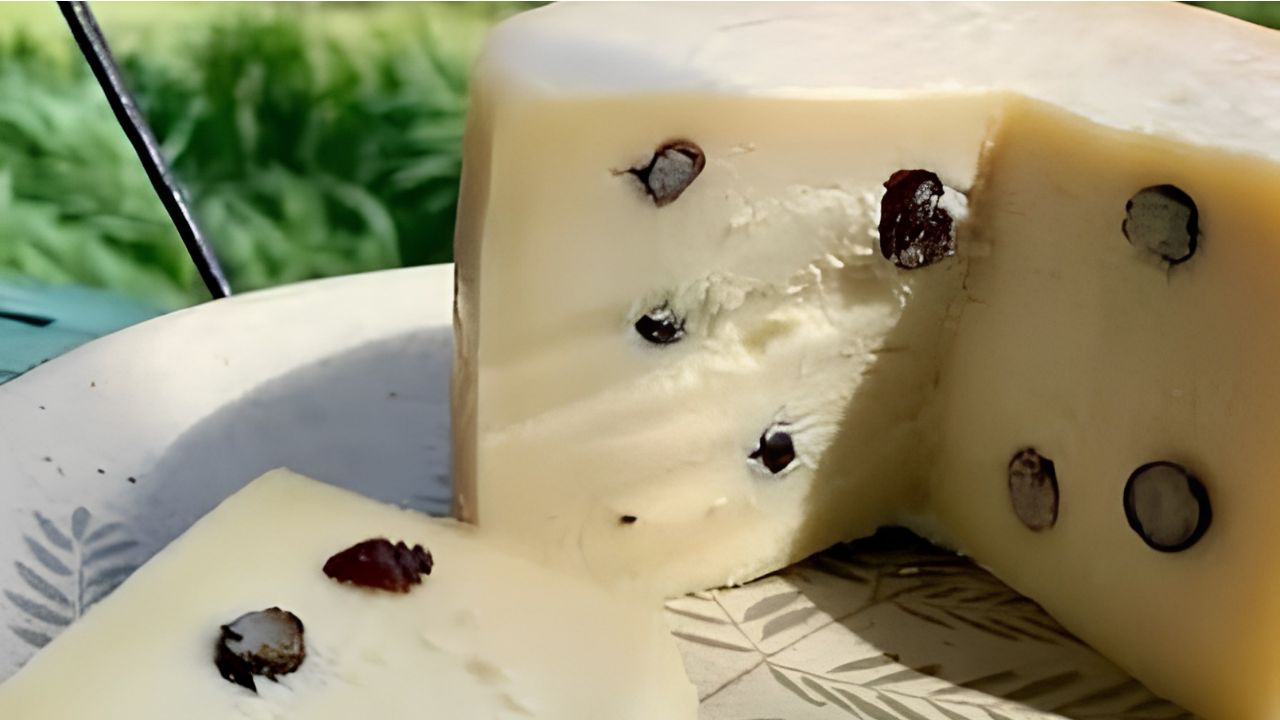
Before being incorporated into the dough, the içás go through a roasting process. Then, they are added during molding, the phase in which the cheese receives its final shape.
According to Camila Almeida, this was one of the main technical challenges in developing the recipe, as the insect does not adapt well to the other stages of production.
Maturation and sensory profile
After pressing, the cheese goes through a maturation period of 60 days.
During this process, it develops a soft texture and a slightly sweet flavor.
The presence of the ants adds unique characteristics to the product:
- distinct crunchiness
- aromas reminiscent of almonds
- notes of nuts and peanuts
- slight hint of fennel at the end of tasting
The result is a cheese with an unusual sensory profile, combining rural tradition and gastronomic innovation.
International recognition of Queijo Taiada
The product’s uniqueness also caught attention outside Brazil. Initially created to compete in the Mondial du Fromage et des Produits Laitiers, held in Tours, France, Queijo Taiada won the bronze medal in the 2021 edition.
The recognition opened doors for the brand to participate in the Salon du Fromage in Paris the following year. Later, the product once again gained international prominence during the 3rd Copa América do Queijo, held in Peru.
In the competition, it received the “Super Oro” distinction, one of the event’s highest awards, after the judges highlighted the harmony between texture, flavor, and originality of the proposal.
With information from Agro em Campo