Portuguese
  Spanish


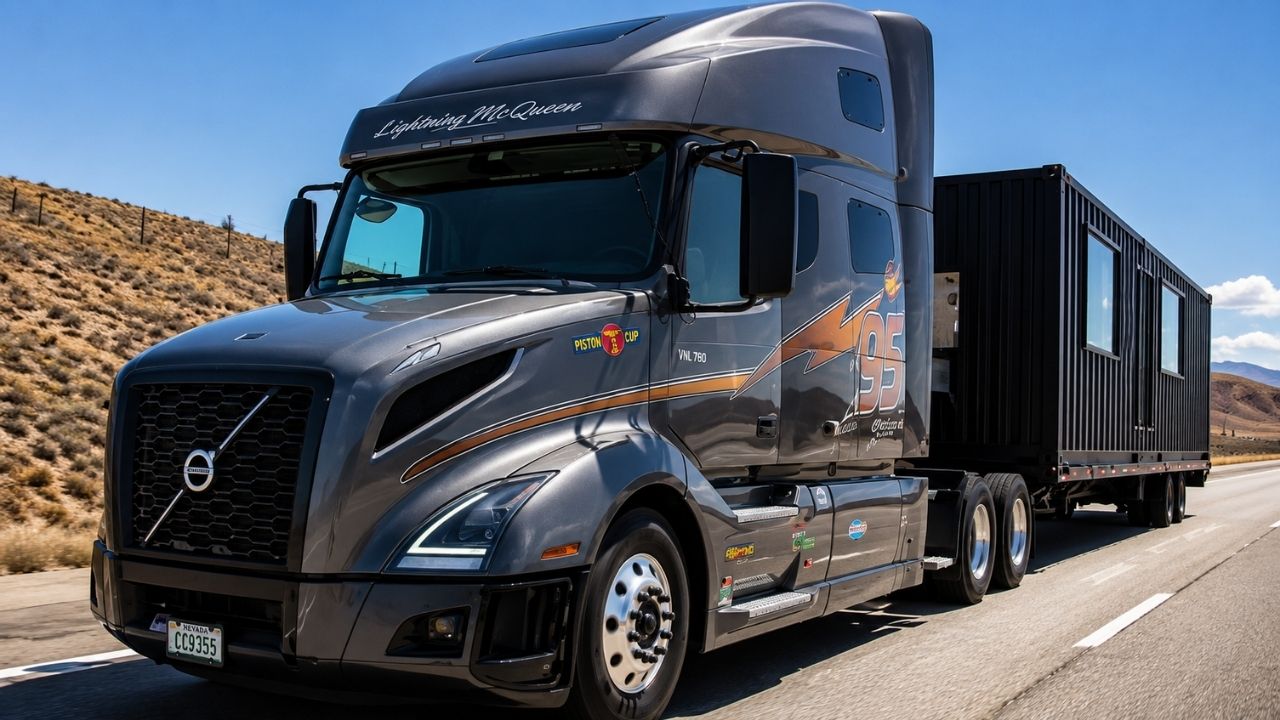

After years of planning a mobile container house, Victória and André showcase in the United States an adapted container in Utah, with sofa bed, full kitchen, mini split, custom bathroom, laundry, queen bedroom, and automated curtains, in addition to transport security and a snowy mountain landscape in the new family phase.
The container house created by Victória and André, a Brazilian couple living in the United States, has entered a new stage in Utah. After months of anticipation, they presented the interior of the mobile project, designed to function as a complete home while still allowing for future relocations.
The container was transformed into a house with living room, kitchen, bathroom, laundry, and bedroom. The result combines custom solutions, comfort choices, and safety concerns, as the structure was designed to be transported and parked in different locations.
Couple shows new phase in Utah after out-of-the-box project
Victória and André explain that the project is not common even for Americans who saw the structure up close. According to them, the reaction was one of surprise, mainly because the proposal deviates from the standard of traditional RVs found in the United States.
-
Giant 3,600-ton Crane Breaks Two World Records by Installing World’s Largest Single-Piece Forged and Welded Hydrogenation Reactor, Weighing 3,037 Tons, in Chinese Petrochemical Plant in Just Six Days

-
$80 Million Bridge in Brazil Cuts Travel Time from 30 Minutes to 1 Minute, but Audit Reveals Major Flaws
-
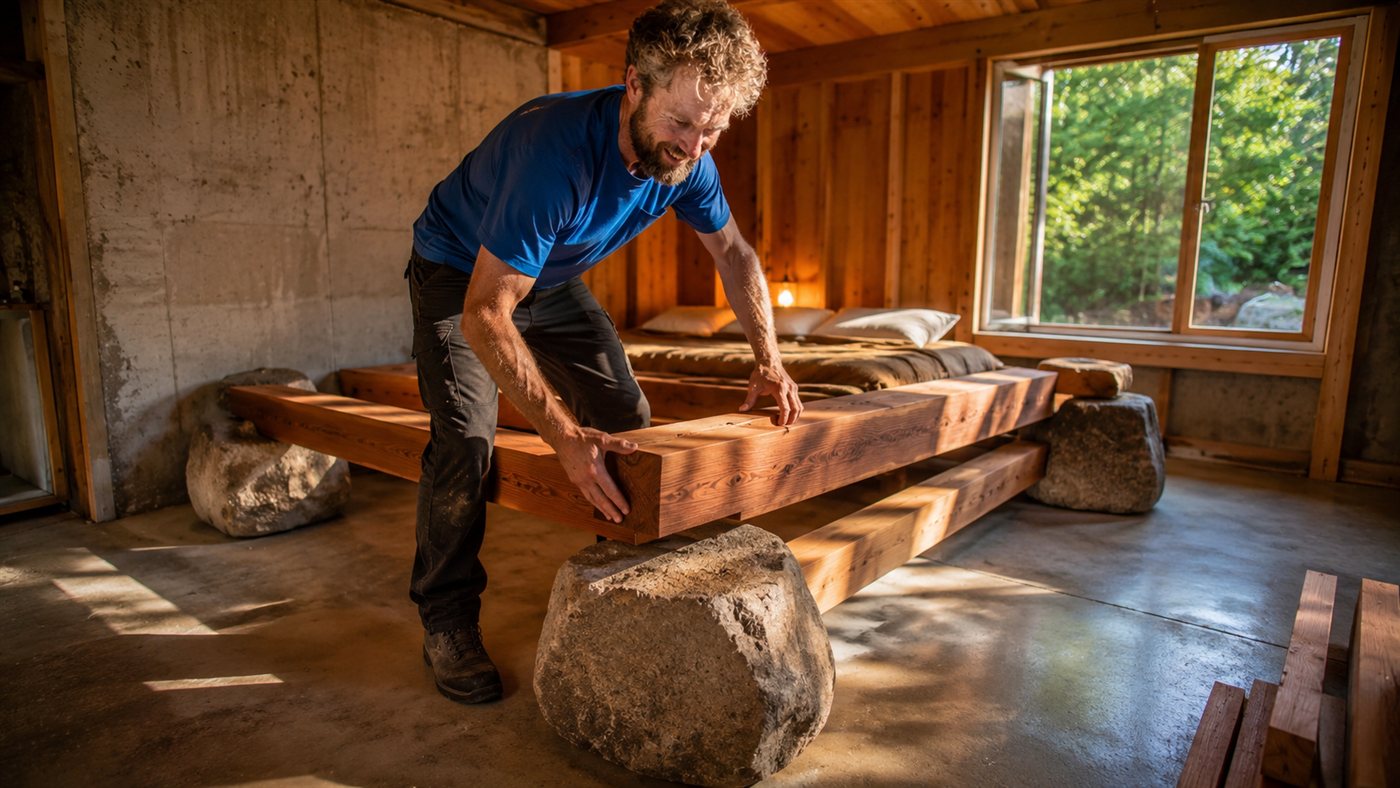
Man Builds Stone Bed with Granite Rocks and Hand-Sawn Cedar Beams, Home Extension Garners Over 437,000 Views on Bonus Bolts Channel

-
Brazilian Researcher Develops Color-Changing Roof Tile to Reduce Air Conditioning Use by Up to 15%



The new phase takes place in Utah, in a location surrounded by nature, with a view of mountains that became snow-covered in the spring. The scenery became an important part of the experience, as the larger window was positioned to better enjoy the landscape.
The couple states that they are still in the adaptation phase. They are in a park for now and explain that the idea is to take it step by step before considering their own land or a more permanent installation.
The choice of Utah also appears as an intermediate alternative. The dream of going to Montana was considered, but the couple assessed that it might be too extreme for the family’s adaptation at this stage.
Entrance was designed for safety and transport

Right on the outside, the project shows an important solution: the original container door was kept. The house has a glass door, but it can also be closed with the container’s own metal door.
This decision was not just aesthetic. Since the container house was designed to move, the couple wanted a way to increase security when it was on land that wasn’t entirely theirs or in temporary locations.
The structure allows the iron door to be locked with a padlock, creating an extra layer of protection. They also mention that other entries in the middle of the container could be interesting, but were not the most practical for a mobile home.
During transport, some items suffered minor damage, such as the door handle, which ended up breaking. The couple showed the problem without hiding the necessary adjustments and informed that the replacement was already being arranged.
Living room has sofa bed, adjustable lighting, and mini split
The entrance leads directly to the living room. The space received a large sofa, chosen to create a comfortable living area. The furniture also turns into a bed, expanding the possibility of hosting guests.
The living room also features a pouf, dimmable lighting, and wall lamps. The idea was to create a compact space, but with the feel of a home, not just an adapted vehicle or improvised trailer.
The climate control system also received special attention. The couple installed mini splits, one in the living room and another in the bedroom, with air conditioning and heating functions. They state that the system worked well even on a 0°C night.
This detail is central to life in Utah, where the climate can vary greatly. The house needs to handle both heat and cold, and the heating was tested precisely during days when there was unseasonal snow.
Complete kitchen occupies the center of the project

The kitchen is one of the most detailed areas of the container house. The couple chose cabinets in a striking tone, a countertop with ceramic coating, a backsplash with a Brazilian piece from Portobello, and seating space with stools.
The choice of finishes was not entirely conventional. They opted for a countertop with a more retro look, made with ceramic, instead of granite or quartz. This solution also facilitates a possible change in the future, should they want to switch to another material.
The chosen stove is gas, although many Americans use electric models. The kitchen also has a range hood, a large refrigerator, freezer drawers, drawer units, an embedded trash bin, and shelves.
Another important point is the entry of light. The kitchen has fixed windows and a skylight, used as an alternative for ventilation, since the glass windows do not open. Thus, the environment gains brightness and the possibility of air circulation.
Vinyl flooring helps reduce weight and facilitate maintenance
The chosen flooring was vinyl, with an appearance similar to wood. The decision considered cost, weight, and practicality, as natural wood would be more expensive, heavier, and require more maintenance.
In a mobile home, weight and resistance matter a lot. Vinyl was also highlighted for being waterproof and easier to repair, which makes sense in a project subject to movement and daily use.
The internal walls received a drywall finish, which, according to the couple, withstood transportation well and did not crack. This point was celebrated because the movement of the structure could cause problems if the execution was not firm.
The corridor also received narrow windows for light entry. Privacy still needs to be adjusted with curtains, especially because the bathroom door is close to this area.
Custom bathroom was one of the biggest challenges

The bathroom was presented as one of the favorite parts of the project, but also one of the most difficult. The couple explains that during construction, it seemed that the elements would not fit in the available space.
The space received a shower box, shower, shelves, ceramic coating, light flooring, small sink, painted cabinet, mirror with light and defogger. There is also an exhaust fan with two intensities and sound function.
Everything had to be custom-made, which increased the cost of the project. They highlight that a small space does not always mean a cheaper project, because each adaptation requires planning, cutting, fitting, and specific solutions.
The bathroom skylight was also installed, but it brought a point of concern: moisture can concentrate on the glass. The couple still intends to find an adaptation to improve air circulation in the space.
Compact laundry has a tower machine and water heater
The container house also gained a laundry room, with a washing and drying machine in a tower. The equipment was bought new but presented a problem with the dryer, which indicates a drain failure even with the washer working normally.
This section shows the real side of construction. Even with new equipment, practical problems arise after installation, especially when the space is tight and access for maintenance is limited.
The couple acknowledges that the division of the laundry looks nice, but it may hinder repairs. If the technician needs to access the back of the machine, the space will be quite restricted.
In the same area are the electrical panel and the water heater, responsible for heating the water in the project. The laundry received a door with a closing system and latch, helping to keep the space separate from the bathroom.
Bedroom has queen bed, cabinets, and automated curtains
The bedroom was designed to avoid a feeling of suffocation. Therefore, the couple preferred not to fill all the walls with cabinets, even needing to create space to store clothes and objects.
The bed is queen-sized and has a storage structure. There are drawers on the side, space under the bed, and custom-made upper cabinets. The solution tries to balance comfort and internal utilization, two difficult points in a mobile container house.
The space also received air conditioning, slatted finish, and decoration with YouTube plaques, one related to YouTube Brazil and another from the United States.
The technological highlight is the automated curtains. They can be operated by remote control and also by a mobile app, with layers of translucent and blackout curtains to darken the room when necessary.
Project was designed as a house to move


At the end of the tour, André emphasizes that everything was designed as a mobile home. The structure was not made just to stay on a permanent plot, but to be transported and accompany new phases of the couple’s life.
They admit that there were simpler or cheaper ways to build a house inside a container. They also say they could have bought a ready-made RV, financed it, and solved it more conventionally.
But the choice was to create something of their own. The couple states that they chose practically everything in the project, from finishes to internal organization, including furniture, curtains, lighting, kitchen, and bathroom.
Despite the difficulties, they say that seeing everything ready made them feel it was worth it. The house was cheaper than an RV of similar size, according to their account, and delivered exactly the different proposal they wanted to show.
Container house combines comfort, road, and family life
The container house of Victória and André shows a trend that goes beyond aesthetics: living in a compact, mobile, and personalized way, but without giving up real comfort. The project has a complete kitchen, functional bathroom, laundry room, bedroom with queen bed, and climate systems to face cold and heat.
At the same time, it is not a perfect solution or without challenges. There are pending adjustments, unexpected maintenance, custom decisions, and adaptation to the location. Life in a container requires planning, but also flexibility.
The project draws attention because it does not try to copy a traditional house. It mixes trailer logic, container structure, and fixed housing choices, creating a mobile home to travel and live in the United States.
And you, would you live in a mobile container house like this, with a complete kitchen, laundry room, automated bedroom, and view of snowy mountains, or do you still prefer a traditional house on a fixed plot? Share your opinion.