Portuguese
  Spanish


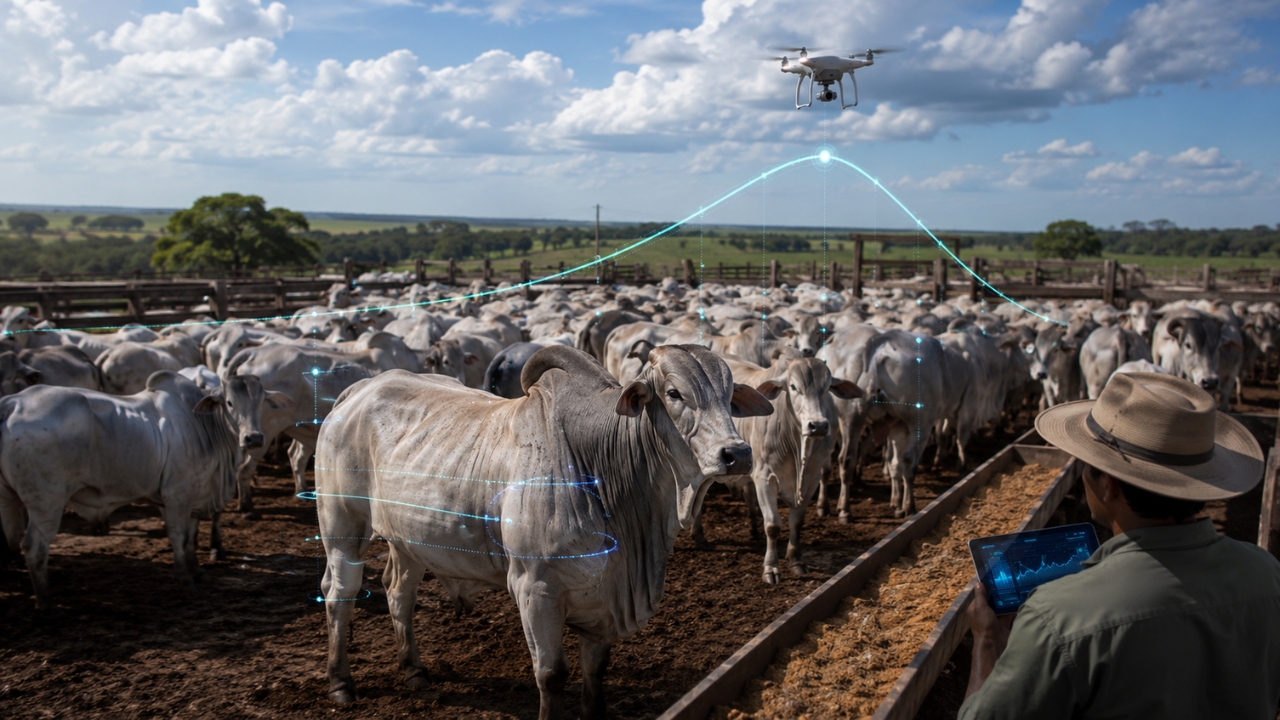
Drones fly over the confinement at 15 meters high, capture images of the cattle, and an AI extracts body measurements without contact. The system identifies the exact point at which the animal stops converting feed into weight efficiently.
Brazilian researchers have developed a technology that promises to revolutionize beef cattle farming in the country: a system that uses drones and artificial intelligence to determine, with unprecedented precision, the ideal moment for slaughtering each batch of confined cattle, without the need to restrain, stress, or even touch the animals.
The study was published by the Semear Digital project, linked to Embrapa Digital Agriculture, in Campinas (SP), in the scientific journal Computers and Electronics in Agriculture, one of the most respected in the world in the field of technology applied to agribusiness.
The problem that livestock faced for decades
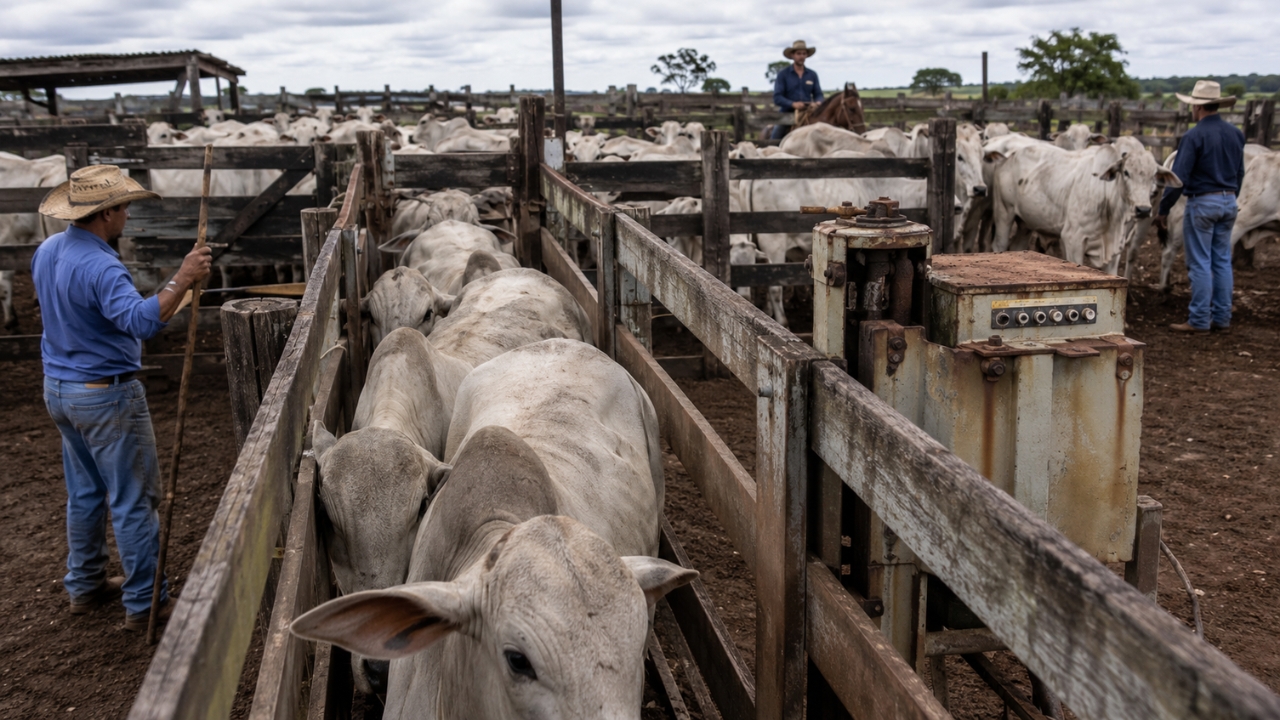
According to researcher Jayme Barbedo, from Embrapa Digital Agriculture, the traditional weighing model has serious flaws: it requires intensive handling, exposes animals to the risk of bruises, and frequently suffers from scale malfunctions. In practice, as detailed in the study, confinements could go more than a week without measuring the herd’s weight gain rate, making decisions based on estimates rather than real data.
-
At 35, Lawyer Leaves Corporate Career to Turn 1-Hectare Farm into Organic Supplier for Schools in Southern Brazil

-
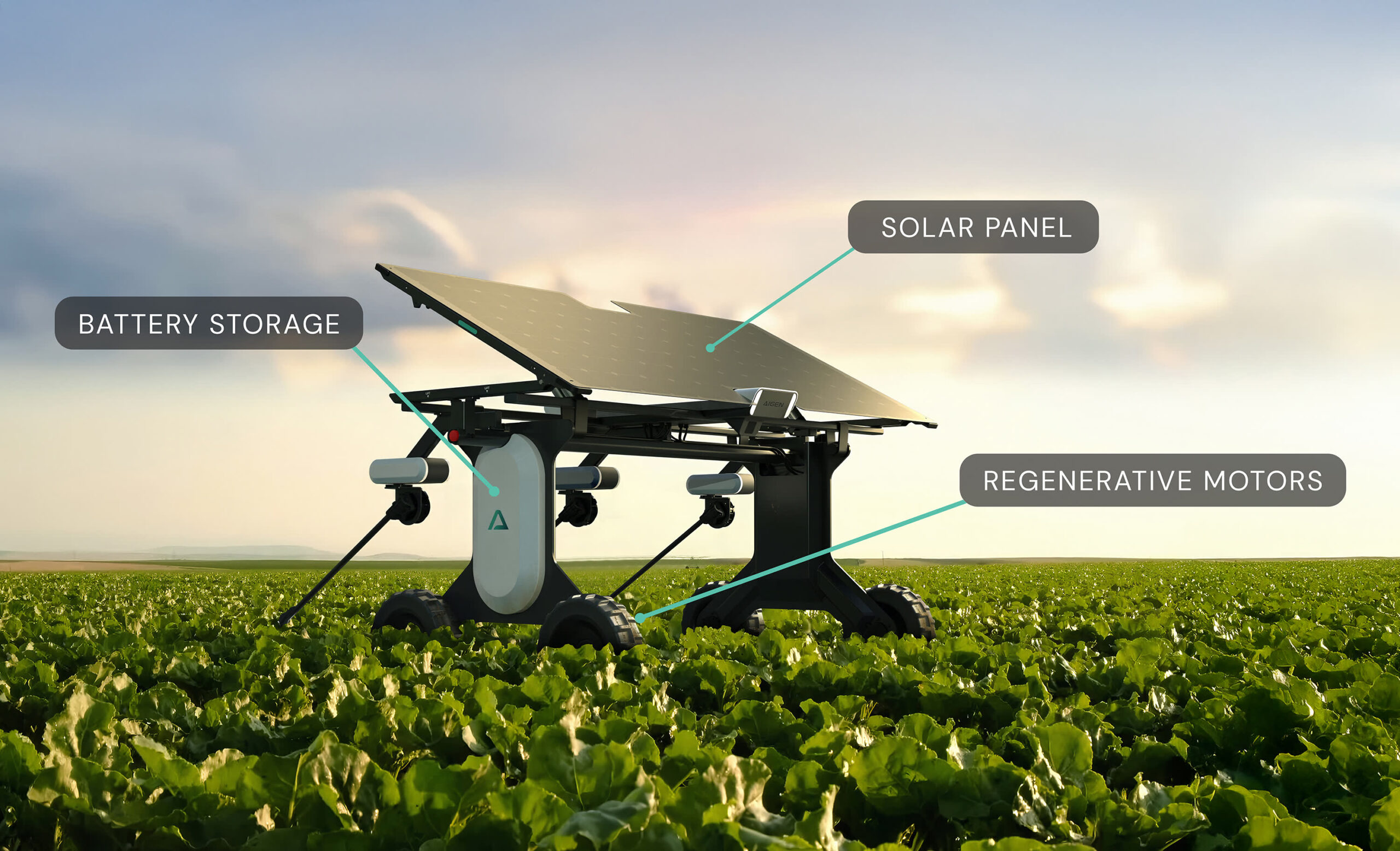
Solar-powered agricultural robots operate 24/7, remove weeds with 8mm precision, and aim to cut herbicide use without fuel consumption in the fields.

-
Brazilian Farmer Invents Low-Cost Tractor Using Motorcycle Parts, Efficiently Working 2 Acres on 1 Liter of Diesel

-
Regenerative Farmers Use Keyline Plow to Improve Pasture Hydration, Storing 1 Gallon of Water Every 30 Centimeters



This delay has a high cost. According to researcher Everton Tetila, from the Federal University of Grande Dourados (UFGD) and coordinator of the research, the difference of just one day in the slaughter moment can represent significant losses in feed and management costs, especially in large batches.
How the drone system with AI works
The system was tested at Fazenda Campanário, in Laguna Carapã, Mato Grosso do Sul, monitoring a batch of 110 Nelore breed animals over 112 days of confinement.
According to BeefPoint, drones conducted regular flights over the confinement at different heights, with 15 meters of altitude being considered the ideal distance to capture images without causing stress to the animals. “The animals didn’t even notice they were being weighed”, stated Eduardo da Silva Alves, traceability analyst at the farm.
From the aerial images, as described by Portal Campo Vivo, artificial intelligence models identify each cow individually, automatically crop and segment the animal’s body, and extract body measurements such as length and width. The algorithm also automatically discards animals that are lying down or at an unfavorable angle, ensuring a more accurate average weight gain for the batch.
The “inflection point”: the secret worth millions
The central concept of the discovery, according to researcher Tetila to Portal Campo Vivo, is the so-called “inflection point”: the moment when the animal reaches its maximum weight gain rate and, from then on, starts converting food into weight less efficiently.
“The animal gains little weight at the beginning, during its adaptation phase, then enters a phase of accelerated gain and, in the end, there is a deceleration that is no longer economically advantageous”, explained Tetila, as reported by BeefPoint. Identifying this point accurately is what the system can now do automatically and continuously, without interrupting the confinement routine.
Savings of R$ 2 million on a single farm
The practical results are significant. According to BeefPoint, the system identified that the tested animals were ready for slaughter up to a week earlier than traditional methods would indicate. In this batch of 110 heads alone, the estimated savings on feed reached R$ 15,000.
As Fazenda Campanário has approximately 14,600 confined cattle, according to BeefPoint, the efficiency gain could reach R$ 2 million if the system were applied to the entire herd. Jefferson de Andrade Parra, livestock manager at the farm, described the solution as “fantastic” and stated that he had never seen drones used for this purpose.
The impact that may reach the supermarket
The logic is straightforward: fewer days of unnecessary feed means lower production costs. And lower production costs pave the way for more competitive prices throughout the entire chain. As researcher Tetila stated to Portal Campo Vivo, “if you can identify the ideal slaughter time, it’s possible to reduce production costs and even contribute to lowering the price of meat”.
The same system also has the potential to detect anomalous feeding behavior and stress situations in the herd, such as disputes between animals that result in injuries and performance drops.
A commercial partner is still missing
Despite the promising results, the project has not yet reached the market. According to Barbedo, as published by Portal Campo Vivo, “we are close to a functional prototype, but a partner is still needed to turn this into a commercial product”. The next steps include adapting the model for other breeds besides Nelore, such as Angus and Brahman, and validating the system on a wide commercial scale.
The technology that can change the price of meat in Brazil already exists. What is missing now is the final step to implement it on the country’s farms.