Portuguese
  Spanish


Organic production in Ibiporã supplies school meals after lawyer leaves corporate career and invests in greenhouses, crop rotation, and direct sales.
At 35 years old, lawyer Émerson Amorim swapped the routine of meetings and commercial targets for the cultivation of vegetables on the family property in Ibiporã, Paraná. Since leaving his position as a manager at an automotive elevator company in 2023, he has structured an organic production in Ibiporã that now allocates about 70% of the food to school meals in Ibiporã and Jataizinho.
The professional change transformed an area of just over one hectare, previously used by his parents only for family consumption, into a venture with greenhouses, organic certification, and different marketing channels.
Tomatoes have become the main product of the property, with about 6,000 kilos harvested per greenhouse in each of the two annual cycles. Cucumber, bell pepper, lettuce, chives, zucchini, and more recently, pitaya, complete the production.
-
Solar-powered agricultural robots operate 24/7, remove weeds with 8mm precision, and aim to cut herbicide use without fuel consumption in the fields.

-
Brazilian Farmer Invents Low-Cost Tractor Using Motorcycle Parts, Efficiently Working 2 Acres on 1 Liter of Diesel

-
Regenerative Farmers Use Keyline Plow to Improve Pasture Hydration, Storing 1 Gallon of Water Every 30 Centimeters

-
Bicolor Pumpkin Resembling Hand-Painted Art Discovered by Brazilian Researchers in the Capital Due to “Spontaneous Mutation”


School meals ensure a destination for most of the harvest
One of the main challenges faced by Émerson was not in planting, but in finding buyers for the food produced without chemicals. To ensure the production’s outlet, he sought public programs such as the Food Acquisition Program (PAA) and the National School Feeding Program (Pnae).
Currently, approximately seven out of ten foods harvested on the property go to schools in the municipalities of Ibiporã and Jataizinho. The rest is sold by distributors or delivered directly to consumers through orders made via WhatsApp.
The presence of products in school meals also created a personal connection with the farmer’s family. Émerson is married to Aline, 35, and father to Pedro, ten, and Samuel, five. “When we deliver to my son’s school, he says: ‘My daddy produces organic food, it has no poison.’ It is very gratifying,” he reports.
Although organic farming requires changes in the way of caring for the land, Émerson considers that the greatest insecurity for the producer is in sales. “The biggest concern for the producer, when becoming organic, is not the management, but the commercialization. I will become organic and sell to whom?” he questions.
The search for buyers began along with the transformation of the property. For the venture to become financially viable, it was not enough to increase the harvest: it was necessary to build a network capable of absorbing the products.
Public feeding programs, distributors, and direct deliveries began to play different roles within this strategy.
Main channels used by the property
- Food Acquisition Program;
- National School Feeding Program;
- supply to schools in Ibiporã and Jataizinho;
- sales through distributors;
- direct delivery organized via WhatsApp.
This combination reduces dependence on a single buyer and allows the production to find different destinations throughout the agricultural cycles.
Small scale led to the choice of organic farming
The property has just over one hectare, a size that would make it difficult to compete directly with larger-scale conventional producers. Faced with this limitation, Émerson decided to seek differentiation and added value through organic foods.
The strategy was not to produce large volumes at any cost, but to make better use of the available area and offer products cultivated with practices aimed at preserving the soil and the environment.
The greenhouses were an important part of this transformation. The structure protects the crops and allows for a larger quantity of food to be harvested in smaller spaces.
Tomato yields 6 thousand kilos per cycle in each greenhouse
Among all the products cultivated, the tomato occupies the central position in the business. Each greenhouse produces approximately 6 thousand kilos per cycle, and the property carries out two cycles per year.
In addition to tomatoes, organic production in Ibiporã includes:
- cucumber;
- bell pepper;
- lettuce;
- chives;
- zucchini;
- pitaya.
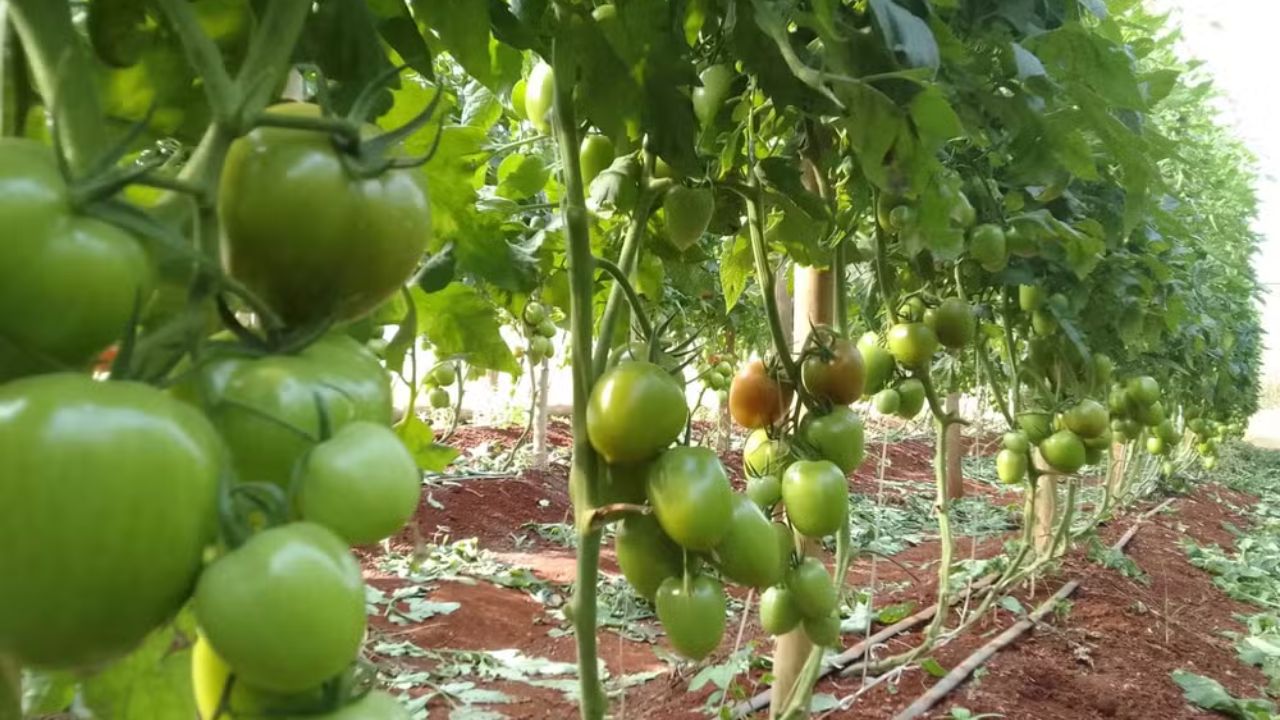
Diversification allows for crop rotation, distributing production over different periods, and meeting buyers interested in more than one type of food. The recent investment in pitaya also expands the property’s possibilities beyond the vegetables that were already part of the routine.
Crop rotation helps protect the soil
The absence of chemical products requires a different approach to dealing with pests, diseases, and land conservation. Émerson uses crop rotation, alternating the planting of tomatoes, cucumbers, zucchini, and peppers.
This practice prevents a single species from remaining continuously in the same area and helps preserve soil conditions. For the producer, organic farming cannot be defined solely by the removal of chemical products.
The process also involves the responsible use of water, maintaining biodiversity, and the presence of vegetation cover. These measures help conserve moisture, reduce erosion, and maintain greater balance in the productive environment.
Change also transformed family practices
The adoption of the new model required a revision of old habits on the property. Émerson reports that his father was used to a form of cultivation where any spontaneous vegetation had to be removed and the soil needed to remain completely clean.
“My father comes from an older generation, who was used to chemicals, to weeding. He couldn’t see a weed, he already wanted to leave the soil clean. But today we see that it’s not like that,” he says.
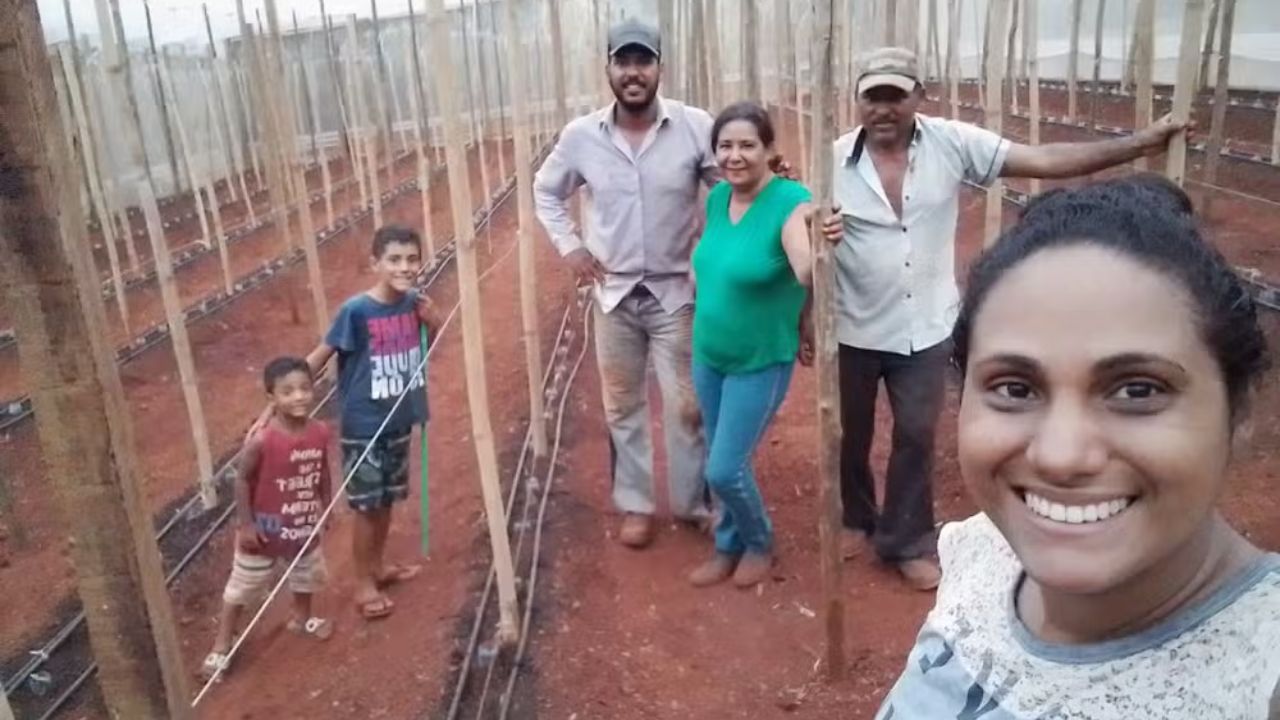
In the organic farming adopted by the family, vegetation and soil cover begin to fulfill functions within the area’s balance. The change shows that the transition depends not only on the exchange of inputs but also on a new understanding of the property’s functioning.
Technical support accompanied the transition
The implementation of organic production in Ibiporã received guidance from the Paraná Rural Development Institute, IDR-PR. The technical support assisted the family during the change of the production system and in adopting the necessary practices for organic cultivation.
The property also has certification granted by Tecpar and the Paraná Mais Orgânico program. The certification formalizes the adopted model and allows the food to be marketed as organic through the channels used by the enterprise.
Before taking over the property, Émerson worked in the corporate sector as a commercial manager for an automotive elevator company. With a degree in law, he decided to leave the job in 2023 and direct his work towards the family land.
His routine changed from a series of meetings to an activity he describes as more solitary, but carried out in a family environment and directly linked to food production.
“Because I am working in a family environment, producing food, I think it was the best decision I ever made,” he summarizes. The choice also allowed the producer to closely follow the destination of the harvest, including when the food reaches the school attended by his own son.
Family production gained commercial purpose
Before Émerson’s involvement, his parents cultivated food mainly for household consumption. The first mission of the new venture was to make the area generate income.
The greenhouses, certification, public purchasing channels, and direct sales transformed a domestic production into an organized commercial activity. The experience shows that a small area can find space in the market when it combines differentiation, planning, and access to buyers.
In the case of organic production in Ibiporã, most of the harvest also began to fulfill a social function: supplying meals for students in two municipalities in Paraná.
By swapping the office for the field, Émerson not only changed professions. He transformed the family property into a certified, diversified business connected to the region’s school meals.
With information from Globo Rural