Portuguese
  Spanish


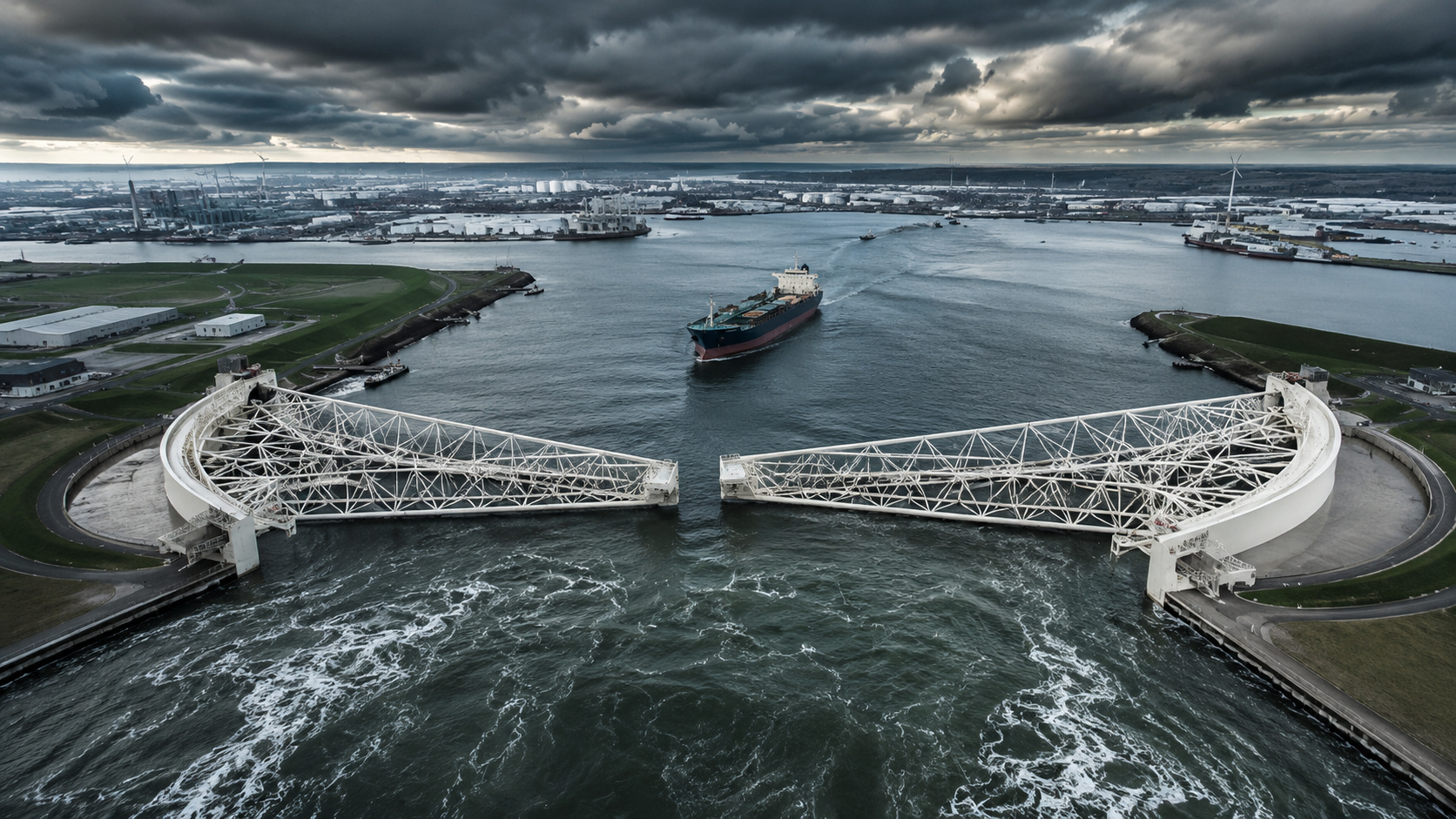

Maeslant Barrier protects Rotterdam from extreme tides, keeps the channel open for cargo ships, and only blocks passage in case of real flood risk, balancing safety and navigation
Two giant floating structures are positioned on the banks of a channel leading to the port of Rotterdam, in the Netherlands. The Maeslant barrier remains open most of the time but can close the passage when an extreme tide threatens to advance inland.
Rijkswaterstaat, the Dutch water management and infrastructure agency, reports that the structure was designed to block the sea’s entry without interrupting navigation during normal periods. The gates only occupy the channel when there is a risk of a dangerous water level rise.
The solution protects areas of the South Holland province and keeps the passage of ships free while there is no threat. The barrier does not prevent all flooding, as it acts in specific events related to the sea’s force.
-
Chinese Ship Elevator Lifts Vessels 113 Meters in 40 Minutes, Bypassing Five Locks

-
Wooden Ship Lost Under Antarctic Ice for 107 Years Found Nearly Intact at 3,008 Meters Depth, Filmed by Robots Without Human Contact
-
Japanese Ship Transforms into Floating Lab, Drills 7,740 Meters Below Sea to Study Earthquake Zones
-
Ships Use Bubble Technology Under Hulls to Reduce Water Resistance and Lower Emissions

How the giant gates of the Maeslant barrier close the channel
The Maeslant barrier has two steel gates, each 210 meters wide, 22 meters high, and 15 meters deep. On regular days, they remain apart from each other, close to the banks of the channel.
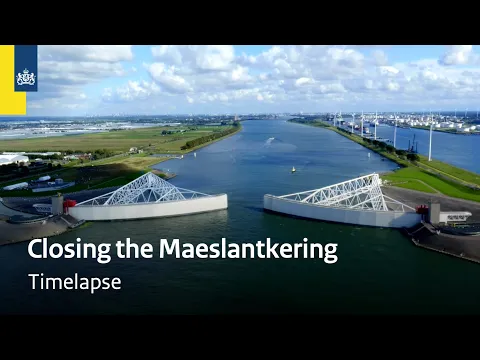

When closure is necessary, the structures move until they meet in the middle of the water. Then, they take in water and descend to the bottom, forming a barrier against the tide’s advance.
This entire process takes up to two hours. The gates do not function as a fixed wall, as they need to clear the route used by vessels heading to the port of Rotterdam.
Why Rotterdam needs a barrier against the sea
Rotterdam is located in an area where seawater can advance through the channels during storm and very high tide situations. The risk increases because part of the Netherlands is in a low-lying region, connected to rivers, channels, and the North Sea.
The Maeslant barrier was built near Hoek van Holland between 1991 and 1997. It is part of a set of protective works that also includes the Hartel barrier and the expanded Rozenburg dike.
The system has a clear function: to prevent a large mass of water from entering the channel that connects the North Sea to the port of Rotterdam. The structure was closed for the first time in 2007.
Open port and protected city require the same structure
A fixed barrier would prevent the circulation of cargo ships throughout the year. This would create a problem for a route used by ships arriving and departing from the port of Rotterdam.
The floating gates solve this dilemma because they stay out of the way most of the time. Navigation continues normally as long as the forecast does not indicate an extreme tide.
When the risk appears, the priority shifts to water protection. The barrier closes the channel for a limited period, reducing the chance of the sea advancing into areas that need to be defended.
When the Maeslant barrier comes into action
The automatic closure begins when the forecast indicates water above 3 meters above NAP near Rotterdam or above 2.9 meters above NAP near Dordrecht. The NAP is a height reference used in the Netherlands and is close to the average level of the North Sea.
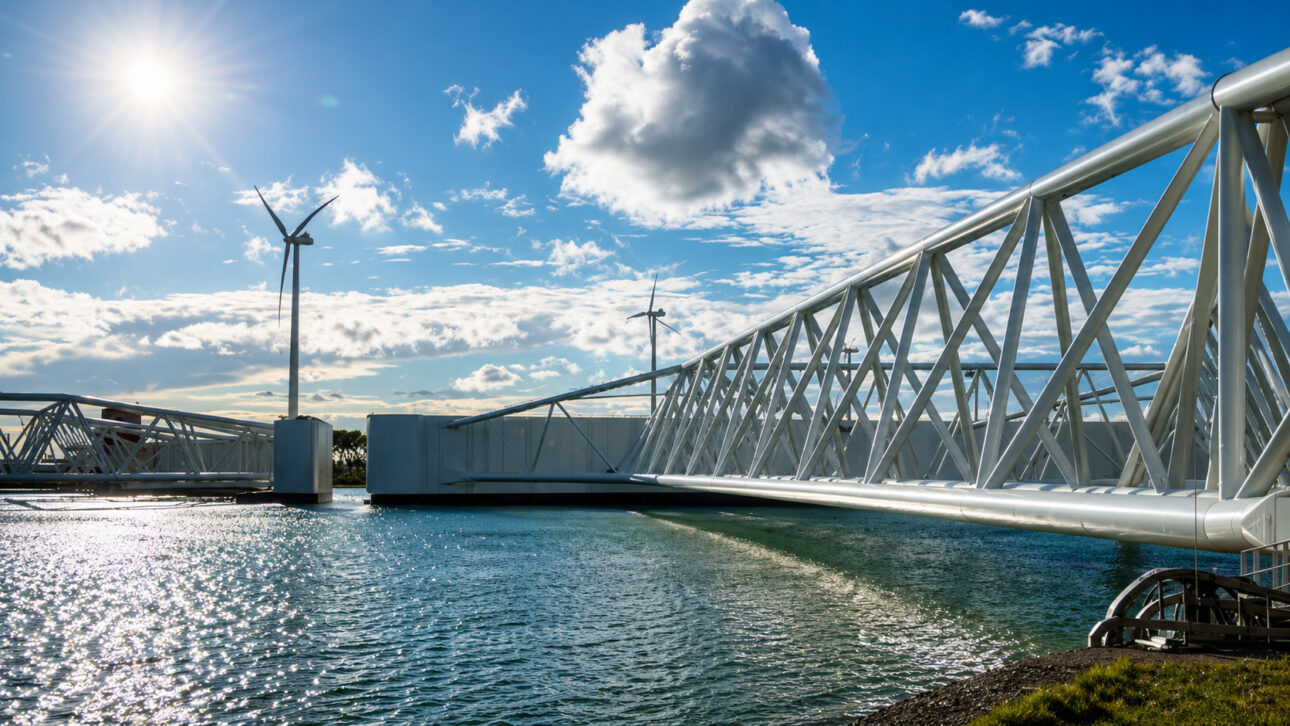
The system does not need a manual order to start operating. Even so, a team monitors the closure and can act if necessary.
The barrier was designed to withstand a tide of up to 5 meters above NAP. This limit shows that the structure was not created for routine closures, but for situations where the sea poses a greater risk to the region.
Tests keep the gates ready for an emergency
The gates undergo tests every year. These closures help verify whether maintenance has been done correctly and if the equipment can respond when a storm requires quick action.
Rijkswaterstaat, the Dutch agency for infrastructure and water management, administers and maintains the Maeslant barrier, with inspections, repairs, and replacement of parts when necessary.
The testing routine is important because the structures need to move at the right time, close the channel, and descend to the bottom without failing. Outside of these situations, the gates remain open to keep maritime traffic functioning.
The Maeslant barrier shows how a structure can protect a coastal region without permanently blocking a route used by large ships. The two gates are almost hidden on the banks but can change the water’s path when the risk increases.
The case of Rotterdam also makes it clear that flood defense and port activity can work together, as long as the structure is designed to act only when it really needs to.
Do you believe that a movable barrier like this could help Brazilian port cities face extreme tides without hindering the arrival of ships? Leave your opinion in the comments and share this report.