Portuguese
  Spanish


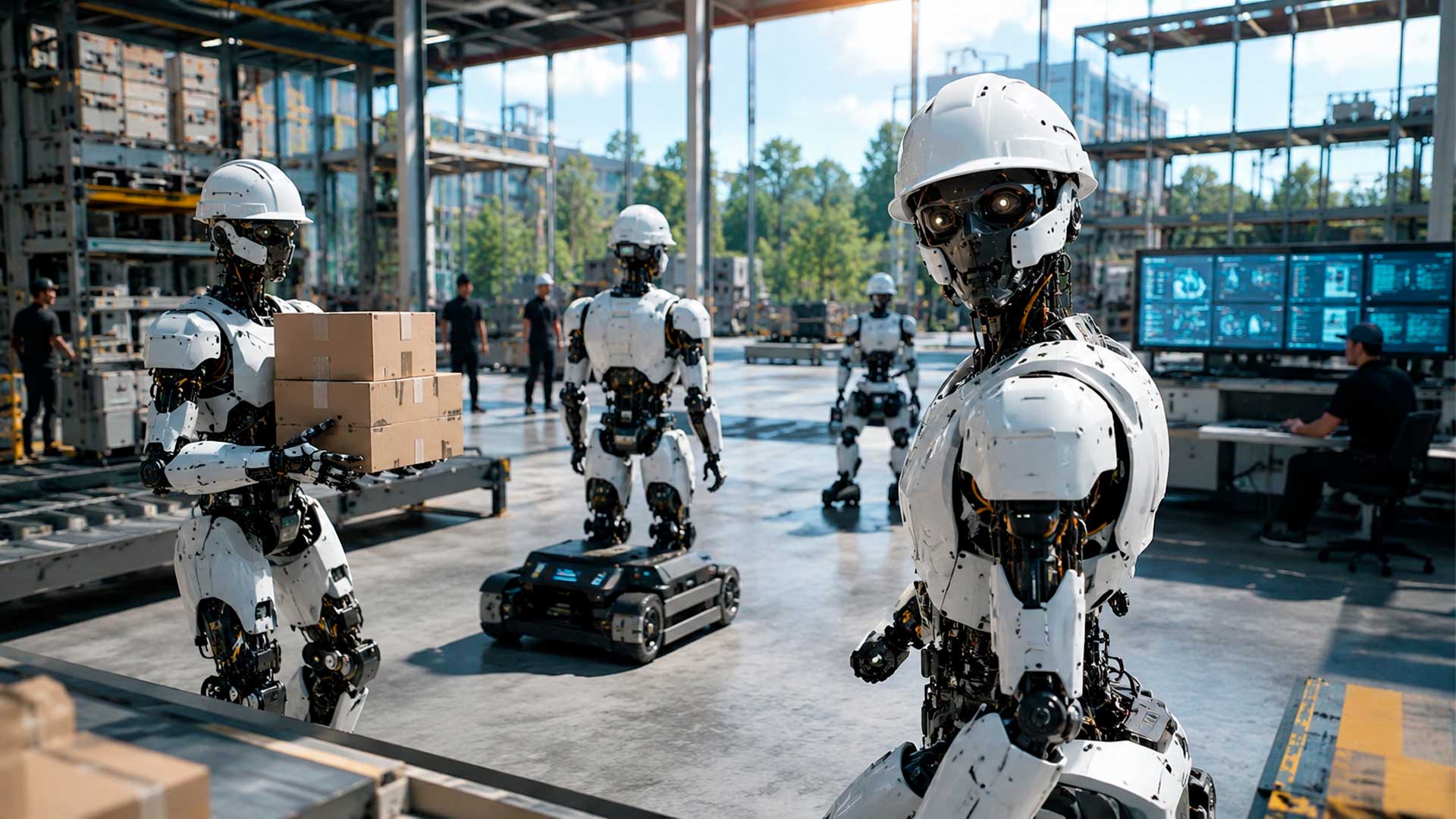

Apptronik opened in Austin, Texas, a structure almost the size of a football field to train humanoid robots in real logistics, industry, and retail tasks. The Robot Park uses the Apollo 2, the company’s new version of the robot, to generate physical data that feeds artificial intelligence models developed in partnership with Google DeepMind.
The American company Apptronik inaugurated a training center for humanoid robots in Austin, Texas, with a clear goal: to take these machines out of controlled demonstrations and bring them closer to real work in factories, warehouses, and distribution centers.
Called Robot Park, the space is almost 90,000 square feet, equivalent to about 8,300 square meters, and was created to collect data from physical tasks performed by robots. The information was published by Exame on July 1, 2026, based on data initially disclosed by The AI Insider.
At the site, Apollo 2 robots move boxes, sort items, transport materials, and repeat common actions in industrial environments. Part of the operations occurs autonomously, while another part is guided by human operators through teleoperation.
-
Volunteer in London Discovers Rare Copy of U.S. Declaration of Independence Missing for Nearly 250 Years

-
16 Children Found in Ohio Home in Shocking Conditions, Authorities Investigate How It Went Unnoticed for Years
-
Researchers Discover Ancient Indigenous Earthworks Under U.S. Forest, 10 Times Larger Than Previously Thought
-
Designer Transforms Discarded Eggshells into Shape-Shifting Modular Lamp


The difference lies in the final goal. Each error, adjustment, arm movement, attempt to pick up an object, or route deviation becomes data to train the artificial intelligence that controls the robot.
The Robot Park functions as a data factory for humanoid robots
Apptronik describes the Robot Park as its main collection and training facility for humanoid robots. The structure in Austin also serves as a base for a larger network of similar locations at the company’s clients and partners.
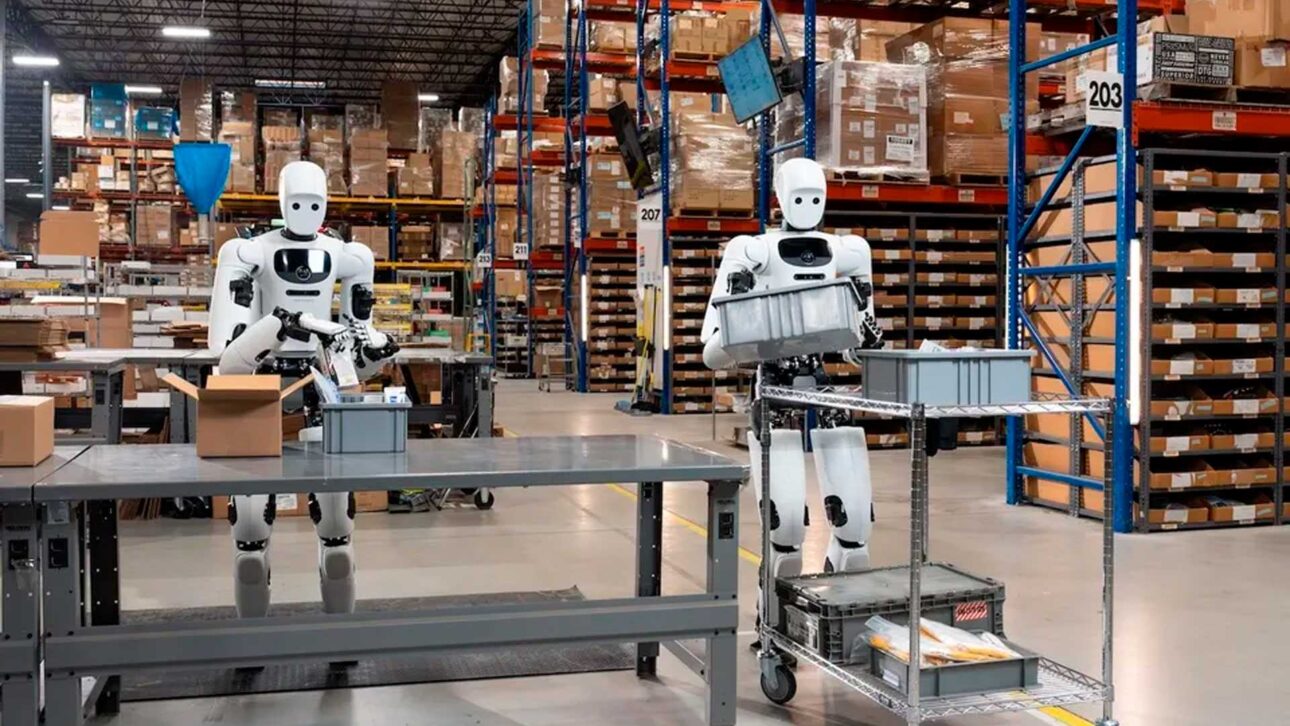
According to Apptronik itself, the Apollo 2 operates in two configurations. One is bipedal, with legs, aimed at more complex environments. The other uses a wheeled base, a format easier to adapt to current industrial safety standards and existing operations in warehouses and factories.
This choice highlights a practical point of current robotics. The robot with legs draws more attention, but the wheeled version may be simpler to operate in places where the floor is regular, corridors are defined, and tasks are repeated throughout the shift.
The center was not created just to show the robot working in front of cameras. Its function is to expose the Apollo 2 to repeated routines, different objects, obstacles, failures, and small variations that appear outside the laboratory.
Why a robot needs physical experience to learn
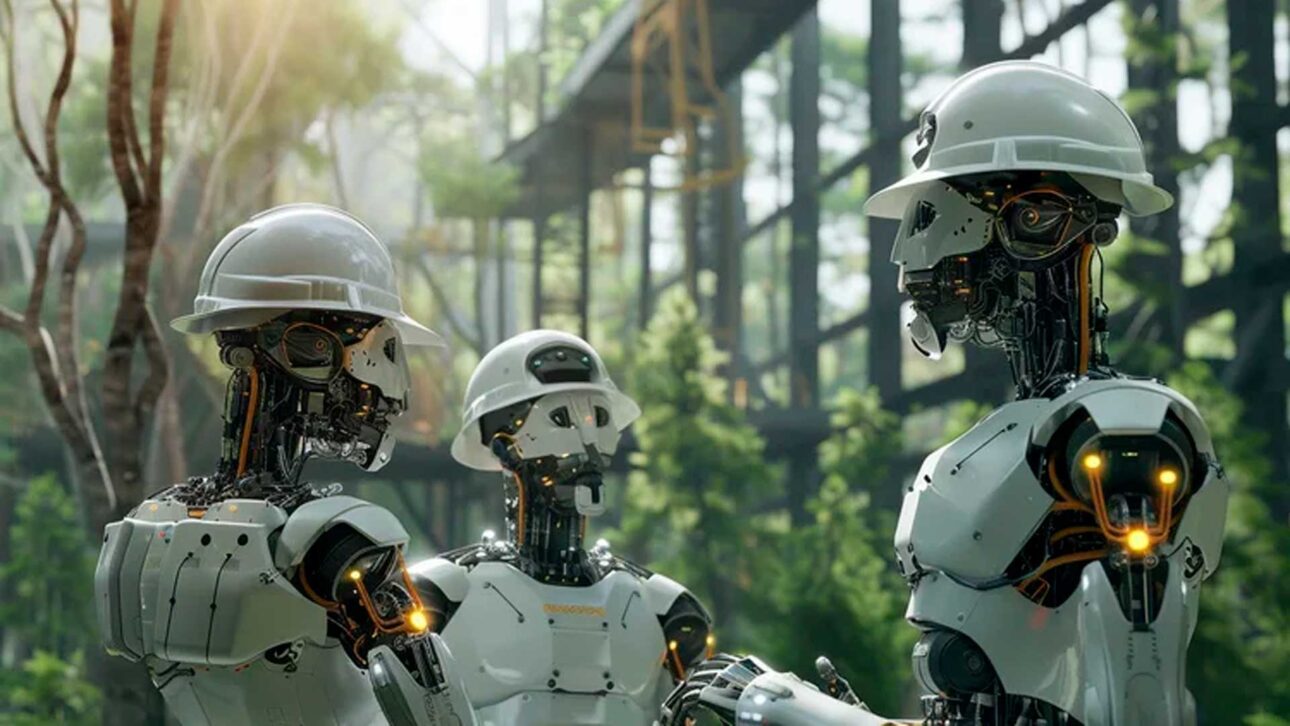
Artificial intelligence models used in text, image, and video are trained with large volumes of digital data. In robotics, the problem is more difficult. A humanoid needs to deal with weight, friction, balance, force, distance, texture, lighting, and objects out of position.
That’s why physical training is so important. A robot can learn in simulations, but reality often brings situations that the computer does not accurately predict. A box gets crushed, a piece slips, a wheel locks for a few seconds, a shelf becomes crooked, a person crosses the path.
Data collection at Robot Park tries to reduce this gap between the simulated environment and the factory floor. The Apollo 2 records what works and what fails in real tasks, while AI systems are adjusted to respond better on the next attempt.
Google DeepMind also enters this stage. Google’s AI division reports that it is working with Apptronik to develop the next generation of humanoid robots with Gemini Robotics, a family of models aimed at machines that need to interpret the environment and perform physical actions.
Apollo 2 is still a training stage before the commercial version


The Apollo 2 is the version currently used as a learning platform. It serves to test hardware, software, teleoperation, autonomy, and safety before the arrival of Apollo 3, the future commercial version planned by Apptronik.
According to Reuters, the company presented the Robot Park and Apollo 2 on June 30, 2026, stating that the facility was developed with Google DeepMind to accelerate the transition from pilots to production applications. The agency also reported that Apptronik raised $520 million in February 2026 and was valued at about $5 billion.
The company already maintains commercial agreements and tests with names like Mercedes-Benz and GXO, two important partners to validate use in manufacturing and logistics. These sectors are the first targets because they concentrate predictable, repetitive, and physically demanding tasks.
Even so, large-scale adoption is not expected to happen all at once. The robot needs to prove it can operate safely near people, endure long shifts, handle failures, and justify the cost compared to already established industrial machines.
The humanoid race has moved from demonstration video to the warehouse
The Robot Park appears at a time when several companies are trying to turn humanoid robots into commercial products. Tesla, Figure AI, Agility Robotics, and other companies are competing for space in factories, logistics centers, and retail operations.
The bet is simple to understand. Instead of adapting each warehouse for specific machines, a humanoid could navigate environments made for people, reach shelves, use doors, lift boxes, and operate at existing workstations.
In practice, there are still limitations. Humanoid robots are expensive, require maintenance, depend on reliable software, and must adhere to strict safety rules. There is also debate about the impact on employment, especially in repetitive functions in logistics, product sorting, and stocking.
The new point is that Apptronik is investing in training infrastructure, not just the robot itself. This indicates a shift in the sector: those who can generate more real data, with quality and safety, can train more useful machines for commercial operations.
The advance may first reach logistics, industry, and retail
The trend is that the first uses of Apollo and other humanoids will appear in support tasks. Sorting products, moving boxes from one point to another, stocking lines, organizing items, and executing routines with a low degree of critical decision are among the most likely paths.
It does not mean that robots will replace entire teams in the short term. The most realistic scenario is gradual use, with humans supervising, correcting failures, and taking on tasks that require judgment, improvisation, or direct contact with customers.
Apptronik attempts to solve precisely this bottleneck. The Robot Park creates an environment where the Apollo 2 can make mistakes, repeat, correct, and produce data before being deployed to clients with higher operational pressure.
If the model works, the next robotics competition will not only be about who builds the most beautiful or strongest humanoid. It will be about who can train robots with enough data so that they can work for hours in real environments without relying on a rehearsed demonstration.
The advancement of humanoid robots in factories and distribution centers still divides opinions. Do you think machines like the Apollo 2 will help workers with heavy tasks or create new pressure on operational jobs? Leave your opinion in the comments.