Portuguese
  Spanish


In the episode of Recycling Tour published by the Cleber Puerta channel, founder Leandro Diana opens the 6,000 m² of the factory and tells how the company that was born from the sale of a small motorcycle almost went bankrupt before becoming a reference
Plastic recycling has one of its most unlikely stories in the interior of São Paulo, and it was told in a video published on June 19, 2026, by the Cleber Puerta channel on YouTube. During the visit to Tecnoplast, in Terra Roxa (SP), founder Leandro Diana, partner of his brother Ulisses, shows the behind-the-scenes of an industry that processes about 350 to 360 tons of granulated resin per month and injects 27,000 pieces per day.
The starting point could not have been smaller. According to the Cleber Puerta channel, Leandro worked in telecommunications, sold his simple car and the small motorcycle he had, and with the money and the help of friends, set up a backyard plastic mill, the embryo of what would come 25 years later.
From the sold small motorcycle to the backyard mill
The company has been formally existing for 23 years, but the operation started earlier, still informal, totaling 25 years in the market, as Leandro recounts in the visit recorded by the Cleber Puerta channel. The beginning was based on the selection and grinding of material, the simplest stages of the chain.
-
The More You Love Someone, the Sleepier You Feel Around Them: Science Explains Why the Body Relaxes and Feels Safe with a Loved One

-
Kenyan Company Recycles Over 10 Million Flip-Flops from Indian Ocean Beaches into Elephant and Giraffe Sculptures Sold for Up to $1,200

-
Kenyan Brothers Recycle Old Newspapers Into 100,000 Pencils Daily, Aiming to Donate to 1 Million Children in Underprivileged Schools
-
China’s Water Project in Southern Chad Delivers Over 500 Wells and 57 Stations, Aiding Over 600,000 Residents




Nothing came easy. The warehouse was rented, the cash flow was always in the red, and the routine included looking at the super negative bank account with a heavy heart, according to the Cleber Puerta channel. It’s the kind of beginning that the current facade of 6,000 square meters of warehouses hides from those who only see the result.
The debt of R$ 1 million that almost ended the story
The rock bottom has a number and a date. According to the Cleber Puerta channel, with just a few years of operation, about 20 years ago, Tecnoplast accumulated a debt of approximately R$ 1 million without even having R$ 10,000 in assets: not even the warehouse was owned.
Leandro admits in the video that the family sat down, cried, and thought about stopping everything. What separated bankruptcy from the turnaround was not a new machine, but an administrative decision: for the first time, understanding how much the company earned, how much of it was net, and how many tons needed to be processed per month to pay the bills.
The turnaround: discovering how much the company really earned
The first concrete step in the reconstruction was hiring someone to structure the administration, set up a system, and install computers in the company, things that simply did not exist, according to the Cleber Puerta channel.
With the numbers on the table, the debt gained a timeline and a plan. The company came to know in how many years it could pay off the debt and what monthly production volume would ensure the necessary profit, in addition to selecting reliable partners to eliminate defaults. The lesson Leandro repeats in the video became the central message of the episode: those starting out should organize the administrative side before chasing volume, because without knowing their own costs, no one even knows if they are incurring losses.
Inside the 6,000 m² of plastic recycling: manual selection and optical reader
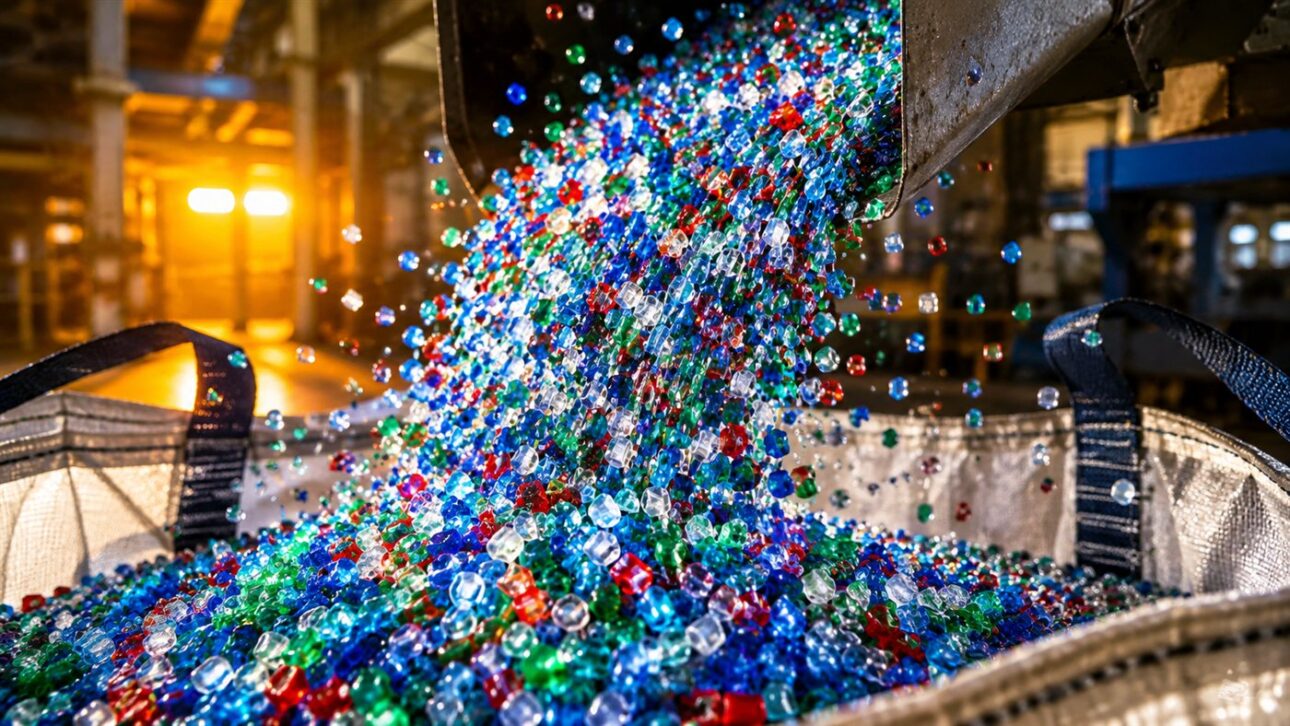
The factory tour shows a complete chain: separation, selection, grinding, washing, drying, extrusion, pigmentation, and injection, all in-house. The selection of material, interestingly, remains manual: as Leandro explains in the video, it is the option that ensures uncontaminated material, because the available optical separators still do not deliver the quality the company requires for the type of scrap it buys.
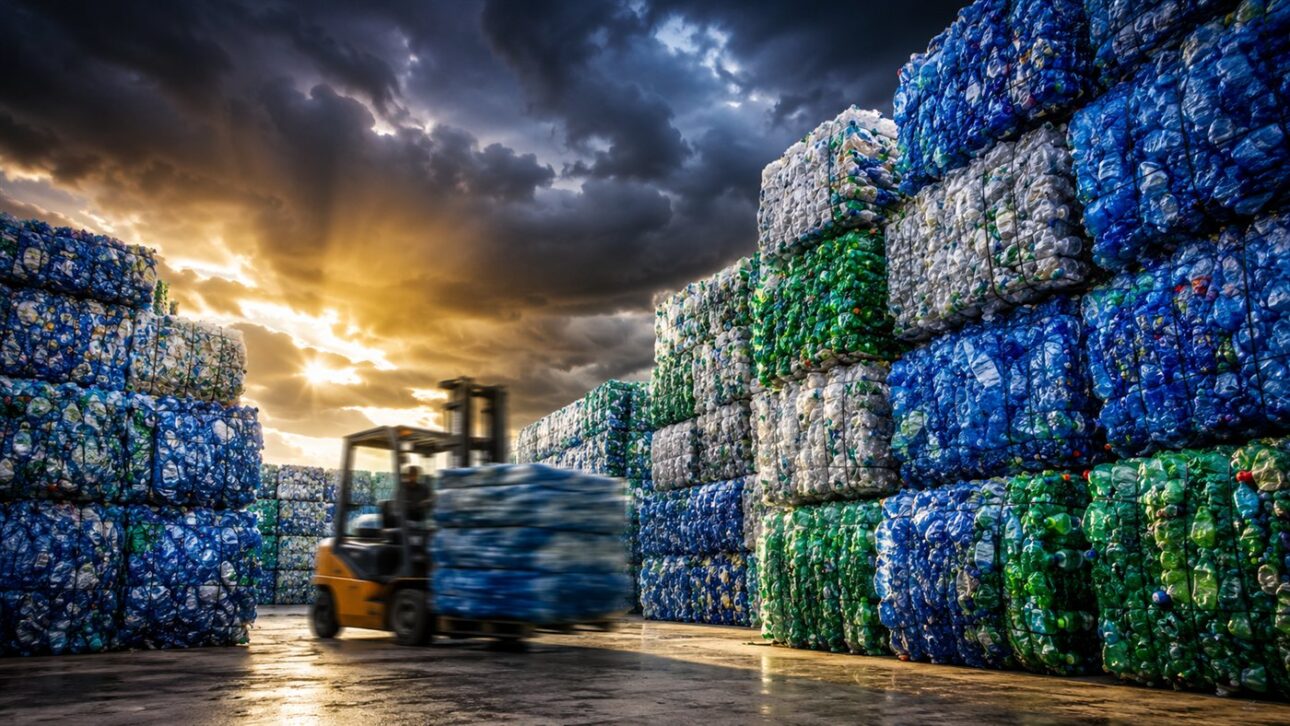
Technology is used where it pays off. A machine with an optical reader detects black and white and separates the cap and label after grinding, a task that used to be done piece by piece, by hand. In the yard, everything is concrete, with no mud or standing water, and the company only buys baled material from the region of Terra Roxa, Bebedouro, Barretos, Sertãozinho, and Araraquara, although it has even bought from Bahia when the logistics made sense.
Extrusion with science: dedicated color, laboratory, and standardized batch
In extrusion, Tecnoplast runs two cascades and two conventional extruders, with an average production of 350 to 400 kilos per hour per machine, according to the Cleber Puerta channel. Mixers that hold 2 to 3 thousand kilos homogenize the batches to eliminate the tone fluctuation that plagues recycled plastic, where no red is the same as another.
An industrial management detail makes a difference at the end of the month: machines dedicated by color, dark ones always on the same lines and light ones on others, to avoid wasting material cleaning the barrel with each change. The factory also maintains a small laboratory with flow tests to control the quality of the granulated resin that goes to the industry.
Nine injectors, one operator, and 27,000 pieces per day
The final point of the chain is the injection of proprietary products. According to the channel Cleber Puerta, there are 9 automated injectors operated by a single employee, and, running 20 hours a day, they deliver about 27,000 pieces daily.
The flagship is a niche that few imagine: cups for rubber tapping, used in latex collection, in 6 models and various capacities, sold as a complete kit for rubber extraction. Besides the pieces, the company sells PEAD and PP resin for injection and blow molding, in natural, milky, blue, green, and black colors, with pink, yellow, and red in polypropylene.
360 tons per month and the decision not to grow at any cost
The current numbers give the dimension of the recovery: 350 to 360 tons of granulated resin per month, with an estimated capacity to reach 500 tons with small expansions, as Leandro reports in the video. About 30% of the production supplies the company’s own injection line, and the rest goes to the market.
The strategic choice draws attention in a sector addicted to volume. Instead of rushing to 500 tons, the company prefers to verticalize and capture margin in the final product, keeping the operation smooth, licensed by CETESB and Sabesp, with a hydrant system and everything up to date. The focus, the word Leandro repeats the most, is the same rule that got him out of debt: doing 100% well before taking the next step.
The episode also records a cultural trait that explains a lot: the owners still wear boots on the factory floor, alongside the employees. If sweeping is needed, they sweep; if operating a forklift or truck is needed, they operate. In a sector where informality is still the rule, the combination of present owner, organized management, and up-to-date licenses has become the house’s competitive edge.
For those starting in scrap, the standard that the video leaves is objective: find out how much you earn, how much it costs to produce, and how much is left net, even if it’s in a notebook. It was this discipline, not a miraculous machine, that transformed an indebted backyard mill into an industry that supplies the national resin market.
Watch the complete visit to Tecnoplast in video
Episode 7 of the Recycling Tour, with the complete tour of the 6,000 m² factory and the conversation about the debt, the administrative turnaround, and the business model, is on the Cleber Puerta channel on YouTube.


In the end, here’s the message Leandro would send to himself 25 years ago: nothing is easy, but it’s in administration that many companies make or lose money without realizing it. Tell us in the comments: how many plastic recycling businesses do you know that went bankrupt for not knowing their own costs?