Portuguese
  Spanish


Video from the Terran Works channel shows the production line of Momo Pencils in Nairobi: a double newspaper page yields 3 pencils, the process has 9 steps, and the final product costs 3 times more than the imported one from China, but supports salaries well above the minimum
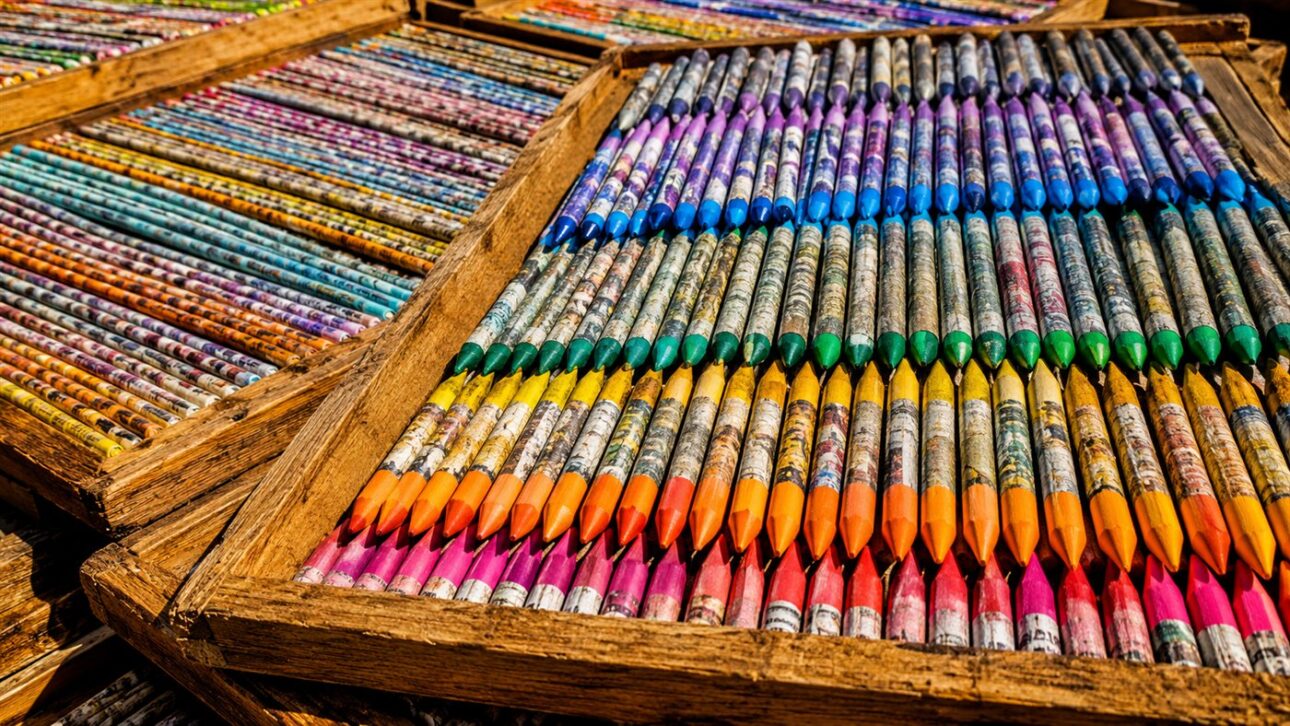
The newspaper pencil went from makeshift to industry in Kenya. In a video published on July 2, 2026, the Terran Works channel on YouTube shows how Momo Pencils, founded by two brothers in 2017, transforms old newspapers into real pencils, in a circular economy model that already inspires attention worldwide, including those considering recycling in Brazil.
The scale of the problem explains the business. According to the Terran Works channel, paper represents about 11 to 12% of Nairobi’s urban household waste, a city that generates 2,000 to 2,500 tons of waste per day. Buried in the landfill, this paper rots without oxygen and releases methane, a potent greenhouse gas, and it is exactly this fate that the pencils prevent.
The problem: tons of paper per day heading to the landfill
In Kenya, the printed newspaper still plays a central role because not everyone has regular internet access, according to the Terran Works channel. The consequence is a constant flow: newspapers read today become trash tomorrow, adding to the hundreds of tons of paper the capital discards daily.
-
China’s Water Project in Southern Chad Delivers Over 500 Wells and 57 Stations, Aiding Over 600,000 Residents

-
Frustrated by Floods Damaging His Power System, Brazilian Man Builds His Own Dam and Micro-Hydroelectric Plant to Live Off-Grid

-
7,500-Year-Old Salt Production Traces in Bosnia Uncover Rare Prehistoric Technology and Shed Light on Food History

-
Man Discovers 2,000-Year-Old Roman Cistern with Drone in Brazil




It was in this mountain of paper that the founders of Momo Pencils saw raw material. The question that changed everything was simple: what if the pencil body, traditionally made of wood, was made of newspaper? The answer required developing a unique industrial process because a thin sheet of paper needs to be as hard as wood, comfortable in the hand, and good for writing.
A double newspaper page becomes 3 pencils
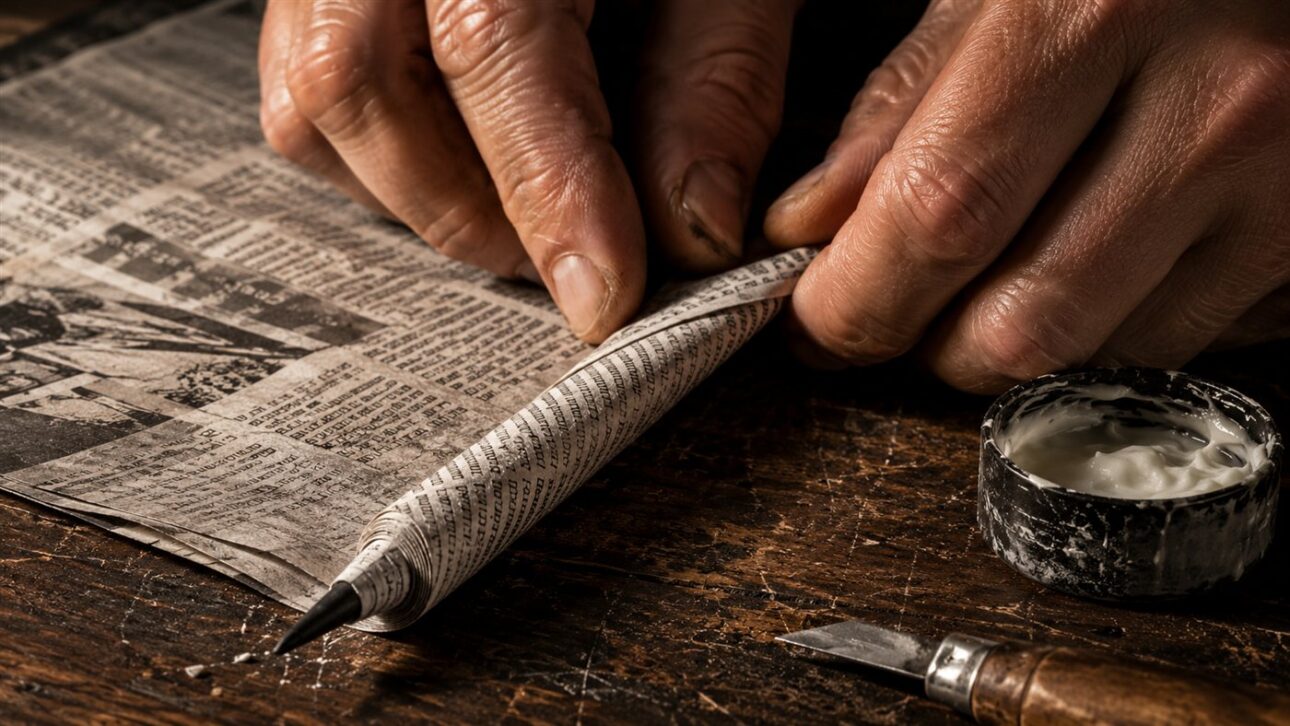
The mathematics of production is straightforward. According to the Terran Works channel, a double newspaper page yields about 3 pencils, and nothing is wasted along the way: the paper scraps from the cut become filling material, filling the gaps between the rolled layers and the graphite core.
The graphite, by the way, is the only raw material the company cannot purchase locally. Everything else is Kenya: the newspaper, the glue, the labor, and even the sun. After being rolled in the machine, the pencil rods dry in the open air, taking advantage of the country’s warm climate as a natural oven, a detail that cuts energy costs from the production line.
The nine steps that harden paper like wood
Transforming newspaper sheets into writing wood requires a method. According to the Terran Works channel, each pencil goes through about 9 steps, from cutting the paper to the right size to gluing, rolling, drying, and finishing.
The technical secret lies in the wood glue. It welds the paper layers to each other and gives the pencil body the rigidity and feel similar to wood. The dosage is the critical point: too much glue and the pencil takes a long time to dry, too little glue and the body does not gain firmness, a balance that workers master with practice. The graphite core is positioned on the sheet, fixed with glue, and rolled by a lamination machine.
From 500 to 100,000 pencils per day
The scale leap is the most impressive part of the story. According to the Terran Works channel, when it started in 2017, Momo Pencils produced about 500 pencils a day. With the automation of various stages, the capacity can reach 100,000 pencils a day.
It’s a two-thousand-fold increase in production capacity, built in less than a decade. Automation did not replace manual work, but rather multiplied what each worker can deliver, maintaining labor-intensive local production, which is part of the business’s purpose.
The pencil 3 times more expensive that competes with the imported one from China
Not everything is an advantage with recycled paper. According to the Terran Works channel, the newspaper pencil can cost about 3 times more than the common pencil, which Kenya mainly imports from China. For the stationery store owner, the math is cruel: why pay more if the imported one costs just a few shillings?
It is the classic contradiction between green products and low-price markets, and Momo Pencils responded with a commercial strategy. Instead of fighting for price on the shelf, the company targets strategic clients: companies, schools, organizations, and brands that value environmentally responsible production and the made in Kenya label. It is the same dilemma that any recycled industry faces, from Kenya to Brazil: the environmental value needs to find those willing to pay for it.
Salary of US$ 15 per day: the cost that became a banner
The company’s biggest cost is not raw material, it’s people. According to the Terran Works channel, Momo Pencils pays workers about US$ 15 per day, a value significantly above the Kenyan minimum wage.
This makes the product more expensive, but defines the business model. The company not only recycles paper: it recycles income, creating better-paying jobs in a market where this is rare, and transforms each pencil into a social argument beyond the environmental one. It’s the kind of choice that deters the occasional buyer and builds loyalty with institutional clients.
The goal of 1 million children and the 10,000 trees
The social aspect of the project is the one that grows the most. According to the Terran Works channel, Momo Pencils has already donated over 50,000 pencils and aims to deliver free pencils to 1 million children. In many Kenyan classrooms, with about 60 students, half the class writes while the other half has nothing to write with.
Visits to schools have become a double ritual. With each pencil delivery, the team also brings tree seedlings to plant with the students, and the tally has already surpassed 10,000 trees planted. The cycle closes with precision: the newspaper that didn’t turn into methane in the landfill becomes a literacy tool, and the tree that wasn’t cut down to make pencils is replanted twice over.
The detail that gives urgency to the goal appears inside the classrooms. As the Terran Works channel records during visits, it’s common for half of a class to follow the lesson writing while the other half just observes, because they don’t have pencils. For a child in the literacy phase, an object that costs cents becomes a concrete learning barrier, and it’s this barrier that each donated box breaks down.
The lesson that the video itself draws from the case serves as a manual for any city in the world: start with the type of waste that your region produces the most and turn it into a product that people really need. When waste gains a destination with economic value, collection has a reason to exist in the long term, and what was an environmental liability becomes a productive chain with employment, revenue, and impact.
Watch: the newspaper pencil factory in video
The complete production line of Momo Pencils, from the bale of old newspapers to the finished pencil drying in the Nairobi sun, is shown in detail in the video on the Terran Works channel on YouTube, which also showcases other recycling models in Kenya.


After watching a newspaper pencil come to life in 9 steps, here’s the challenge: how many everyday products could be born from the waste that Brazil buries every day? Tell us in the comments: would you pay 3 times more for a pencil made from recycled newspaper?