Portuguese
  Spanish


Amanda and Fernando’s guide details the 2 MPa and 20% absorption standard, the cost of a thousand bricks at R$ 2,000 with shipping, the cases where the block is not worth it, and the wet curing that almost everyone neglects
Before buying a single ecological brick, there is a checklist that separates real savings from losses disguised as sustainability. According to the channel Amanda and Fernando, in a video published on February 2, 2023, which has over 128,000 views, the couple who built their own house with interlocking blocks saved about 41% of the construction cost and turned the experience into a manual of quality, price, and product pitfalls.
The opening message is straightforward. Do not build with ecological bricks without first knowing what the standard requires, how much a thousand bricks cost at the factory, and in which situations it simply does not pay off, as Amanda and Fernando warn. The video is the third part of a recorded series within the couple’s own construction site, with blocks manufactured by themselves.
The 41% savings that motivated the series
The number that opens the video came from the couple’s house spreadsheet. According to Amanda and Fernando, the ecological brick, combined with other low-cost construction techniques, allowed them to save 41% of the house’s cost, with the account reaching 46% savings in the detailed comparison in another video of the series.
-
Brazilian Company Uses 3D Printing to Construct House Modules in 48 Hours with Three Operators, Costing $180 to $240 per Square Meter, Ready for On-Site Assembly

-
Brazilian Community Raises $1.4 Million, Builds Bridge in 138 Days, and Lets Residents Decide on Surplus Funds
-
Taiwan Unveils 914-Meter “Impossible” Bridge by Zaha Hadid, Cutting Travel Time by 25 Minutes and Withstanding Severe Earthquakes

-
Engineering Feat in Brazil: 6.4 km Tunnel and Powerful Pumps Overcome 200-Meter Elevation to Save São Paulo’s Cantareira Water System




The source of the savings is known to those who follow the product. The interlocking block eliminates the need for traditional mortar, speeds up wall construction like a building set, and reduces the reliance on specialized labor, as the Amanda and Fernando channel on YouTube shows in previous episodes of the series. The couple notes that even those who are not bricklayers can execute it, as the interlock guides the plumb and alignment of the wall.
What the standard requires: 2 MPa, 20% absorption, and 1 millimeter
The first disadvantage the video points out is regulatory. According to Amanda and Fernando, the ecological brick still does not have its own structural masonry standard, which is under construction, so structural use relies on equivalent masonry standards and the manufacturer’s resistance reports.
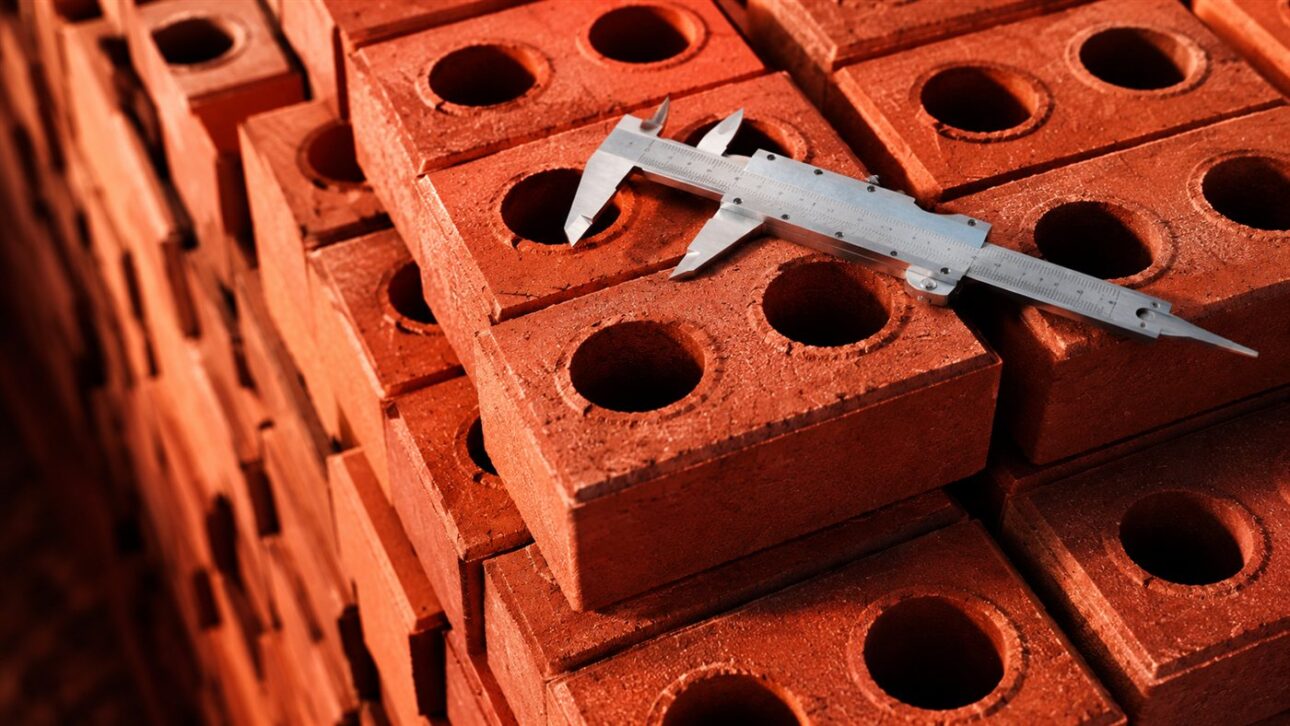
However, manufacturing has a clear standard. The ABNT standard for soil-cement brick requires a compression resistance of 2 MPa, water absorption of up to 20%, and a maximum dimensional deviation of 1 millimeter, with testing of 10 pieces for every batch of a thousand, as Amanda and Fernando detail, showing the technical report model. The couple’s engineer emphasizes that the block has resistance comparable or superior to that of structural bricks provided in the standard and that it is safe when well manufactured and well calculated.
The market problem: manufacturer without report
The standard exists, but not everyone meets it. According to Amanda and Fernando, Brazil still has many producers of ecological bricks that do not comply with the standards, and this was exactly the problem the couple faced in their own region, where there was no supplier with proven quality.
The buyer’s filter fits into one question. Ask for the test: a serious manufacturer presents the technical report of the batch, and common concrete laboratories, present in most cities, conduct the tests, as Amanda and Fernando advise. Without a report, the cheap option can become expensive with the first loaded wall, and the blame will not be on the brick, but on the lack of control by the one who pressed it.
Is it worth paying for freight? The calculation of a thousand at R$ 2,000
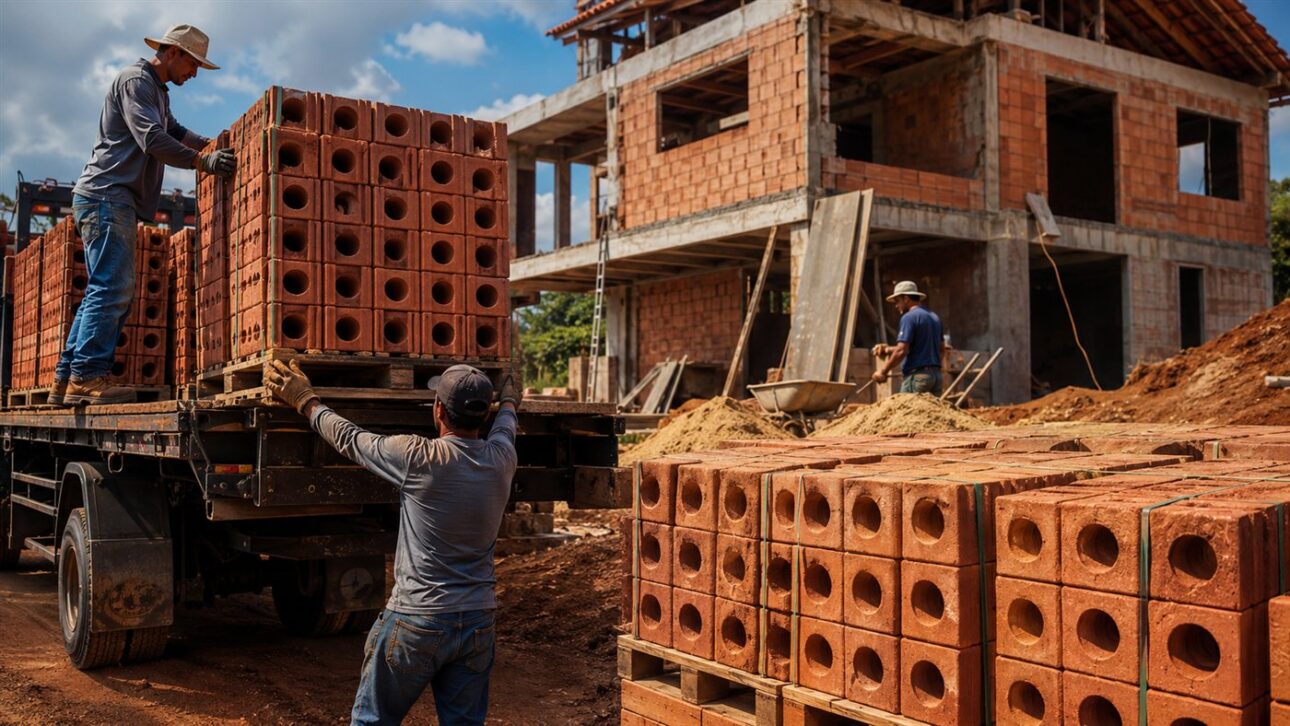
The absence of a factory in the city does not eliminate the purchase option. According to Amanda and Fernando, it is common to bring the brick from other states, directly from the manufacturer, as the couple themselves did and as other projects they followed did, with the freight cost diluted in the product price.
The order of magnitude helps in deciding. With freight included, the cost per thousand was around R$ 2,000, and even so, the final savings of the project remain in the thousands of reais, as Amanda and Fernando calculate, noting that a freight cost of a few thousand does not weigh on a project of hundreds of thousands. The correct comparison is not freight against freight, but total cost of the finished wall against total cost of the conventional wall.
When the ecological brick is not worth it
The video dedicates a rare segment in the niche: the cases where the product loses. According to Amanda and Fernando, the ecological brick ceases to be worthwhile when the supplier’s distance is too great, when the buyer does not want to produce at all, and especially in a specific scenario: a simple sealing wall, without structural function, within spans already structured with pillar and beam, and without finishing on both sides.
In this case, the old rival wins. The exposed ceramic brick is cheaper to close a span without aesthetic or structural requirements, as Amanda and Fernando admit. Honesty has a method: the series compares techniques by total cost, and the interlocking block shines exactly where the structure, deadline, and finishing come into play.
Producing your own bricks: when the machines pay off
For large volumes, the video points to the path of self-production. According to Amanda and Fernando, it makes sense to buy the machines for those who need dozens of thousands, between 30 and 50, whether to sell, to build several houses, or a large house, as in the case of the couple themselves, who manufactured the blocks on-site.
The return math is simple. The thousand bricks bought at R$ 2,000 cost about R$ 800 to produce with paid labor, and the difference of R$ 1,200 per thousand goes towards amortizing the machines, as Amanda and Fernando explain, with a detail that almost everyone forgets: at the end of the construction, the bricks and machines remain, which can be sold or rented, returning another slice of the investment.
The frying pan test: find out if your soil is suitable
The most didactic part of the video happens in the kitchen. According to Amanda and Fernando, the homemade test that estimates the sand content of the soil uses a frying pan, kitchen scale, and sieve 200, with a very fine mesh: the soil is dried on the fire until all the vapor is released, 100 grams are weighed, the sample is washed in the sieve until the water runs clear, taking away the clay, and dried again to weigh what remains.
The result comes out in direct percentage. In the video samples, about 60 and 57 grams of sand remained, and the minimum recommended for production is 50%, as Amanda and Fernando demonstrate, reminding that soil out of standard is corrected with purchased sand, in the approximate ratio of 1 bucket of sand for every 6 of soil, redoing the test until getting it right. It’s the same principle as engineering college tests, adapted for the home stove.
Water at the right point, ARI cement, and the curing no one respects
The last three quality secrets close the manual. According to Amanda and Fernando, the water has an exact point, tested in the little cake: the mass pressed in the hand should break into two firm pieces without crumbling, and, when released from waist height, should fall apart on the ground without dirtying the palm; the recommended cement for those who manufacture is the high initial strength one, which allows handling of the pieces sooner, with complete curing taking 28 days.
The third item is the most neglected. The wet curing in the first 7 days, with the bricks kept wet like plants and stored in the shade, is pointed out by studies cited in the video as the third factor that most defines the final strength, as Amanda and Fernando emphasize. And the rule applies after the wall is ready: a block exposed to heavy rain for months without waterproofing degrades, so the stack is covered with a tarp and the external wall receives protection at the end of the work.
Watch the couple’s guide
The video covers standards, prices, homemade testing, and the mistakes that compromise strength, with the experience of those who manufactured and laid their own blocks.


Amanda and Fernando’s manual summarizes the maturity that the ecological brick has reached in Brazil: it is no longer a fair curiosity, it is a technique with standards, reports, and spreadsheets, and it rewards exactly those who do their homework before pressing or buying. Tell us in the comments: would you do the frying pan test with the soil from your land?