Portuguese
  Spanish


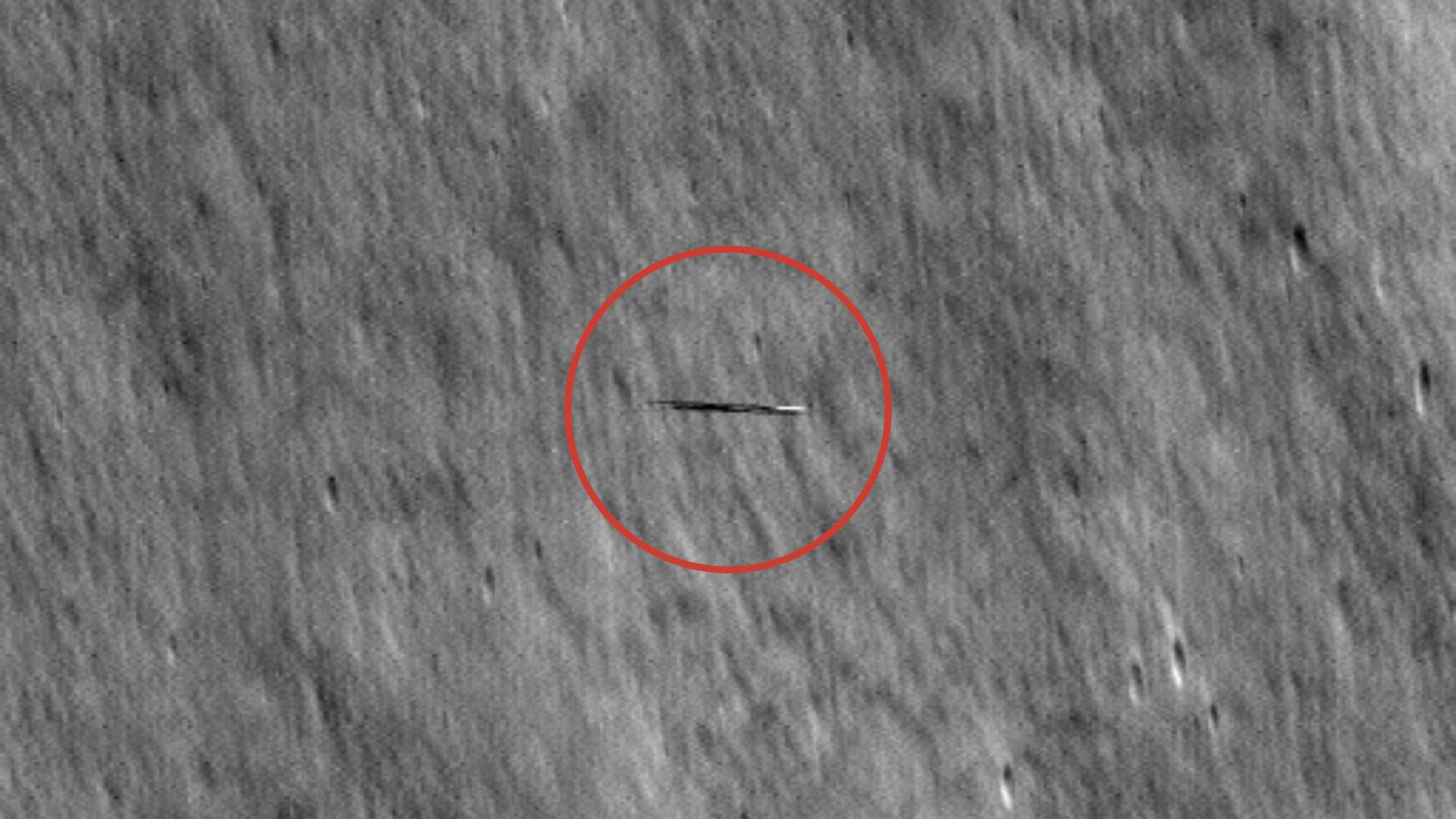

The episode brought together two probes from different countries in a high-speed crossing around the Moon, resulting in images that went viral precisely because of the unusual shape of one of the spacecraft involved
There are encounters in space that seem like science fiction, but actually happened — and were captured in real images. In 2024, NASA captured a rare scene: a South Korean spacecraft crossing the Moon’s orbit at high speed, with a shape so peculiar that it resembled, at first glance, a surfboard gliding through space.
According to NASA’s own official website, it all started with the Lunar Reconnaissance Orbiter (LRO), a satellite launched by the American space agency in 2009 with the mission to investigate the lunar surface in detail. The LRO’s goal has always been to identify potential landing sites, natural resources, and interesting geological features, such as the so-called lava tubes — and over the years, the equipment has mapped a large part of the Moon’s surface, except for the deeply shadowed regions located in the polar areas.
The Korean spacecraft that looks like a surfboard
It was precisely on one of these monitoring routes that the LRO spotted what seemed to be a kind of surfboard passing at high speed through the lunar orbit. In fact, it was the Danuri spacecraft, launched by South Korea in August 2022 and considered the country’s first lunar orbiter in history. In this sense, Danuri’s mission goes far beyond simply flying over the Moon: the equipment was designed to develop and test new technologies — including space internet systems — as well as to produce a detailed topographic map of the lunar surface.
-
Germany Opens World’s Largest Smart Power Semiconductor Factory with €5 Billion Investment, Creating 1,000 Jobs and Doubling Capacity for AI and Energy Needs

-
Kazakhstan’s Torysh Valley Holds Thousands of Giant Stone Spheres, Intriguing Scientists with Ancient Oceanic “Cannonballs”

-
Egypt Discovers 18 Ancient Tombs with Gold Tongues, Unveiling Unusual Funeral Rituals and Amulets Believed to Give Voice to the Dead

-
Nigeria Dumps 120 Million Tons of Sand into Atlantic to Build Massive City with 8.4 km Sea Wall for Protection Against Ocean Waves and Erosion




According to the Korea Aerospace Research Institute (KARI), responsible for the mission, the work of the Danuri satellite should help select future landing sites and identify strategic resources such as uranium, helium-3, silicon, aluminum, and even water ice. Among the instruments on board the spacecraft are a spectrometer, a magnetometer, and different cameras — one of them, named Shadowcam, is capable of photographing precisely the shadowed polar regions that the LRO cannot map. Interestingly, this specific instrument was developed by NASA itself, which reinforces the collaborative nature behind the two missions, even though they belong to different countries.
The crossing at 11,500 km/h and the unprecedented angles of the images
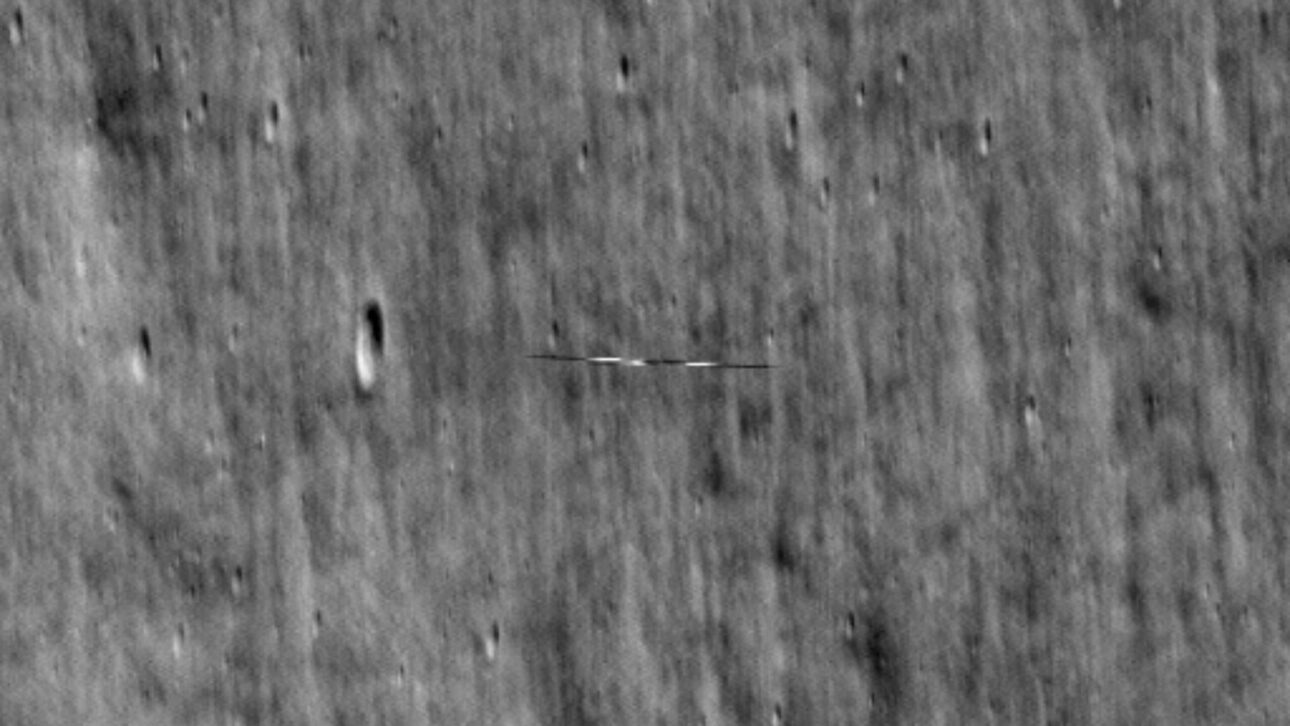
Meanwhile, the most remarkable moment of this entire orbital encounter happened in March 2024, when the two spacecraft passed each other at a combined speed of 11,500 km/h. In total, there were three different orbits that positioned the LRO in ideal conditions to capture images of Danuri in full motion — and, in each of these passes, the vertical separation between the two spacecraft varied.
In the first image, the LRO was just five kilometers above the South Korean satellite, which appears recorded as a silhouette similar to a surfboard. To achieve this angle, NASA’s orbiter had to point its cameras 43 degrees below the usual positioning. In the second orbit, the distance between the two spacecraft dropped to just four kilometers. Finally, in the third and last pass, the separation rose to eight kilometers, requiring the LRO to be oriented at an angle of 60 degrees to capture Danuri in frame.
However, this was not the first photographic encounter between the two probes. In April 2023, it was Danuri’s turn to capture the LRO, using precisely the Shadowcam, when the American satellite was 18 kilometers above the Korean spacecraft. Thus, the 2024 episode actually marked the second time the two missions managed to photograph each other during lunar orbit — a rare feat that requires extremely precise orbital planning, as any small trajectory variation could prevent the spacecraft from aligning well enough to capture a clear image of each other.
According to Mark Robinson, principal investigator of the LROC camera and scientist at Arizona State University, given the extremely high relative speed between the two spacecraft, millimetric precision was required to point the equipment at the exact moment and capture a glimpse of Danuri. The statement, published on NASA’s official website, reinforces the level of technical planning behind images that, at first glance, seem almost accidental.