Portuguese
  Spanish


The giant Piracanjuba inaugurated one of the largest dairy factories in the country in the interior of Paraná, designed to nationalize the production of the most consumed supplement in gyms
The whey protein that supplies Brazilian gyms mostly comes from abroad, and a single project in the interior of Paraná aims to tackle this dependency head-on. The Piracanjuba Group inaugurated in March 2026 a factory worth R$ 612 million designed to manufacture on national soil the supplement that the country currently imports in mass.
National whey protein is still an exception: about 85% of all whey consumed in Brazil is imported, according to federal government data cited by Exame magazine. The new unit, in São Jorge D’Oeste, will process 1.2 million liters of milk per day and produce up to 6,000 tons of whey protein per year, directly addressing this costly slice of the trade balance.
Why 85% of whey protein comes from abroad
The data that gives meaning to the entire investment is the external dependency. Despite Brazil being one of the largest milk producers in the world, the national industry has never mastered on a large scale the stage of transforming whey into concentrated protein, precisely the most valuable and technical part of the process.
-
Sakura Soy Sauce, Originating from a São Paulo Village in 1940, Now Holds 75% of the Market

-
Brazilian Energy Agency Announces August Electricity Bill Discounts; Find Out Who Qualifies

-
Subway Fare Rises to R$ 6 in Belo Horizonte, Brazil; Combined Tickets Reach R$ 14.20
-
Food Waste in Brazil’s Campinas Transformed into Compost to Cut Methane, Leachate, and Greenhouse Emissions


That’s why the supplement that fills store shelves mostly comes from factories abroad. According to Exame, this import weighs on the country’s account, and nationalizing production is officially treated as an expansion of the technological frontier of the Brazilian industry. It’s not just about making supplements, it’s about mastering a technology that was lacking in Brazil.
A R$ 612 million factory in a city of 9.5 thousand inhabitants
The scale contrast is impressive. The investment of R$ 612 million landed in São Jorge D’Oeste, a municipality of about 9.5 thousand inhabitants in the southwest of Paraná, transforming the local economy overnight.
The plant has 54 thousand square meters of built area and is among the largest in the dairy sector in the country. For a small city, the arrival of a structure of this size means 250 direct jobs and an entire chain of suppliers and services revolving around the factory. It’s the kind of project that changes the economic map of an entire region.
1.2 million liters of milk per day
The processing capacity gives the industrial scale of the enterprise. The unit was designed to receive 1.2 million liters of milk per day, a volume that requires a robust and organized dairy basin around the plant.
According to Diário da Região, the factory started operating by producing butter and cheese, and will advance to whey and lactose in a second phase. Starting with the basics and scaling up to the premium product is the classic strategy for those who want to dominate the entire chain, from raw milk to shelf supplements.
From whey that was waste to the most expensive product in the line
Here is the most interesting turnaround of the story. Whey protein is nothing more than the protein extracted from whey, which for decades was treated as an effluent, a byproduct of cheese production that many industries simply discarded.
Modern technology has reversed this logic. What was waste has become the most expensive and sought-after part of milk, sold at a premium in gyms worldwide. Turning waste into premium protein is the economic heart of the project, because it adds high value to something that the cheese industry already produces anyway.
6 thousand tons of whey and 14.8 thousand of lactose per year
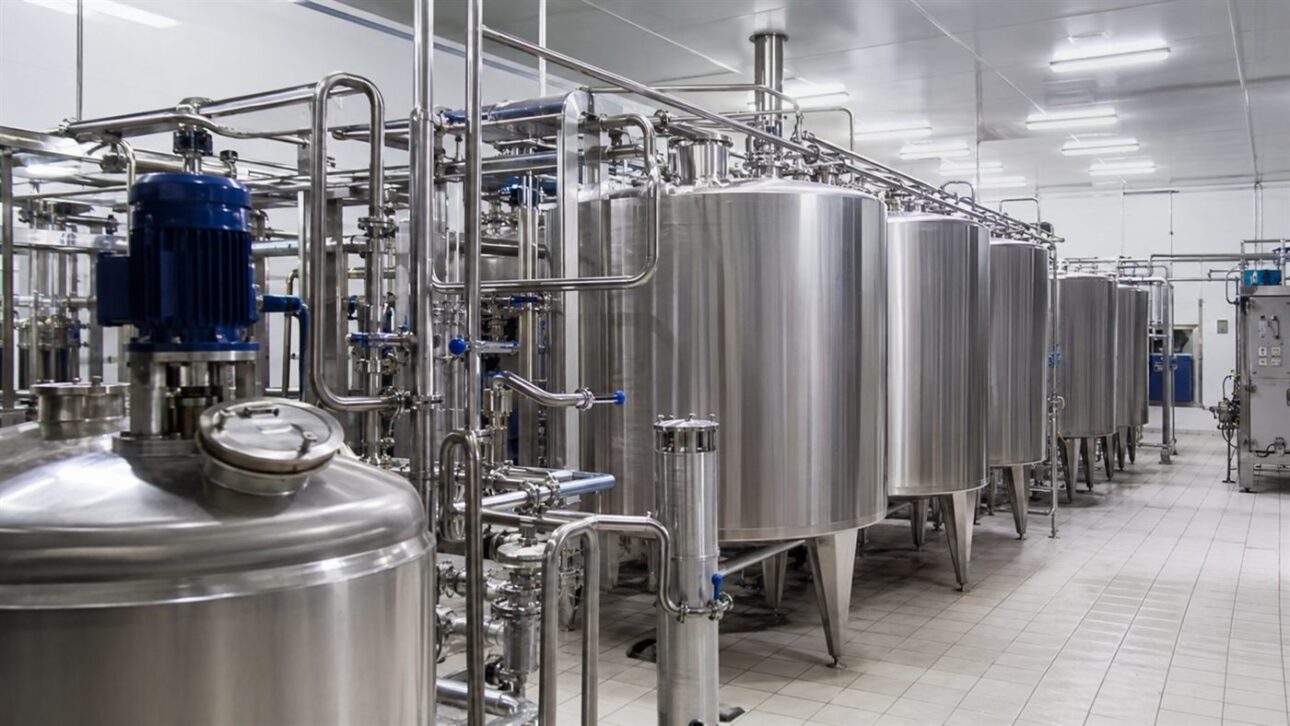
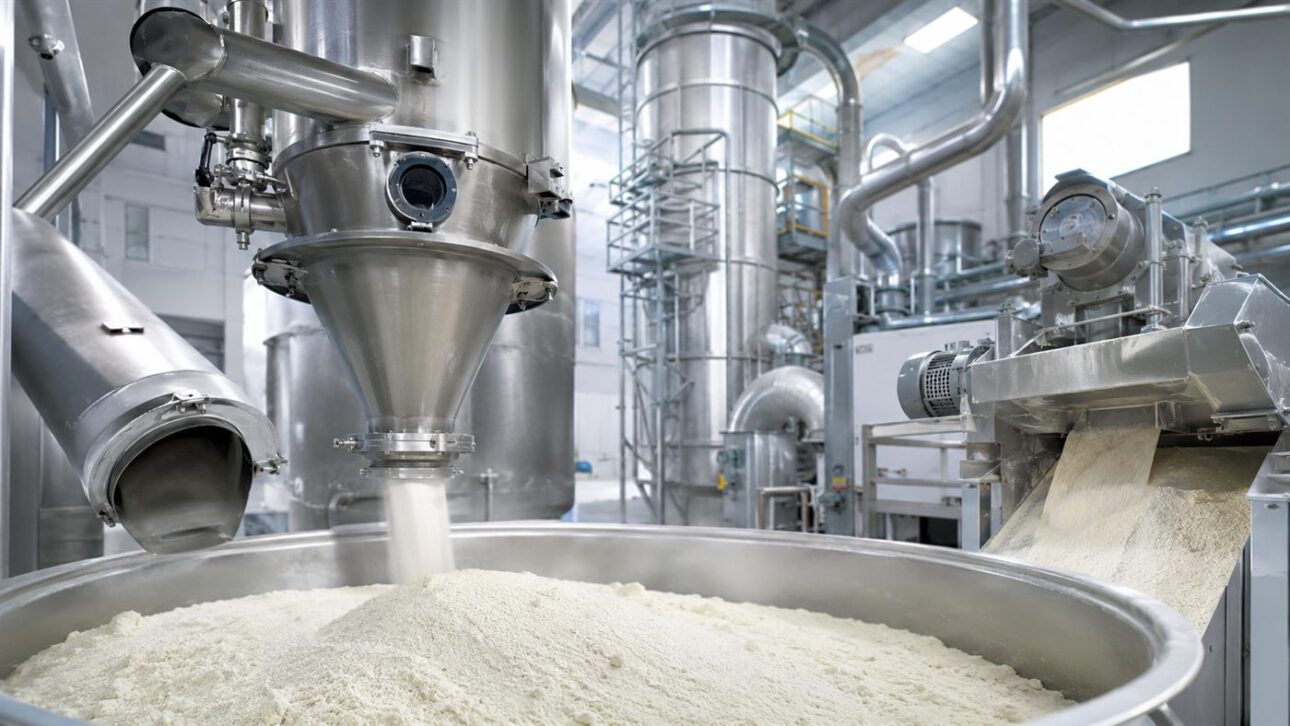
The production numbers show the ambition of the new unit. In two dedicated lines, according to Diário da Região, the factory is expected to generate up to 6 thousand tons of whey protein per year and up to 14.8 thousand tons of powdered lactose, both products currently mostly imported.
Powdered lactose, less famous than whey, is an essential input for the food and pharmaceutical industries. Producing it on a large scale in Brazil addresses another front of importation at the same time. The plant was designed to extract the maximum value from each liter of milk, utilizing fractions that previously left the country as lost money.
The role of BNDES and the R$ 499 million
A project of this size does not finance itself. Of the total R$ 612 million, according to Exame, the BNDES contributed R$ 499 million, and the initiative also received support from the state program Paraná Competitivo.
The presence of the public bank signals that import substitution has entered the country’s strategic radar. Reducing dependence on imported whey and lactose improves the trade balance in products that total tens of millions of dollars per year. When public financing aims to nationalize technology, the goal goes beyond the profit of a company, it is industrial policy.
Why Import Substitution Matters for Your Wallet
It may seem distant from the consumer, but the cost reaches the price of the jar. Each kilo of imported whey includes international freight, exchange rates, and import taxes, costs that make the supplement more expensive at the end. Producing within the country tends to stabilize price and supply, reducing the market’s exposure to dollar fluctuations.
Import substitution also retains jobs and income within Brazil, instead of exporting them to foreign factories that currently supply the market. It is a chain effect that starts in the dairy basin of Paraná and ends on the supplement store shelf.
Piracanjuba, Which Earns R$ 12 Billion Per Year
Behind the bet is a giant. Founded 71 years ago in the city of Piracanjuba, in Goiás, the group processes about 7 million liters of milk per day in its operations and closed 2025 with a revenue of R$ 12 billion, according to Diário da Região.
This scale is what allows taking on a risky investment like the national production of high-value dairy products. A smaller company would hardly have the capacity to cover the R$ 612 million portion that did not come from BNDES. It is the size of the group that enables the boldness to challenge a market dominated by imports.
A Bet Aiming at Your Gym Jar
The new factory is one of the biggest recent moves in the dairy industry in Brazil, targeting a market in full expansion, driven by the supplement craze and the search for protein. If national production takes off, consumers may start to find locally made whey, with less dependence on the dollar.
The question remains whether the national whey protein will be able to compete in price and quality with the imported ones that dominate the shelves. Would you trade your imported whey jar for one made in the interior of Paraná if it costs less?