






 Portuguese
  Spanish
  4 min of reading
  0 comments


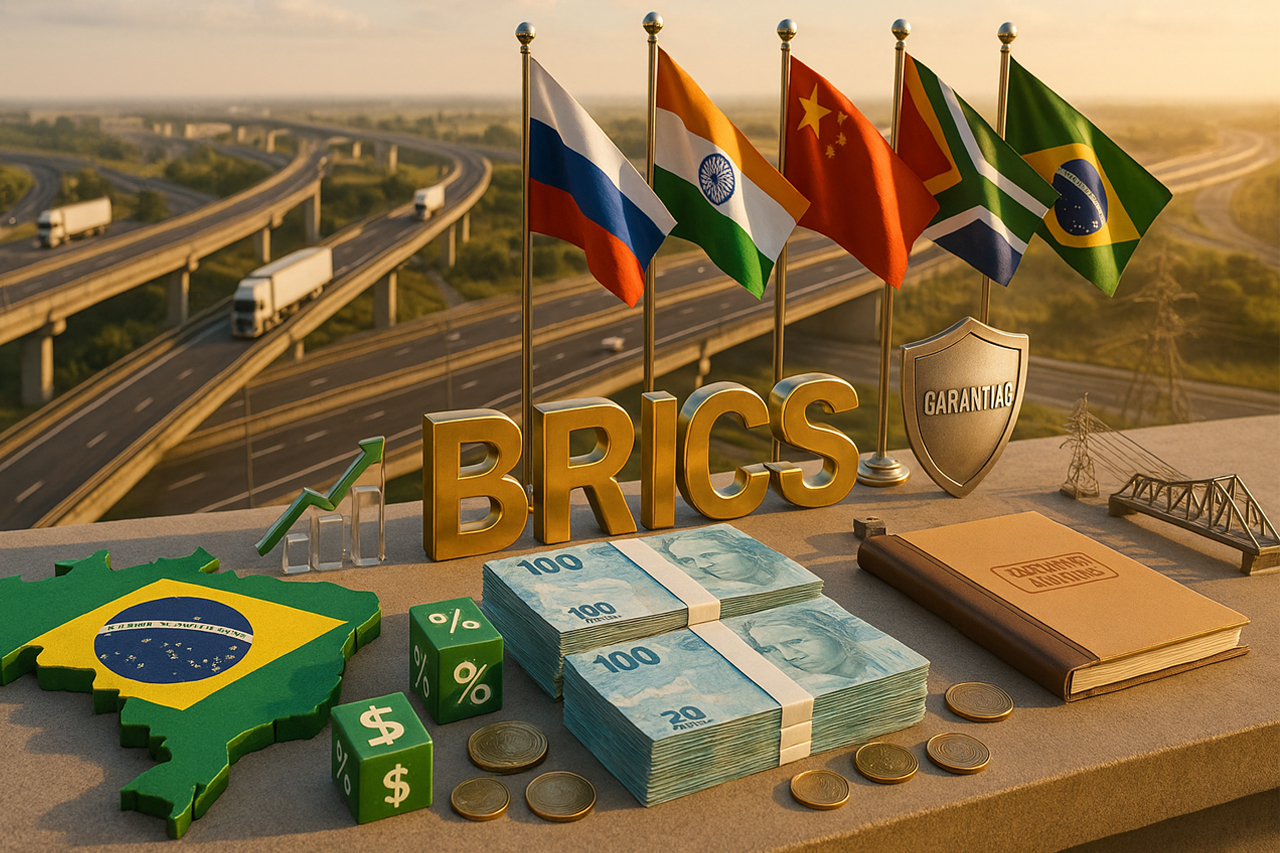
The New Development Bank (NDB) of the BRICS Prepares a Unique Guarantee Mechanism to Boost Infrastructure in Brazil. The Initiative Promises to Reduce Risks and Lower Financing Costs
The meeting of BRICS leaders in Rio on July 6, 2025, validated guidelines to incubate, within the New Development Bank, a multilateral guarantee mechanism designed to reduce risk and lower the cost of capital for large projects. The new mechanism is now included in the Rio Declaration, which explicitly mentions the pilot creation of the instrument at the NDB.
The idea follows the path of international experiences and aims at a practical bottleneck in financing; many infrastructure projects in Brazil have robust returns but face perceptions of regulatory, exchange rate, and political risks. The “guarantee shield” targets these points, enhancing bankability and opening space for PPPs and concessions with participation from funds and commercial banks.
Market sources detail that the mechanism, nicknamed BMG, was prioritized by the Brazilian presidency of the BRICS and that its first version will be operated by the NDB. The signal is one of launch with a framework already technically approved by the countries and a design inspired by MIGA, the World Bank’s guarantee agency, according to Reuters.
-
Coal mine purchased for $2 million in Wyoming, the Brook Mine holds rare earth elements and critical minerals estimated at up to $37 billion, in an asset that the US is competing for with China.

-
In the year Brazil won the World Cup, gasoline cost R$ 1.77, the cheapest car was worth R$ 13,000, there were no flex-fuel cars, SUVs were rare, and no Chinese brand sold a single vehicle in the country.
-
Neighboring Balneário Camboriú will receive a R$ 1 billion airport with 225 hangars, an area of 2.2 million m², a technology park, and an export zone that promises to transform the economy and generate thousands of jobs.
-
After investing R$ 5,000 in fried chicken in his backyard, a Brazilian transformed two fryers and a freezer into a network with 115 sales points, presence in up to 17 states, and revenue exceeding R$ 115 million per year.



How the NDB “Guarantee Shield” Will Work
In practice, the BMG is expected to offer partial credit guarantees and political risk coverage in flexible formats, including shared first-loss layers. This allows for the dilution of risks that increase financing costs, extending timelines and attracting institutional investors for eligible projects in logistics, energy, sanitation, and climate. The official guidelines themselves indicate the NDB as the “ideal platform” to test and calibrate the instruments before scaling.
This design aligns with global trends. In 2024, the World Bank Group issued about US$ 10.3 billion in guarantees, with US$ 8.2 billion via MIGA, a record that demonstrates the mobilization power of these tools when well-structured. For the reader, this means more private capital entering where only public credit used to reach.
In terms of communication, it is crucial to understand that guarantee is not a lost expenditure. It is a priced technical coverage that reduces the perceived risk of the project and multiplies each public dollar allocated to de-risking. That is why international organizations use guarantees to leverage investment at scale.
Where Brazil Enters First
Brazil already has a concrete pipeline at the NDB and has been signing operations and memorandums in energy, transportation, and social infrastructure. In July, during the 10th Annual Meeting of the NDB in Rio, the bank signed a memorandum with State Grid Brazil to strengthen electric transmission, signaling projects readily eligible for guarantees. Transmission energy is often a classic field for this type of instrument.
Moreover, the NDB has already recorded relevant operations in the country, such as green loans signed in 2023, and maintains an active portfolio in sectors where revenue predictability facilitates the structuring of concessions and PPPs. This track record is a key piece for a first batch of guarantees that gains quick traction.
Signals from players in the electric sector in Brazil reinforce the investment window. After regulatory advances and environmental licenses, new transmission lines are expected to demand a large volume of capital, an ideal ground for coverages that lower the risk and attract private financiers.
How Much It Can Leverage and When It Starts
According to sources consulted by the international press, the BMG can leverage five to ten times the amount covered in guarantees, depending on the project risk and contractual arrangement. In practice, each unit of public capital allocated to de-risking can multiply the entry of private capital. The plan is to formalize and detail the operationalization starting from the cycle opened in Rio.
The expectation is for a pilot phase with selected projects and then expansion as the impact assessment progresses. Specialized media confirms that the discussions were endorsed by the BRICS finance ministers, with the NDB prepared to lead the operational structure.
On the timeline, sources report that first guarantees may appear as early as 2026, after final adjustments in governance and standardization. For Brazilian proponents, it is time to accelerate studies, organize data, and structure bankable projects to enter the queue.
Why This Matters for Brazil
For those who follow infrastructure, it is known that guarantees reduce risk, extend timelines, and lower financial costs, which brings projects to fruition faster. In a country with a historical deficit in logistics and sanitation, this means projects starting sooner, services coming online earlier, and economic impact reaching the end-users.
From a macro standpoint, positioning the NDB as a guarantee hub brings Brazil closer to a global ecosystem where public credit makes intelligent leverage of private capital. It is a combination of public policy and financial engineering to reduce investment bottlenecks.
And by anchoring the model in standards already tested by institutions like MIGA, the BRICS signals governance and risk measurement compatible with what large investors seek. In summary, it is an opportunity for infrastructure in Brazil to gain scale with lower costs and more predictability.


-

-

2 people reacted to this.