Portuguese
  Spanish


In February 2026, Buenos Aires began construction of the Anillo La Pampa — a 540-meter tunnel plus a 140-meter diameter circular bridge with a panoramic viewpoint for airplanes. The deadline is just 20 months, and the project will cut travel time by 50% in one of the most congested regions of the Argentine capital.
According to the Government of the City of Buenos Aires (GCBA), the Anillo La Pampa is Argentina’s urban mobility project in decades.
Works began in February 2026 by Autopistas Urbanas S.A. (AUSA), with an investment of 57.44 billion Argentine pesos and a 20-month deadline for delivery.
The project resolves a historical disconnection between the neighborhoods of Bajo Belgrano and Palermo and Costanera Norte, Aeroparque Jorge Newbery, and Ciudad Universitaria.
-
With 26 Million Brazilian Families in Substandard Housing, Churches to Launch 2026 Challenge: Each Parish to Build or Renovate a Home for a Local Family

-
Wood-Look Aluminum Emerges as a High-Tech Alternative for Facades and Gates, Offering Sophisticated Aesthetics and Low Maintenance

-
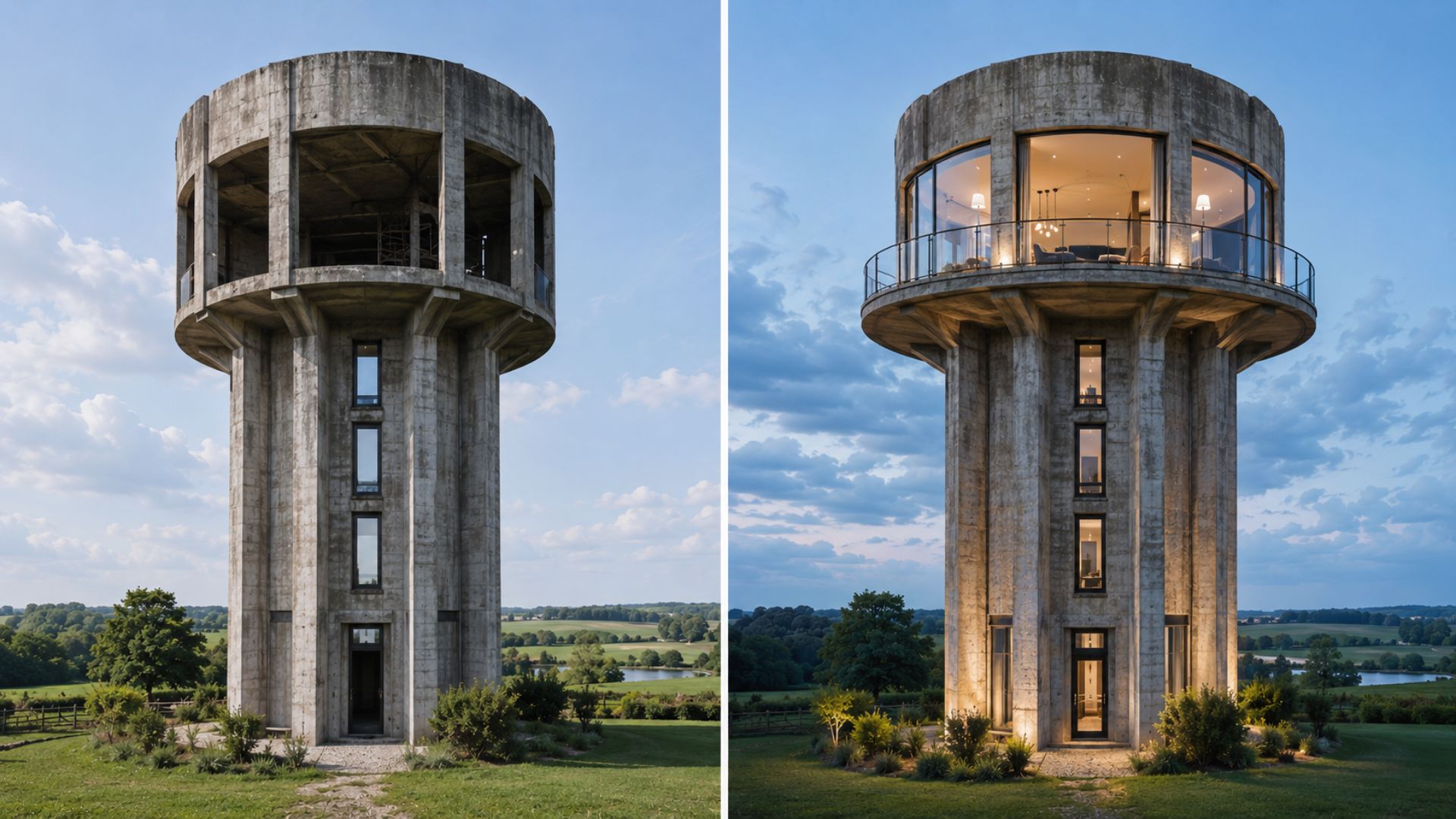
Couple Transforms 1964 Concrete Water Tower into Four-Bedroom Home with Views of London Over Four Years
-
U.S. City Builds Tiny Home Village on Water Company Land to House 136 Homeless People: Inside the Social Housing Units



Therefore, it is a project that directly affects the daily lives of hundreds of thousands of *porteños*.
Furthermore, the design is unprecedented in South America.
The project combines underground engineering — with a tunnel that passes under an avenue, a highway, and train lines — with a ring-shaped bridge,
something that does not exist in any other city on the continent.
What is the Anillo La Pampa and why is it unprecedented

The project consists of two distinct structures. The first is a vehicular tunnel 540 meters long, with four lanes of traffic — two in each direction.
The clear height is over four meters, allowing the passage of buses and trucks.
According to the GCBA, the tunnel passes under La Pampa Avenue, Illia Highway, and the tracks of the Belgrano Norte Railway.
In practice, this eliminates at-grade crossings that currently block traffic for long periods.
The second structure is the circular bridge — the most unusual element of the project. It is a pedestrian ring with a 140-meter diameter, which includes a bike path, a leisure area, and a panoramic viewpoint.
From the walkway, pedestrians have a direct view of takeoffs and landings at Aeroparque.
- Vehicular tunnel: 540 meters, 4 lanes (2 per direction), clear height >4m
- Pedestrian ring bridge: 140m diameter with bike path and viewpoint
- Total intervention area: over 10,000 m²
- Travel time reduction: 50% during peak hours
- Investment: 57.44 billion Argentine pesos (≈ US$ 57 million)
- Deadline: 20 months — delivery expected by end of 2027
The historical mobility problem that the project solves

Northern Buenos Aires is one of the most congested regions of the city.
According to Observatorio AMBA, residents of Bajo Belgrano and Palermo currently need to make long detours to reach Costanera Norte, Aeroparque, or Ciudad Universitaria.
Existing connections — via Labruna, Scalabrini Ortiz bridges, or the underpass beneath Sarmiento — result in extensive routes and high travel times, especially during morning and afternoon peaks.
Furthermore, railway crossings add unpredictable stops to the journey.
Thus, a trip that should take 10 minutes can take 20 to 25 minutes on normal days.
The project promises to eliminate this bottleneck with a permanent solution, without traffic lights or at-grade crossings.
According to the GCBA, soil tests conducted in February confirmed that underground utility installations coincide with existing plans.
Therefore, the risks of unexpected interferences were mitigated before the start of major excavations.
The viewpoint with airplane views: the detail that went viral
Among all elements of the project, the panoramic viewpoint on the ring bridge was what attracted the most attention.
The space is at the highest point of the circular structure and offers a privileged view of Aeroparque Jorge Newbery — one of Argentina’s busiest airports.
In practice, pedestrians and cyclists using the walkway will be able to observe aircraft in approach and takeoff maneuvers just a few meters away. However, the viewpoint is not just a tourist attraction.
It also serves as a connection point between the bike path and the paths of the Coastal Park.
According to the GCBA, the goal is to create a space that, in addition to solving the mobility problem, is “enjoyable and livable” — a leisure hub integrated with the river and the green surroundings of Costanera.
The construction schedule and traffic impacts

The works are causing significant changes to traffic in northern Buenos Aires. The section of La Pampa Avenue between Lugones and Figueroa Alcorta was closed to traffic in early March 2026.
Additionally, the Lugones exit to La Pampa and the Udaondo exit were temporarily closed.
Consequently, Observatorio AMBA recommended route changes for drivers and public transport users. Bus lines passing through the region received temporary detours.
Still, AUSA coordinated the closures to avoid overlaps with other simultaneous works — such as the expansion of the Labruna Bridge, which is occurring during the same period. The schedule was developed to minimize cumulative impact.
In other words, temporary traffic disruption is part of the plan. AUSA chose to concentrate the disruptions over 20 months to deliver a definitive solution instead of prolonging punctual interventions for years.
How it compares to similar projects worldwide
Projects combining vehicular tunnels and elevated pedestrian structures exist in cities like Bilbao (Basque Country) and Rotterdam, but with different scales and contexts.
In South America, there is no direct precedent for a ring-shaped bridge integrated with an urban tunnel providing airport access.
On the other hand, urban underground engineering is a recurring theme in cities that need to solve bottlenecks without expropriating properties.
As a recent study shows, Brazil invests only 2.24% of its GDP in infrastructure — well below recommended standards for developing countries.
Argentina, with this project, chose a high-engineering solution in a dense urban space.
Similarly, the bet on iconic design follows the trend of infrastructures that function as urban landmarks.
This is the case of the two-story suspension bridge that China built with 5 world records — a global reference in engineering with visual identity.
What the project says about Buenos Aires in 2026
The project is part of a broader urban requalification agenda for the City of Buenos Aires.
The project integrates with the Innovation Park, the Coastal Park, and Ciudad Universitaria — forming a modernization corridor in the north of the capital.
According to the GCBA, the expectation is that the structure will increase property values in the region and attract new uses for the surrounding public spaces.
In practice, the ring bridge and viewpoint will function as anchors for a larger integration project with the Rio de la Plata.
Would it be possible to replicate such a project in other South American metropolises — like São Paulo, which has debated solutions for its urban mobility bottlenecks for decades?
The answer depends less on technology than on political decision and long-term planning.
Still, it’s worth remembering: the 20-month deadline is ambitious for a complex urban project.
Note: the investment of 57.44 billion Argentine pesos reflects the official values of the GCBA, released in February 2026. Given Argentina’s exchange rate volatility, conversions may vary.
The 20-month deadline is subject to revisions, as is common with complex urban projects in an inflationary environment.