





 Portuguese
  English
  Spanish
  5 min of reading
  0 comments


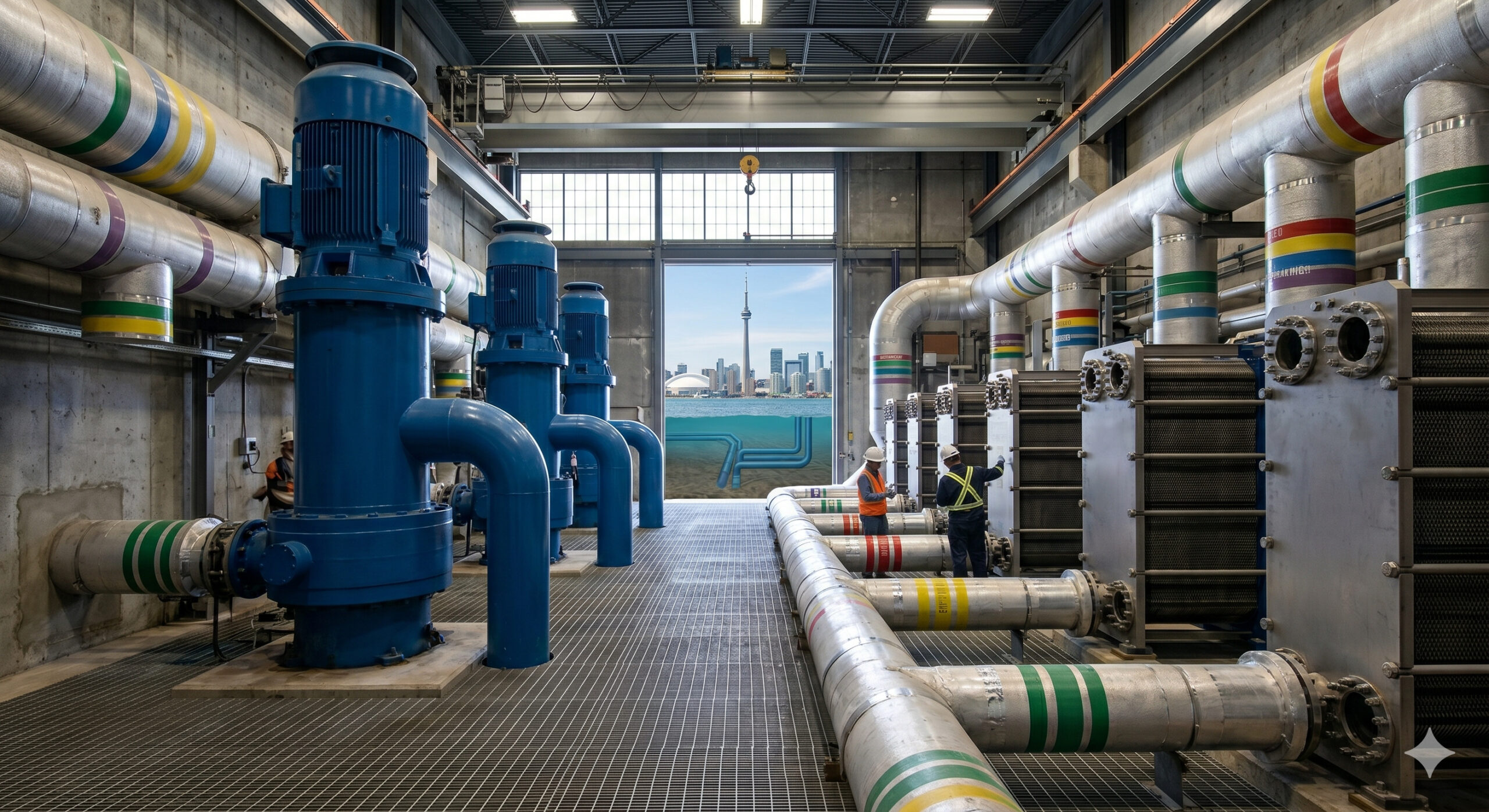
Toronto uses cold water from Lake Ontario to cool more than 40 million square feet with an underground system that reduces energy and eliminates traditional chillers.
In operation since 2004, the Deep Lake Water Cooling (DLWC) system of Enwave Energy Corporation has transformed downtown Toronto into one of the most advanced examples of urban climate control in the world by using cold water drawn from the depths of Lake Ontario as the primary cooling source. The proposal replaces a significant portion of conventional compressor-based systems with a solution that takes advantage of the lake’s natural thermal stability at great depths.
According to operational data from Enwave itself, the system currently serves 200 buildings, covers more than 40 million square feet of built area, and distributes chilled water through about 40 kilometers of underground piping. With the expansion commissioned in August 2024, the infrastructure gained 60% more capacity, reinforcing the scale of an almost invisible network that transforms Lake Ontario into a true cold plant for Canada’s largest city.
System uses water at dozens of meters deep to generate large-scale urban cooling
The physical principle of the DLWC is based on something simple: the water at depth in Lake Ontario maintains significantly lower temperatures than the surface, usually close to 4 °C, due to natural thermal stratification.
-
Between Alaska and Siberia, there is an abyss on the sea floor, a submarine trench 2,600 meters deep that surpasses the Grand Canyon in vertical scale and hosts one of the rarest ecosystems on the planet.

-
End of separate pressure cooker, air fryer, and electric pot? Ninja Foodi MAX SmartLid combines 15 functions, three cooking modes, and a smart lid to cook, fry, bake, and steam in the same device.

-
Super airplane Phantom 3500 advances towards its first flight, promising 60% lower fuel consumption, a windowless cabin, operation above 51,000 feet, technology validated by DARPA, and a billion-dollar order of 300 jets before certification.
-
In addition to cars, BYD is already testing 10 heavy 6×2 electric trucks in Brazil with a recharge time of just 10 minutes, a range of 220 km, and a new battery inspired by the brand’s automobiles to revolutionize freight transport.




To access this resource, the system uses pipes that extend for kilometers into the lake until reaching deep regions. This cold water is then drawn and conducted to a heat exchange station in the city.
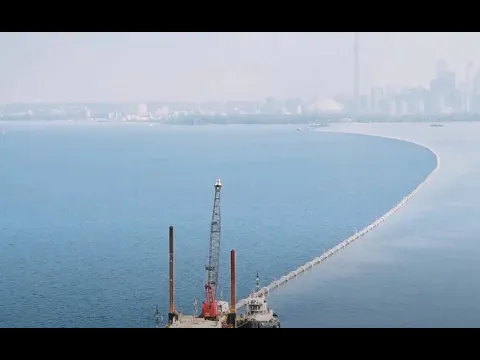

Important: the lake water does not circulate directly through the buildings. Instead, it passes through heat exchangers, where it transfers its low temperature to a secondary clean water circuit, which is then distributed to the buildings connected to the network.
This process prevents contamination, reduces losses, and allows precise control of climate control.
Technology eliminates compressors and drastically reduces energy consumption
In conventional air conditioning systems, cooling depends on compressors that consume large amounts of electricity to remove heat from the environment.
No DLWC, this process is replaced by a passive mechanism: the existing cold in the lake water does the work that would normally require energy-intensive machines.
According to Enwave Energy Corporation, this results in a significant reduction in energy consumption associated with cooling, as well as decreasing the need for maintenance and the use of chemical refrigerants.
The system also reduces greenhouse gas emissions by avoiding the additional electric generation that would be necessary to operate traditional chillers.
Underground infrastructure connects hospitals, hotels, and data centers in a single thermal network
The DLWC distribution network operates similarly to a water or electricity system, but is exclusively focused on cooling.
Pipes buried under the streets of Toronto transport chilled water to connected buildings, where internal units perform thermal exchange with local climate control systems.
Among the main users are:
- hospitals, which require strict temperature control
- data centers, which need to dissipate large amounts of heat
- large hotels and commercial buildings
This integration allows multiple structures to share a single cooling source, increasing the overall efficiency of the urban system.
System takes advantage of a stable natural resource available 24 hours a day
Unlike renewable sources like solar and wind, which are intermittent, deep water cooling presents an important advantage: continuous stability.

The temperature of the water at great depths in Lake Ontario varies very little throughout the year, ensuring a constant supply of cold regardless of weather conditions.
This means that the system can operate 24 hours a day, 7 days a week, without relying on sun, wind, or seasonal variations.
Project also improves the efficiency of the city’s drinking water system
An additional aspect of the DLWC is its integration with Toronto’s drinking water supply system.
Water drawn from the lake for cooling can also be used in the city’s water treatment and distribution process, creating synergy between energy and water infrastructure.
This integration reduces redundancies and increases overall resource use efficiency, something increasingly relevant in large urban centers.
Model can be replicated in other cities with access to large bodies of water
The system’s success in Toronto has paved the way for similar projects in other regions of the world.
Cities located near deep lakes or oceans with suitable thermal gradients can adopt similar solutions, provided there is technical and economic feasibility.
Examples include initiatives at universities, such as Cornell, and urban networks in European cities that use seawater for district cooling.
Limitations include high initial cost and geographical dependence
Despite the advantages, implementing systems like DLWC faces significant challenges. The main one is the initial investment required to build the intake, thermal exchange, and distribution infrastructure.
Furthermore, the technology depends on specific geographical conditions, such as access to deep, cold bodies of water, which limits its application to certain regions.
The case of Toronto demonstrates a paradigm shift in how cities can deal with energy and climate control.
Instead of relying exclusively on mechanical systems and fuels, engineering now incorporates natural environmental features as part of the energy infrastructure. The lake ceases to be merely a geographical element and becomes an active component of the city.
Do you believe coastal cities can transform oceans and lakes into urban climate control systems?
The use of deep water for urban cooling raises a relevant question for the future of cities.
With rising global temperatures and demand for climate control, solutions that use natural resources may gain traction as more efficient and sustainable alternatives.
To what extent can oceans and lakes become part of the energy infrastructure of modern cities?









Be the first to react!