Portuguese
  Spanish


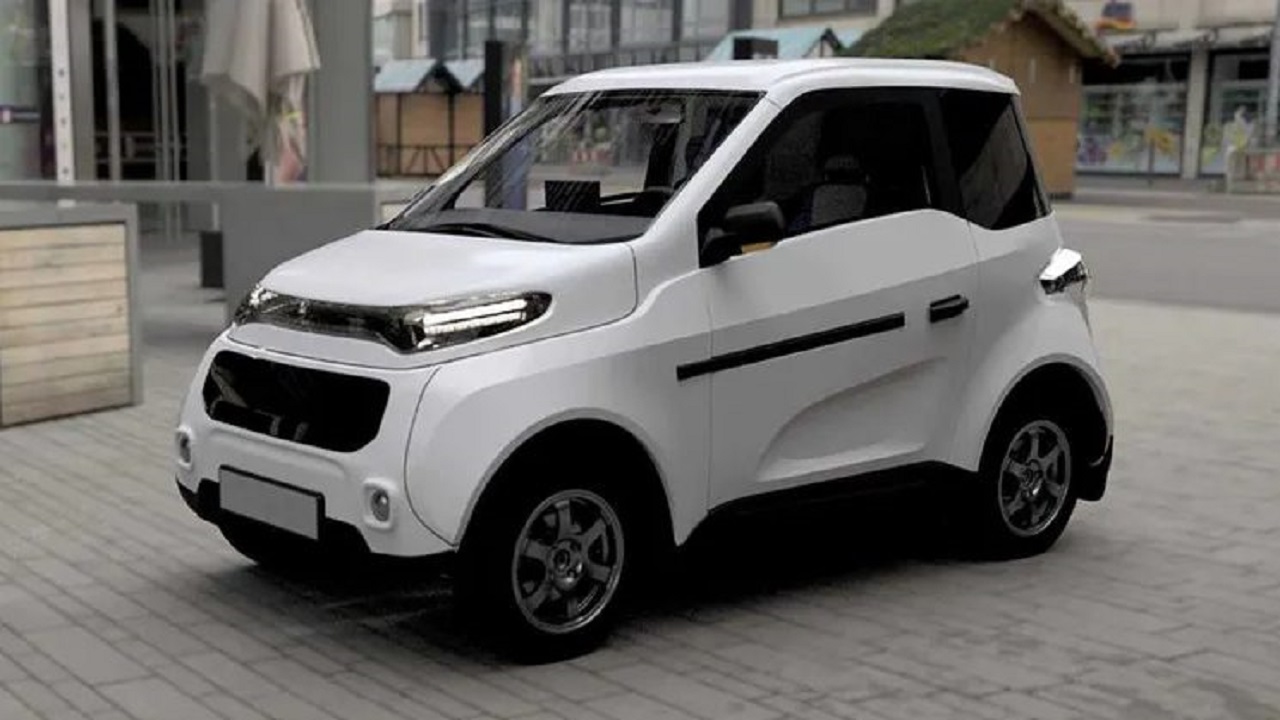

Russia Will Launch a Technological and Affordable Electric Car, Costing Less than R$ 65 Thousand and with a Range of 180km. The Initial Idea Is for the Vehicle to Be Sold in Most Neighboring Countries
Electric vehicles are becoming increasingly popular, and both private and public sector entities are creating projects to promote sustainable models on the streets. Among the governments is that of Russia, which presented a project for a compact electric car named Zetta, boasting an excellent range and promising to be the cheapest electric car in the world.
Read Also
World’s Cheapest Electric Car

The model with a range of 180 km has a robust and minimalist size that resembles the electric vehicles launched in the Chinese market. However, the country aims to go even further, making the Zetta the cheapest electric car in the world and also popularizing the fleet of vehicles in the territory. The production of the electric car has already been confirmed for the end of this year, but in the initial schedule, the vehicle was supposed to be real in 2020.
Due to general shutdowns caused by the pandemic, the project had to be postponed by a year. With the Zetta, the Russian government expects the electric fleet to grow, and projections indicate that by 2030, the percentage of electric cars will be 10%.
-
Latin America’s Largest Port Invests $400 Million in Rail System with Trains Up to 2.4 Kilometers Long
-
New Smart Radar Begins Issuing Fines to Solo Drivers in Carpool Lanes, Uses Cameras to Count Occupants, Changing Traffic Enforcement Rules on Busy European Roads

-
Why can the crane operator only obey the correct signalman on the construction site: among dozens of workers, a hand raised by the wrong person can confuse the maneuver and turn a load of tons into an immediate risk.
-
What changes with the new public transportation rules that can reduce pressure on fares and pave the way for zero fare in Brazil?


The dimensions of the electric car demonstrate its size and technological functions that deserve highlighting. The car has a length of 335 cm, 160 cm x 160 cm, and a wheelbase of 200 cm. However, the space of the vehicle is not what stands out, but rather the range it can deliver at an affordable price.
Zetta: 180 km Range
According to Mobiauto, there is no official information on the car’s specifications. However, the expectation is that the model will draw from compact vehicles available in the Chinese market.
Thus, we can expect something around a 10 kWh battery capacity, which will provide the electric car with 24 horsepower and 8.7 kgfm of torque. The electric car’s range is averaging 180 km. The general idea is to create an electric car that is affordable and accessible for those considering abandoning combustion engines. Accordingly, the Zetta may cost around 550 thousand rubles, the Russian currency.
In direct conversion to real, it will amount to approximately R$ 39 thousand. An excellent cost-benefit if we consider that the cheapest electric car in Brazil costs R$ 150 thousand. However, if this price is confirmed, the electric car would still be R$ 17 thousand more expensive than the version sold in China, with electric models from Wuling Hong Guang.
JAC e-JS1, the Cheapest Electric Car in the Brazilian Automotive Market
Currently, the cheapest electric car in the Brazilian electric vehicle market is the JAC e-JS1. The model is being sold in the country for the price of R$ 150 thousand and will arrive in the Brazilian market in October and is already available for reservations.
The compact model is the result of a collaboration between JAC and Volkswagen. The vehicle boasts a range of 300 km and 61 horsepower. The model is even cheaper than its older counterpart E-JS4, which costs R$ 155 thousand.