Portuguese
  Spanish


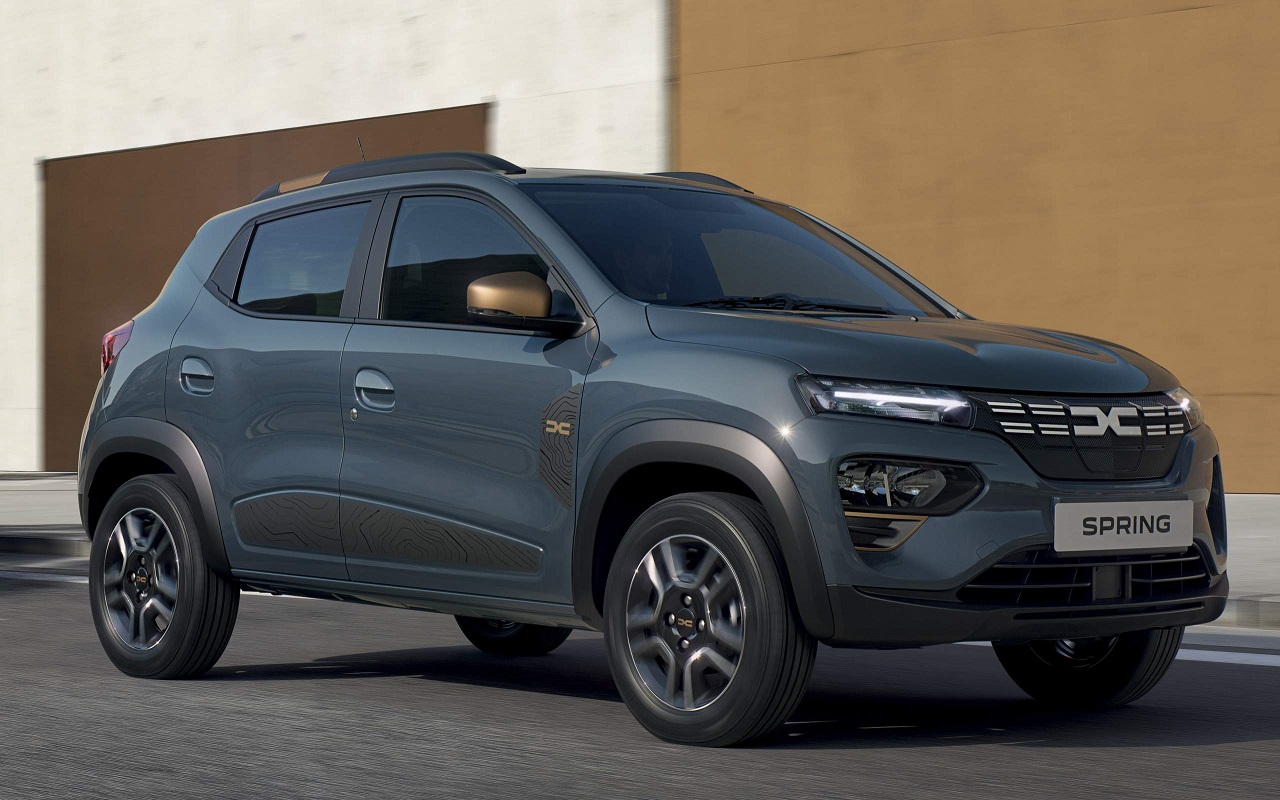

Dongfeng, in Partnership with Renault, Developed a ‘Cheap’ Electric Car Based on the Renault Kwid. The Model is the Cheapest in China and Will Be Sold for Only R$ 45 Thousand.
Dongfeng Motor recently launched the most basic version of the Nanobox, a compact electric SUV that is super cheap and full of details. The electric car from the Chinese manufacturer was presented last year and is essentially a version based on the Renault Kwid, also known as Dacia Spring in Europe. Produced in China, the model is 3.7 meters long and has a wheelbase of 2.4 meters. It is the result of a partnership with the French automaker and basically retains the same rounded design as the original model on the outside.
Electric Car Based on the Renault Kwid Delivers 45 Horsepower


The interior of the model, however, is different, as the seats are made of synthetic leather and the finish is done in two colors. The Nano Box also features two screens on board, including a 7-inch (17.78 cm) digital instrument panel behind the steering wheel and a 10-inch multimedia center.
An interesting feature of the electric car based on the Renault Kwid is an app from the manufacturer that allows users to control some functions via their smartphone, such as locating the vehicle, adjusting the air conditioning, and performing remote diagnostics.
-
British Factory Transitions from Mechanical Parts to Producing 420,000 Electric Power Units Annually, Supplying 70% of Ford’s Electric Cars Sold in Europe

-
BYD’s Dolphin Mini Becomes Electric Vehicle Sensation in Brazil, Surpassing 300,000 Sales with Major Factory and Retail Leadership
-
Toyota Shifts from Hybrid Cars to Electric Air Taxis with Joby’s 6-Rotor Aircraft, Capable of 322 km/h, Aiming for Mass Production to Electrify Urban Skies

-
Ferrari Unveils Limited Edition 12Cilindri Manuale: 6.5-Liter V12, 830 HP, 0-100 km/h in 2.9 Seconds, Top Speed Over 340 km/h, Only 1,499 Units Available




Performance, on the other hand, is not one of the highlights of this entry-level electric car, which has a front motor that generates only 45 horsepower, less than the Kwid E-Tech, sold in Brazil, which offers 65 horsepower.
The propulsion allows the model to go from 0 to 50 km/h in just 6 seconds. The manufacturer did not provide details about the top speed and acceleration. Its lithium iron phosphate battery is from CATL and has a capacity of 15.97 kWh, which is enough to cover approximately 200 km per charge.
“Chinese Renault Kwid” Will Hit the Market for R$ 45 Thousand
The most basic version of the SUV also operates solely with slow charging and takes 3 hours to complete its charge. The other two versions of the “Chinese Renault Kwid” take about half an hour to fully recharge, according to the company.
In the end, the main highlight of the model is its price. Exclusive to the Asian country, the entry version arrives as one of the most affordable SUVs in the country and is priced at US$ 8,800, equivalent to R$ 45 thousand at the current exchange rate.
For comparison, the Kwid E-Tech costs about three times this amount, starting at R$ 146,990. According to the manufacturer, the plan for the coming years is to develop five more electric cars, including sedans and SUVs. It has not yet been confirmed whether the brand’s models will be sold outside the Asian market.
Meet the Renault Kwid E-Tech
The Renault Kwid E-Tech hit the market in August last year, taking the title of the cheapest electric car in Brazil, priced at R$ 142 thousand. Renault emphasizes that the cost per kilometer driven in the Renault Kwid E-Tech is only R$ 0.06, which is an improvement compared to the version with a combustion engine, which costs R$ 0.48.
The electric model comes with 26.8 kWh batteries, generating a range of 294 km in urban use and 265 km in mixed cycle, which combines city and highway driving. When recharged from a 20A residential outlet at 220V, the vehicle takes an average of 9 hours to recover 190 km of range.