Portuguese
  Spanish


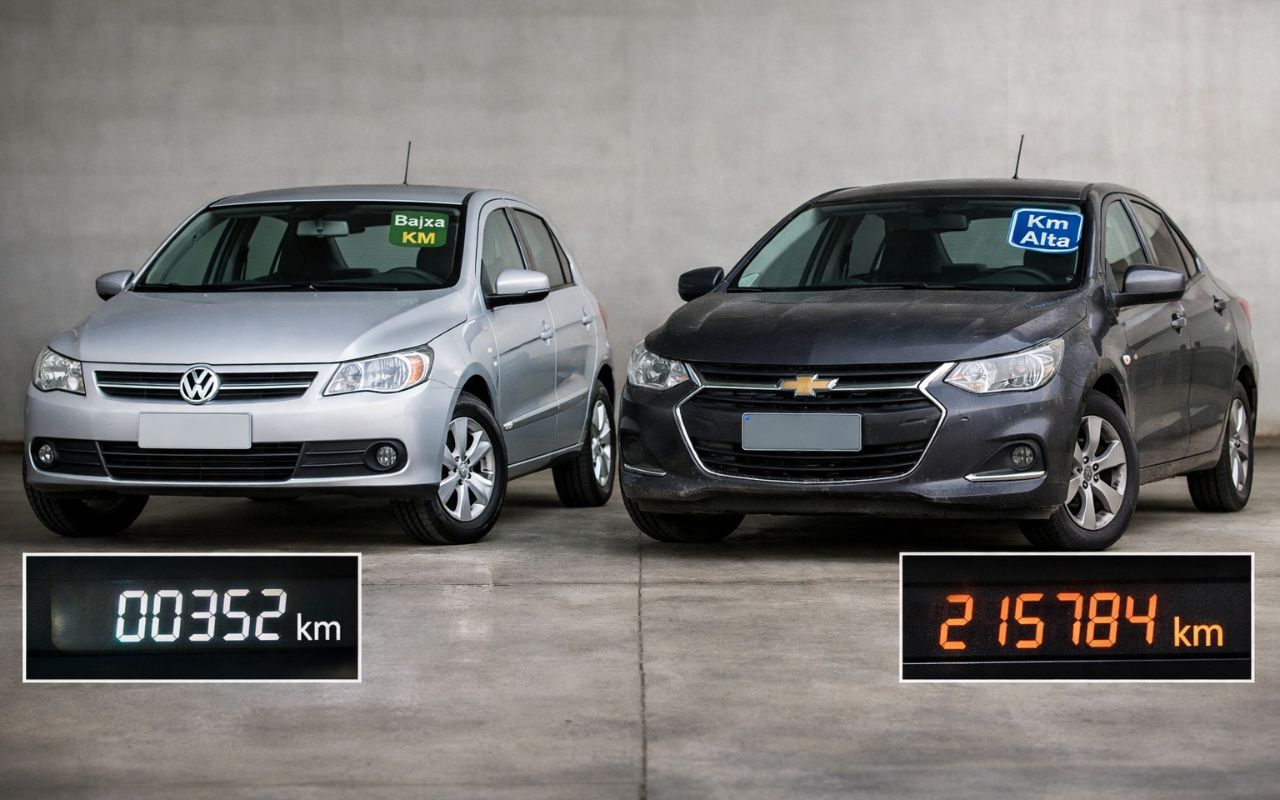


A Car That Is Rarely Used May Have More Problems Than One That Is Driven Daily. Understand The Mechanical, Electrical, And Structural Risks Before Buying.
Buying a car with low mileage seems, at first glance, like a great deal. However, experts warn that a rarely used car may have more problems than a car that is driven frequently.
This situation occurs because vehicles that are parked for long periods experience silent wear and tear that does not always show up on the odometer.
The warning especially applies to those thinking about acquiring a car that is nearly new or used, believing that “it has low mileage, it’s like new.”
-
End of an era in Brazil: beloved sedan by Brazilians is discontinued despite having a 2.0 engine with 151 hp, CVT transmission, 466-liter trunk, and up to 650 km of range.

-
New Law Proposal in Brazil Could Heavily Penalize Drivers: Dangerous Overtaking May Become a Serious Offense with Fines Increased Tenfold and a 12-Month License Suspension; Update on 2026 Progress

-
Electric Revolution: Watts W125 Motorcycle Offers 160 km Range, 90 km/h Speed, and Affordable Price Starting at $3,000
-
General Motors Replaces Over a Thousand Workers with 50 Cobots at Electric Vehicle Plant, UAW Union Criticizes Move Amid Industry’s Automation Push



Although mileage is an important factor, it does not tell the whole story. A car that has been parked for months or years can accumulate mechanical, electrical, and even structural failures.
Therefore, before closing a deal, it is essential to understand the hidden risks behind what is known as a “rarely used car.”
Why Can a Parked Car Have More Problems?
When a car remains unused for a long time, its components stop functioning at the ideal frequency for which they were designed.
This can accelerate internal wear, even without the vehicle being driven.
Rubber dries out, fluids lose their properties, and metal parts can oxidize. Additionally, the lubrication system relies on regular engine operation to keep the parts protected.
In other words, contrary to what many believe, leaving a car parked does not automatically mean preserving it.
Fluids and Lubrication: An Invisible Risk in the Rarely Used Car
The engine oil, for example, loses efficiency over time, even if the car is not being driven. This happens because oxidation naturally occurs.
The same applies to brake fluid, coolant, and fuel. When the car is parked, these liquids can degrade and compromise performance.
Furthermore, stale gasoline can form residues that harm the injection system.
Battery and Electrical Components Suffer with a Parked Car
Another critical point in the rarely used car is the battery. Without frequent operation, it discharges more quickly and may lose capacity permanently.
Meanwhile, modern electronic components continue consuming power even when the vehicle is off. Thus, the risk of electrical failure increases.
In more recent models, which heavily rely on electronic modules, this care should be heightened.
Tires, Brakes, and Suspension Are Also Affected in the Rarely Used Car
A car that spends a lot of time parked can develop deformities in the tires.
The brakes also suffer. Discs and pads can oxidize, impairing braking efficiency.
The suspension may exhibit noises or premature wear if the rubber parts and bushings dry out.
The Environment Influences the Car’s Maintenance
The location where the car is parked makes a difference. Damp garages promote rust and internal mold.
If the car is exposed to the sun for long periods, the interior may suffer from fading and cracking in plastics and leather.
Therefore, it is not enough to know that the vehicle has low mileage. It is crucial to understand the conditions in which it was kept.
Can a Car That Is Driven Regularly Be in Better Condition?
Interestingly, a car that is driven regularly tends to keep its systems more balanced.
Constant operation helps circulate fluids, keep the battery charged, and prevent component drying out.
This does not mean that every car with high mileage is better. However, regular maintenance is often a more significant factor than merely low mileage.
Automotive industry experts emphasize that a history of maintenance and preventive care should weigh more in the buying decision than the number displayed on the dashboard.
What to Evaluate Before Buying a Rarely Used Car?
Before acquiring a car with low mileage, it is essential to check:
- Maintenance history;
- Date of the last oil and fluid change;
- Condition of the battery;
- Conditions of the tires and brakes;
- Presence of rust or internal odors.
Moreover, a mechanical report can reveal structural issues or signs of neglect.


Rarely Used Cars Require Extra Attention
In summary, the idea that “the less driven, the better” is not always true. A car that has been parked for too long may hide problems that only emerge after the purchase.
On the other hand, a car that is driven frequently and undergoes regular maintenance tends to exhibit more stable performance.
Thus, when choosing a car, it is ideal to analyze the set of factors. Mileage is important, but maintenance, regular use, and storage conditions make all the difference.
With information from O Antagonista.