






 Portuguese
  Spanish
  3 min of reading


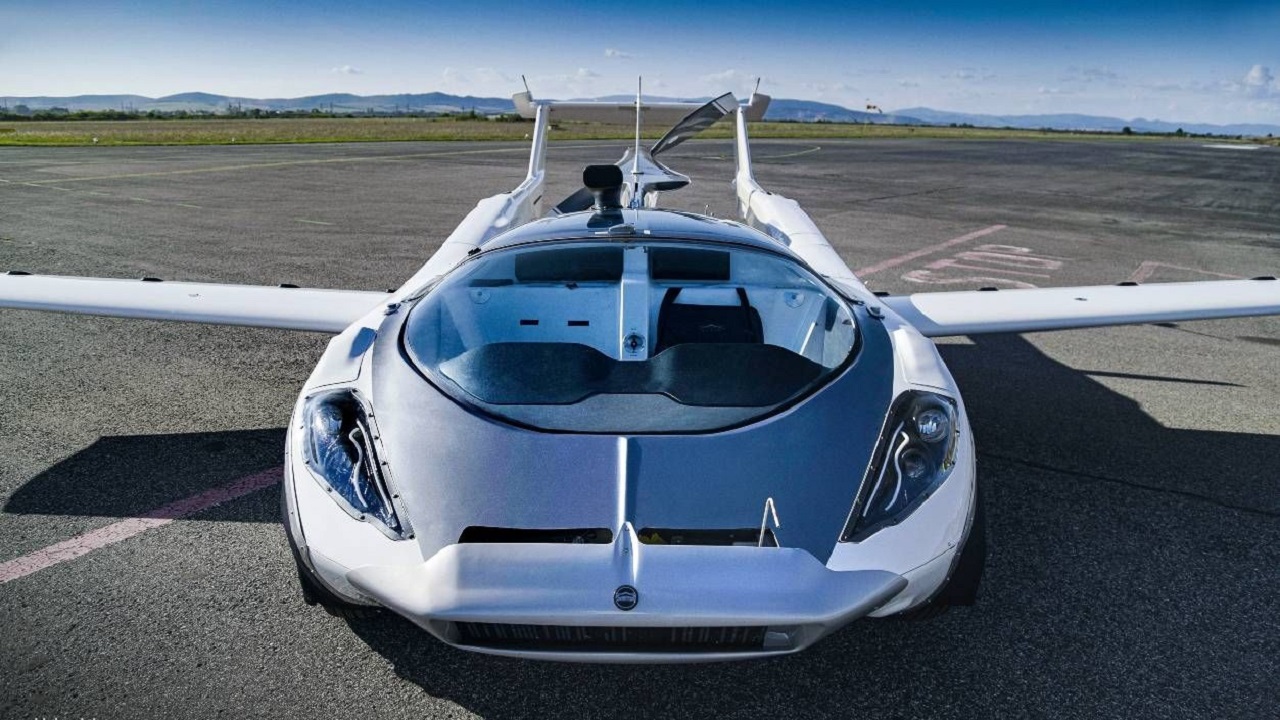
What If a Regular Gasoline Car Could Turn Into a Flying Car? This Is the Proposal from Klein Vision, Which Developed a Gasoline Flying Car That Can Also Be Used on Solid Ground
A regular car that can transform into a flying car has been approved after flight tests in Slovakia. The gasoline flying car, named AirCar, received a Certificate of Airworthiness from the Slovak Transport Authority after completing 70 hours of “rigorous flight tests,” according to Klein Vision, the company that developed the dual-mode flying car. According to a statement released by the company, the test flights, which included over 200 takeoffs, were compliant with standards set by the European Union Aviation Safety Agency (EASA).
Read Other Related News
Gasoline Flying Car May Reach the Market Within a Year

According to Klein Vision, the challenging flight tests included the full range of flight maneuvers and performance and demonstrated surprising dynamic and static stability of the flying car when in aircraft mode. A pilot license will be required to operate the “hybrid” vehicle, and the company plans to launch the gasoline flying car to the market within 12 months.
-
Cheaper than a brand new Fiat Cronos, this used SUV offers a giant 516-liter trunk, a 1.0 Turbo 200 flex engine, CVT automatic transmission, and six airbags; the 2023 Fiat Fastback Impetus positions itself as a more complete alternative than the entry-level Cronos for those seeking more for the same budget.

-
The Ford Ranger plug-in hybrid, the same rugged pickup that handles 800 mm of water, becomes a plug-in pickup with a flex-fuel ethanol engine and is chosen as the International Pickup of 2026.

-
New 0km electric car costs less than R$ 50,000 with an 18 hp engine, carries up to 6 people, travels over 100 km per charge, recharges in a regular outlet, and surprises by dispensing with airbags and limiting speed to 50 km/h in Mexico.
-
Pressure from residents forces a U.S. energy utility to suspend negotiations with a data center that could require 500 megawatts by 2032 and demand new lines, reinforcements in the power grid, and large infrastructure investments.


An eight-member team spent over a decade transforming design concepts into mathematical models to make the construction of the flying car prototype possible. According to Klein Vision co-founder Anton Zajac, the flying car is powered by a 1.6-liter BMW engine and is fueled with gasoline sold at any gas station.
The vehicle can fly at a maximum altitude of 18,000 feet, equivalent to 5.4 kilometers. Last June, the flying car completed a test flight of approximately 35 minutes between Nitra and the capital Bratislava in Slovakia. After landing, the gasoline flying car transformed back into a regular car and was driven through the streets to the city center.
Flying Car Segment Could Generate Thousands of Jobs Worldwide
According to the inventor of the gasoline flying car and the leader of the development team, Stefan Klein, the certification received by the vehicle opens doors for mass production. Kyriakos Kourousis, chairman of the Royal Aeronautical Society’s Specialist Group on Airworthiness and Maintenance, stated that if the company involved in the certification develops a business plan, it could lead to the creation of a market-ready product.
According to the chairman, the scale will also create numerous job opportunities and open up the possibility for new technologies to be developed. Other projects of this kind are being developed, such as the PAL-V Liberty, a gyroplane that also functions as a gasoline car. The vehicle has received complete certification (AESA), but the final compliance demonstration step is still pending.
Experts Suggest That Flying Cars Could Replace Helicopters
Kourousis states that the choice of a combustion engine for the vehicle’s propulsion system was likely made based on proven technology. The environmental impact could be substantial if the use of this type of vehicle expands, especially in urban areas.
It is possible that we may see fully electric or at least hybrid models of this type, or something similar, in the near future, contributing to CO2 emission reduction goals.





Be the first to react!