Portuguese
  Spanish


Behind The Promises Of Employment And Education In Russia, A Web Of Exploitation Leads African Young Women To Drone Factories Used In The War In Ukraine
On her first day at work, Adau realized she had made a serious mistake. They were given uniforms without knowing what they would be doing, and soon were taken inside a massive factory. Looking around, she saw drones everywhere, at different stages of assembly. It was the beginning of an unexpected journey that would take her to the heart of one of Russia’s most sensitive industries: military drone production.
The Program That Promised Opportunities And Turned Into A Nightmare
The 23-year-old woman, originally from South Sudan, was lured to the Special Economic Zone of Yelabuga in the Republic of Tatarstan, under the promise of a stable job and vocational training. She had signed up for the Yelabuga Start program, aimed at women between 18 and 22 years old, predominantly African, but also from Latin America and Southeast Asia. The project offered courses in logistics, hospitality, and general services, but concealed a much more dangerous reality.
The program has been accused of using deceptive recruitment practices, leading hundreds of young women to work in drone factories for low wages and in unhealthy conditions. While denying the accusations, the organizers do not refute that some participants were involved in weapon production.
-
Chinese Nuclear Submarine Launches Simulated Warhead Missile in Pacific, Heightening Regional Tensions Amid Naval Drills with Russia Near Qingdao; New Zealand and Papua New Guinea Warn of Persistent Chinese Military Presence

-
Ayatollah Ali Khamenei’s Funeral Draws 15 to 20 Million in Tehran, Calls for Revenge Against Trump After Joint Israel-U.S. Attack

-
U.S. Establishes Permanent Embassy in Jerusalem, Reigniting International Debate Over Israel’s Capital
-
The world has nearly 12,000 nuclear warheads, with the majority held by the United States and Russia; see the figures for China, France, and the United Kingdom.


The allegations gained international attention after South African influencers promoting the program were accused of facilitating human trafficking. The South African government launched an investigation and warned its citizens not to enroll. It is estimated that over a thousand women have been recruited from various African countries.
Frustrated Dreams In A War Factory
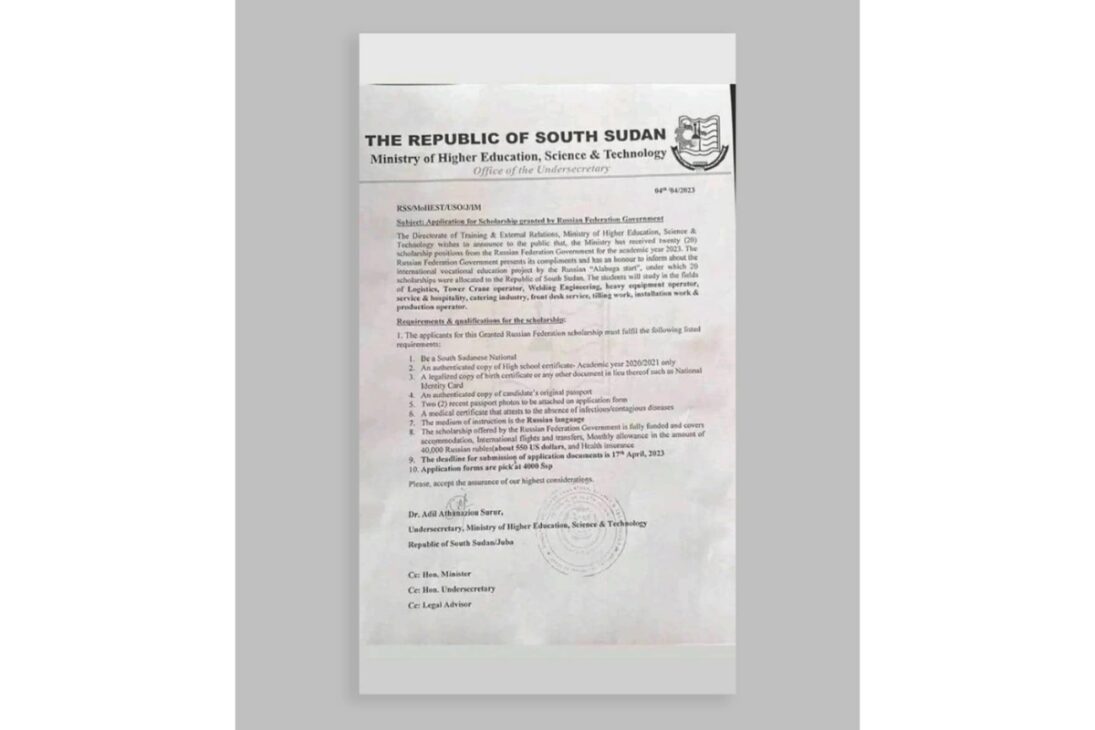
Adau recounts that she learned about the program through an advertisement posted on Facebook and endorsed by her country’s Ministry of Higher Education. The announcement promised job placements and special training in Russia. She eagerly applied, filling out forms and indicating that she would like to work as a crane operator, a technical and unusual role for women in her region.
After a year of waiting and visa bureaucracy, she traveled in March 2024. “When I arrived, it was too cold. It was a shock,” she remembers. In the first few months, she had Russian classes and believed she was about to begin a promising career. But in July, the illusion shattered: participants were directed to the military drone factory. They had all signed non-disclosure agreements and could not speak about their work, not even with their own families.
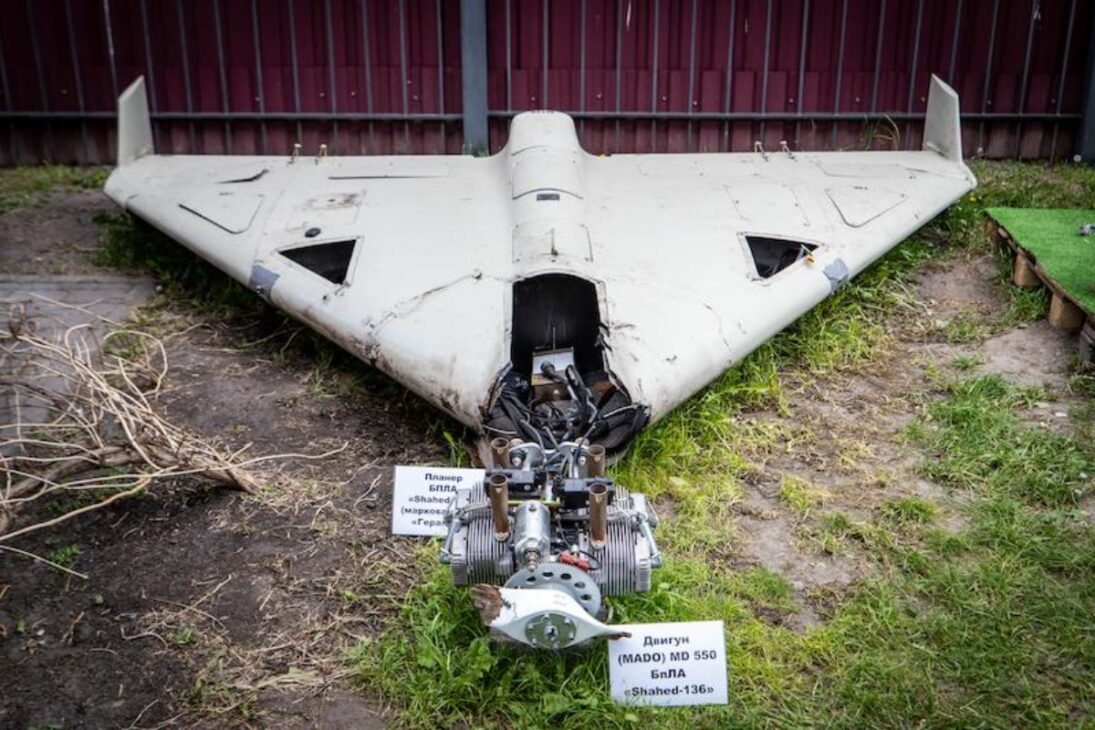
The BBC showed Adau a video from the Russian state broadcaster RT, which displayed the production of the Shahed-136 drones, Iranian models used by Moscow in the war against Ukraine. She confirmed that it was the same facility where she worked. According to expert Spencer Faragasso from the Institute of Science and International Security, “the reality is that Yelabuga is a military production facility; Russia itself takes pride in this in official videos.”
Ukrainian Attack And Daily Fear
Two weeks after Adau’s arrival, on April 2, 2024, the factory was targeted by a Ukrainian drone attack. “I woke up to the sound of the alarm and the glass shattering. When we ran out, I saw a drone coming toward us,” she reported. The attack destroyed a building next to the dormitory where the foreign workers lived. Images verified by the BBC confirm that the location was hit.
The incident revealed the danger they were in. For Adau, it was the turning point: “Only then did I realize that everything made sense, the lies, the secrecy, the fear. I couldn’t stay there any longer.”
When she tried to quit, she was forced to serve a two-week notice period, during which she painted the external structure of the drones with chemicals. The substances burned her skin. “We wore white overalls, but the material hardened with the product and didn’t prevent the burns,” she reported. Photographs of colleagues show severe injuries on their arms and hands.
The Yelabuga administration denies any irregularities and claims that all employees receive proper protective equipment.
Life Between False Promises And Retained Passports
After the attack, some women fled the program, which led the organizers to temporarily withhold the passports of the others. Nonetheless, Adau managed to have her family send her money for her return. Others, however, remained trapped in the reality of low wages and debts. “They promised 600 dollars a month, but I only received a fraction of that,” she said. They deducted amounts for housing, language classes, transportation, and even for accidentally triggering the fire alarm.
Another participant, who requested anonymity, defended the program and stated that “no one was forced to do anything.” But according to experts, the economic vulnerability and isolation made an easy exit impossible.
Adau, who once dreamed of a career in technology and engineering, returned to South Sudan with trauma and a sense of guilt. “It was horrible to realize that I was helping to build something that takes so many lives. I just wanted a chance to grow, not to participate in a war,” she lamented.
Today, the Yelabuga Start program remains active but under intense international investigation. For many young women like Adau, it represents the symbol of a broken promise, a reminder that behind rhetoric of opportunity and exchange, there may lurk the machinery of a conflict that seems endless.