Portuguese
  Spanish


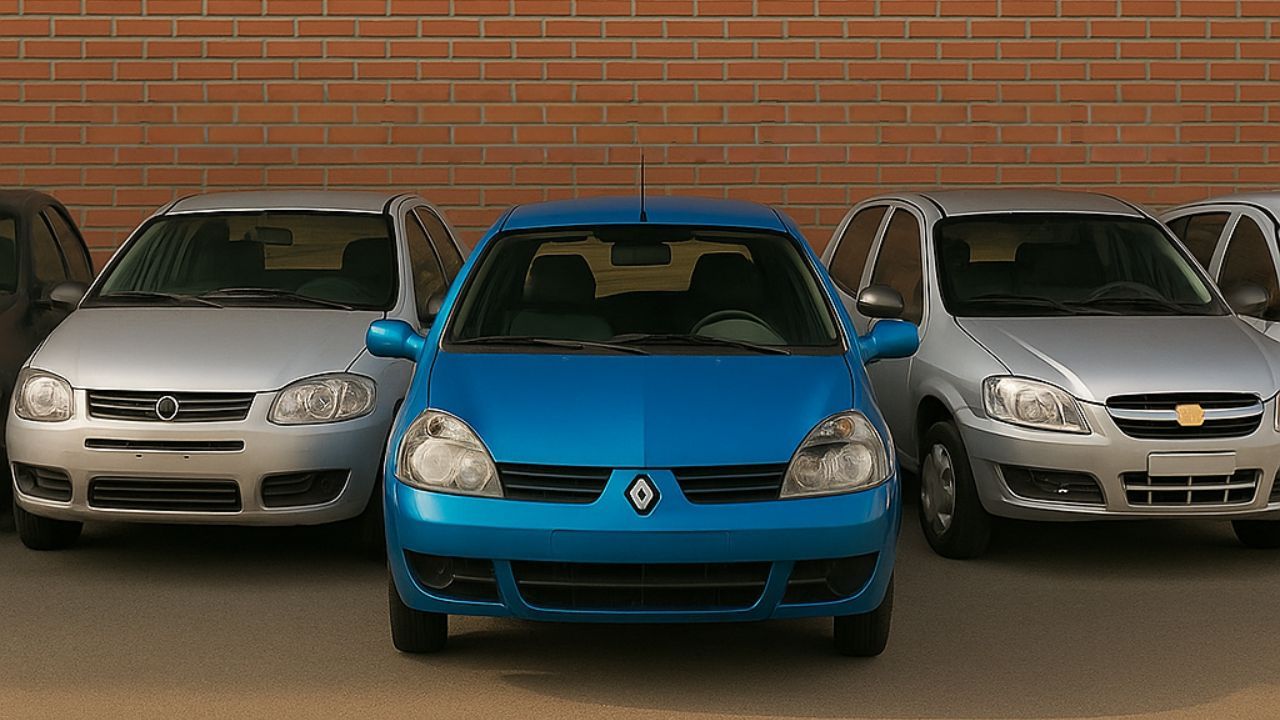


The Absence of a Secure System of Used Car Certification in Brazil Hinders the Development of the Sector. Understand Why Used Car Certification Is Vital and What Are the Challenges the Market Needs to Overcome.
The used vehicle market in Brazil faces a significant obstacle: the lack of a reliable used car certification, points out J.R. Caporal, CEO of Grupo Auto Avaliar, in an article published on October 18, 2025.
In this scenario, although more than 15 million used cars were sold throughout 2024 in the country, there remains a lack of a standardized model that offers safety and transparency for buyers and resellers.
Caporal highlights that the lack of this system limits the full development of the used and semi-new market, preventing it from reaching its true potential.
-
End of an era in Brazil: beloved sedan by Brazilians is discontinued despite having a 2.0 engine with 151 hp, CVT transmission, 466-liter trunk, and up to 650 km of range.

-
New Law Proposal in Brazil Could Heavily Penalize Drivers: Dangerous Overtaking May Become a Serious Offense with Fines Increased Tenfold and a 12-Month License Suspension; Update on 2026 Progress

-
Electric Revolution: Watts W125 Motorcycle Offers 160 km Range, 90 km/h Speed, and Affordable Price Starting at $3,000
-
General Motors Replaces Over a Thousand Workers with 50 Cobots at Electric Vehicle Plant, UAW Union Criticizes Move Amid Industry’s Automation Push


Why Used Car Certification Matters
The so-called used car certification aims to ensure that a resold vehicle has undergone rigorous inspection, has been reconditioned to reliable standards, and has a clear history — elements common in mature markets such as the United States and Europe.
In Brazil, however, the culture of “prioritizing the lowest price” still prevails, and many buyers fail to appreciate the additional benefit of certified vehicles.
Therefore, certification not only brings more safety to consumers but can also increase profit margins and the credibility of resellers, according to the executive.
Situation of the Brazilian Used Car Market
According to presented data, in 2024 Brazil sold more than 15 million used or semi-new vehicles.
Despite this, the country still lacks a consolidated national framework for used car certification, unlike other markets where “Certified Pre-Owned (CPO)” programs are recognized and valued by consumers.
The result is a segment that heavily relies on price and volume — without valuing quality — and faces hurdles such as high-interest rates on used financing and a large supply of older vehicles.
What Are the Main Challenges
Vehicle Selection and Inspection
Caporal emphasizes that certification should start with a strict selection of vehicles, meaning only choosing models with appropriate history, mileage, and condition.
Then, it requires standardized inspection and reconditioning processes before resale.
Lack of Integration Between Rental Agencies and Dealers
Another challenge noted is the absence of integration between rental companies, fleet operators, and dealerships.
This complicates the establishment of consistent parameters for vehicles coming from fleets or subscription programs — a segment that frequently passes used vehicles to the market.
Price Versus Value Culture
In Brazil, many consumers choose vehicles based on the lowest price, without considering the “added value” of certification.
Shifting this mindset is an important point for the used car certification to be truly valued.
Margins and Loyalty
Caporal states that “more than a technical issue, it’s a business strategy capable of increasing margins, building customer loyalty, and raising the standard of the entire automotive chain.”
What Can Be Done to Move Forward
- Adoption of programs similar to CPO (Certified Pre-Owned) adapted to Brazilian reality, so that used car certification becomes recognized and trustworthy.
- Establishment of clear standards and parameters for inspection, reconditioning, and vehicle history — so that the certification seal has meaning.
- Consumer education to help them understand that paying a little more for a certified vehicle — or demanding that level — brings benefits of safety, lower risk of surprises, and potential future appreciation.
- Improvement of integration among different links in the chain (rental agencies, dealerships, fleet operators) so that everyone follows similar standards regarding vehicle origins.
- Incentive policies or regulations that encourage the formal market of certified used cars, reducing informality and increasing buyer confidence.
The imposition of a reliable used car certification seems to be one of the next necessary steps for the market of semi-new and used cars in Brazil to reach a higher level of maturity.
With over 15 million units sold in 2024, the sector already has scale — yet lacks a standard that ensures quality, provenance, and consumer trust.
If this model materializes, benefits such as higher margins for resellers, customer loyalty, lower risk of fraud, and a healthier automotive chain may arise.
Still, to get there, a change in culture, processes, and structure will be necessary.
Meanwhile, those who buy or sell need to stay alert: demand a clear history, rigorous inspection conditions, and understand that a low price alone is not a guarantee of peace of mind.