Portuguese
  Spanish


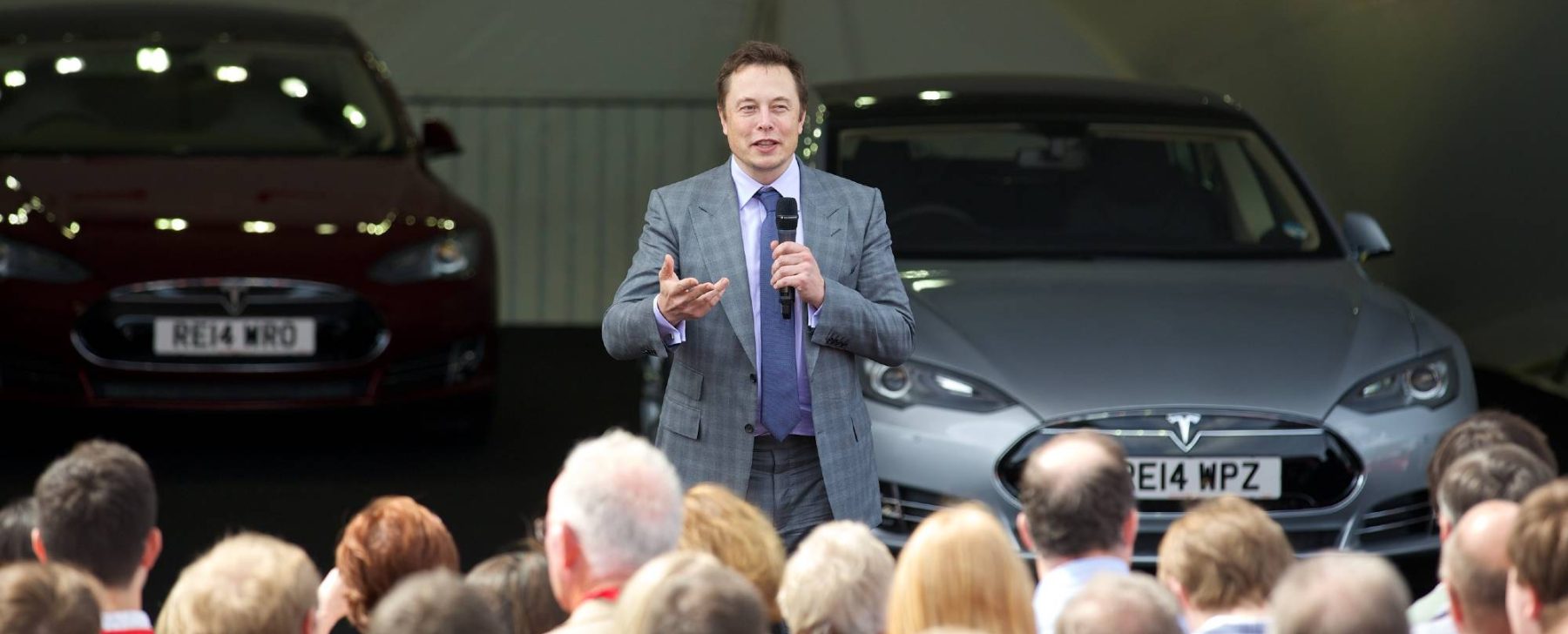

Elon Musk and Drew Baglino Say That the 800-Volt Architecture Is Not in the Cards for Existing Tesla Models. Their 400-Volt Architecture Achieves Comparable Peak Charging Performance to the 800-Volt Architecture Used by Hyundai and Kia.
Tesla, the global leader in electric vehicle manufacturing, is considering using the 800-volt architecture for the Cybertruck and Semi, said Drew Baglino, senior vice president of engineering during last week’s first-quarter earnings call. However, the company is unlikely to adopt an 800-volt architecture for existing models.
His statement came in response to a question about why Tesla is not fully integrated with 800-volt architecture when it is the standard for the Porsche Taycan, Audi e-tron GT, Hyundai Ioniq 5, and Kia EV6. (The new Lucid Air uses a 900-volt architecture.)
Watch the Video Below and Check Out Elon Musk and Tesla Management Discussing Tesla’s First Quarter 2022 Financial Results and Answering Questions from Investors and Analysts


Baglino admitted that Tesla is looking at the 800-volt architecture, but it is not a magic solution for all use cases. According to Baglino, the advantages of the 800-volt system include higher charging power at the same amperage or smaller cables for the same charging power, but these advantages are “massively outweighed” by the additional costs associated with these higher voltages.
-
End of an era in Brazil: beloved sedan by Brazilians is discontinued despite having a 2.0 engine with 151 hp, CVT transmission, 466-liter trunk, and up to 650 km of range.

-
New Law Proposal in Brazil Could Heavily Penalize Drivers: Dangerous Overtaking May Become a Serious Offense with Fines Increased Tenfold and a 12-Month License Suspension; Update on 2026 Progress

-
Electric Revolution: Watts W125 Motorcycle Offers 160 km Range, 90 km/h Speed, and Affordable Price Starting at $3,000
-
General Motors Replaces Over a Thousand Workers with 50 Cobots at Electric Vehicle Plant, UAW Union Criticizes Move Amid Industry’s Automation Push


Baglino said: “For smaller platform vehicles, like 3 and Y, there are some wins and losses with 800 volts. Not everything is better. And so, we look at this platform, and we are not, like, ignoring the reality that you can go to a higher voltage, but there is nothing that really incentivizes us to do so on this platform.”
Then Elon Musk chimed in to add that moving from 400 to 800 volts could save the company US$ 100 per car, but would add enormous costs, as all 33,000 chargers in the Tesla Supercharger network would need to be converted to operate at 800 volts if the switch were made. In other words, changing horses midstream can be a bad — and costly — idea.
Tesla, with its 400-volt architecture, achieves peak charging performance comparable to the 800-volt architecture used by Hyundai and Kia, but can only maintain that level for a short period. As a result, the charging time is a few minutes longer.
Baglino added that he sees more advantages than disadvantages for vehicles that require higher charging power or more torque. “There is a little more real savings in semiconductors and conductors when going to a higher voltage. And so, we consider this for Semi and Cybertruck. But for the 3/Y platform, where we have everything working, the benefit is questionably small.”
Baglino and Musk’s remarks suggest that the 800-volt architecture could be chosen for the Cybertruck and Semi, both scheduled to enter production at Tesla’s factory in Austin relatively soon. However, analyzing the words of both men, a safe bet is that if it does appear, it will be part of the Semi, which will likely have its own dedicated charging infrastructure due to the size of its battery and the need for higher power charging.
Nothing in Muskland is certain until it actually happens, so it’s probably best to take a “wait and see” approach on whether Tesla will opt to incorporate 800-volt architecture in any of its vehicles.