





 Portuguese
  English
  Spanish
  5 min of reading
  0 comments


Submerged structure in the Pacific connects oceanic intake, desalination plant, and long-distance aqueduct to bring fresh water to central Chile areas, in a private project that combines maritime engineering, land treatment, and distribution for different uses.
Aguas Pacífico completed central maritime stages of the Aconcagua Project in Chile, with the installation of a 1,025-meter submarine intake and five intake towers in the Pacific Ocean, a structure created to bring seawater to a desalination plant in Puchuncaví, in the Valparaíso region.
With a planned capacity of 1,000 liters per second of fresh water, the unit will be able to produce the equivalent of 86.4 million liters per day and will send the treated water through a 105-kilometer aqueduct to the Quilapilún sector in the Metropolitan Region of Santiago.
Water intake in the Pacific
Responsible for conducting seawater to the land treatment infrastructure, the intake operates without direct suction, according to the description released by the company itself about the submarine intake system.
-
Prisoners will work in Brazil: with the new law, Brazilian inmates will clean streets and work with recycled materials in a measure that promises to transform cities.

-
Almost no one knows the real meaning of the letters AA and AAA on batteries: a standard created almost 100 years ago retired forgotten models, powers billions of devices, and explains why these cylinders dominated the world.
-
A 4,500-year-old blade from Turkey has been added to the list of objects made with extraterrestrial metal: study links Alaca Höyük artifact to the use of meteoric iron before the Iron Age.
-
Before the great colonial centers were born, São Vicente was already voting: in 1532, the first city in Brazil held the first recorded elections in the Americas and marked the beginning of the continent’s political life on the coast of São Paulo.



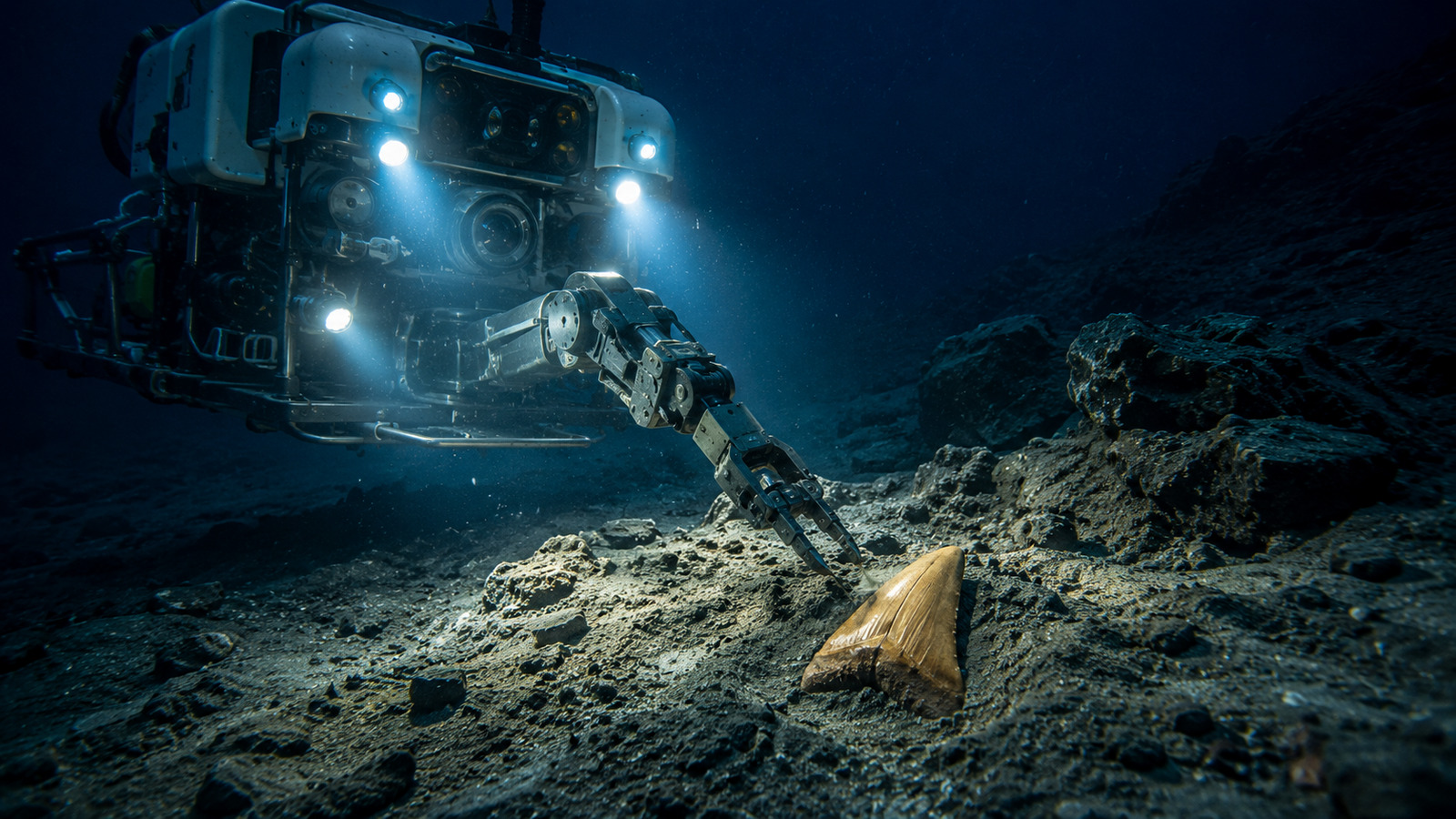
Installed on the seabed as part of the project’s submarine works, the piece has a 1.8-meter external diameter and integrates the physical connection between the Pacific Ocean and the desalination plant.
At the maritime end of the system, the five intake towers allow the oceanic water to enter the pipeline and enable the captured volume to reach the land treatment structure.
The positioning maneuver of these towers took place on September 5, 2025, as reported by Aguas Pacífico, and required about four hours of technical operation in the coastal environment.
Before this stage, in July 2025, the company had reported the completion of the installation of the project’s marine ducts, including the intake installed on the Pacific seabed.
Linked to the return of effluent to the sea, the submarine emissary had already been installed in January 2025, according to a statement reproduced by Diario Estrategia on the progress of maritime works.
The set integrates maritime engineering, pumping, treatment, and long-distance distribution, forming an operational chain that begins below the surface and continues to the land infrastructure.
Once captured, the Pacific water goes to a sump, where it accumulates before being sent to the desalination plant, according to the project’s technical description.
Desalination Plant in Puchuncaví
Located in the commune of Puchuncaví, in the Valparaíso region, the desalination plant is in a coastal area near Quintero Bay and focuses on the stage of removing salts from water captured in the Pacific.
For Aguas Pacífico, the project represents a new source of water aimed at industrial, agricultural, and human consumption uses, with distribution planned for different demands of central Chile.
The announced capacity of 1,000 liters per second corresponds to 86,400 cubic meters per day, a volume that helps to gauge the scale of the maritime and terrestrial infrastructure involved.
Therefore, the venture is not limited to sea capture and depends on a chain formed by underwater structures, a treatment plant, pumping, reservoirs, and pipeline transport.
According to the company, the produced water will be transported by an aqueduct of 105 kilometers from the coast to Quilapilún, in the Metropolitan Region of Santiago.
This route connects the Valparaíso coast to interior areas of central Chile, where pressure on traditional supply sources is part of the project’s context.
Along the route, the system also considers five storage and distribution tanks, according to information published by companies and media following the implementation of the work.
This stage organizes the delivery of desalinated water to the planned points, after the removal of salts and long-distance pipeline transport.
Aqueduct Brings Water to the Interior of Chile
The territorial dimension of the project becomes clearer with the aqueduct, responsible for taking the treated water beyond the coastal zone and expanding the reach of the plant installed in Puchuncaví.
According to KSB Chile, a supplier involved in the pumping infrastructure, the route crosses communes such as Puchuncaví, Quintero, Quillota, Limache, Olmué, and Til Til until reaching Quilapilún.
With this design, the desalination plant functions as a physical link between the Pacific Ocean and consumer areas located in the interior of central Chile.
While the underwater part captures the raw water, the terrestrial infrastructure needs to maintain pressure, storage, and distribution compatible with the volume produced by the unit.
Aguas Pacífico states that the venture seeks to provide a non-continental water source to address water scarcity in central Chile.
Instead of relying exclusively on rain, rivers, reservoirs, or aquifers, the proposal relies on converting ocean water into fresh water for different uses.
The use of certified renewable energy at the plant is also planned, according to institutional materials from the company and reports on the venture.
This point has operational relevance because desalination usually requires high energy consumption, especially in pumping and the salt separation process.
Underwater structure supports the operation
Out of sight of those observing the coastal landscape, an important part of the intervention will be submerged or integrated into terrestrial systems that support the continuous operation of the plant.
The operation depends on submerged towers, seabed pipelines, intake and outflow systems, as well as terrestrial treatment and pumping equipment.
The technology planned for the plant is reverse osmosis, a process widely used in desalination to separate salts and other substances from the water captured from the ocean.
After this stage, the treated water undergoes adjustments before being stored and sent through the aqueduct to the end users, according to the project’s environmental summary.
The scale of the work helps explain why the installation of the intake and towers was treated as a key phase within the Aconcagua Project.
Without this underwater connection, the plant would not have continuous access to the raw water necessary to operate at the capacity reported by the company.
Although the image of a large intake installed in the Pacific draws attention, the project depends on an integrated and permanent system to transform seawater into fresh water.
The operation is only complete when intake, treatment, transportation, and distribution work in sequence, with environmental and operational control at each stage.





Be the first to react!