Portuguese
  Spanish


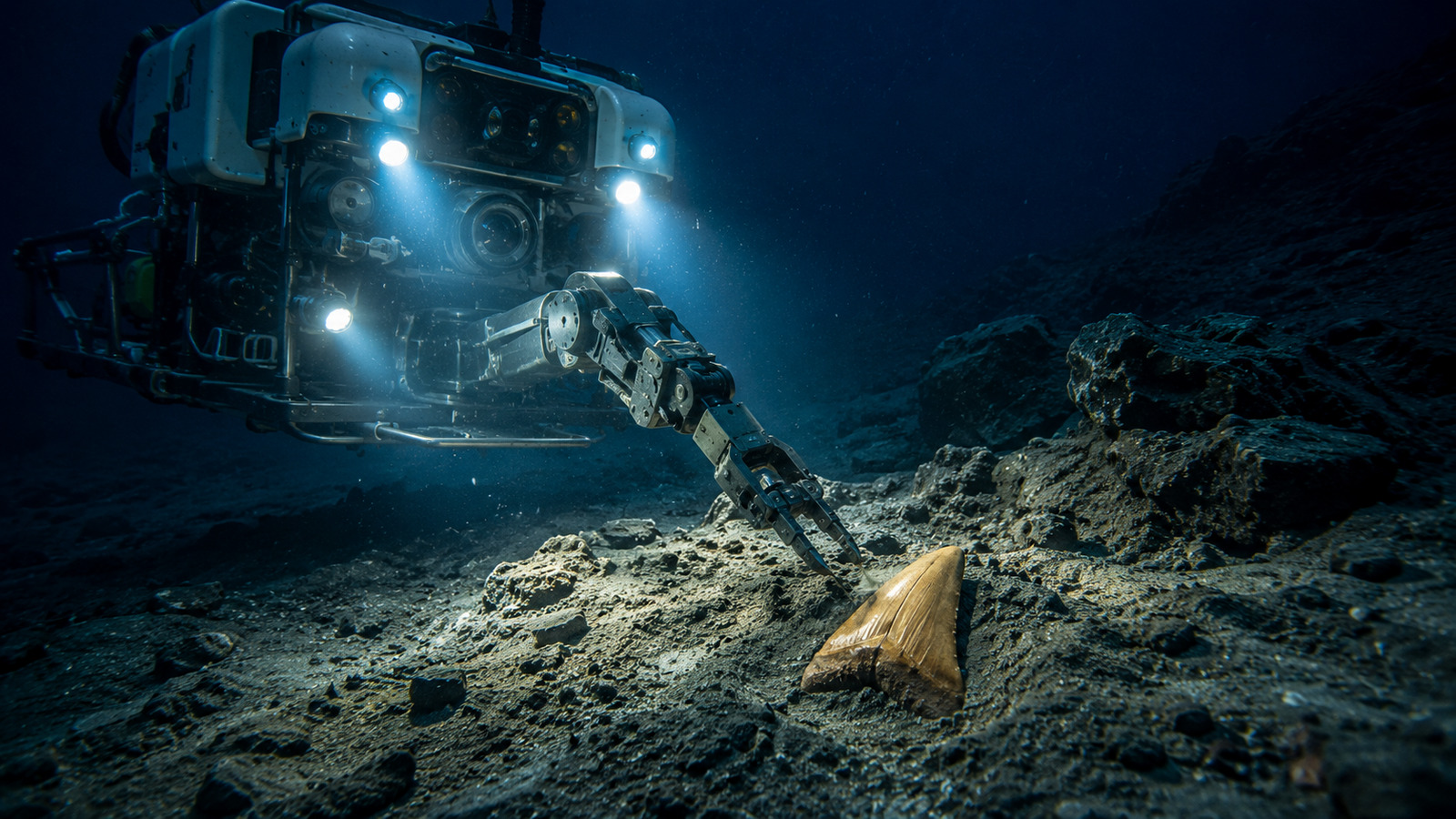

6.8 cm Fossil was observed and collected in its original position on the seabed during Ocean Exploration Trust mission near Johnston Atoll, in 2022
A megalodon tooth was discovered more than 3,000 meters deep in the Pacific Ocean during an Ocean Exploration Trust mission in 2022. The fossil, recovered near Johnston Atoll, is identified by researchers as the first tooth of the species observed and collected in its original position on the seabed.
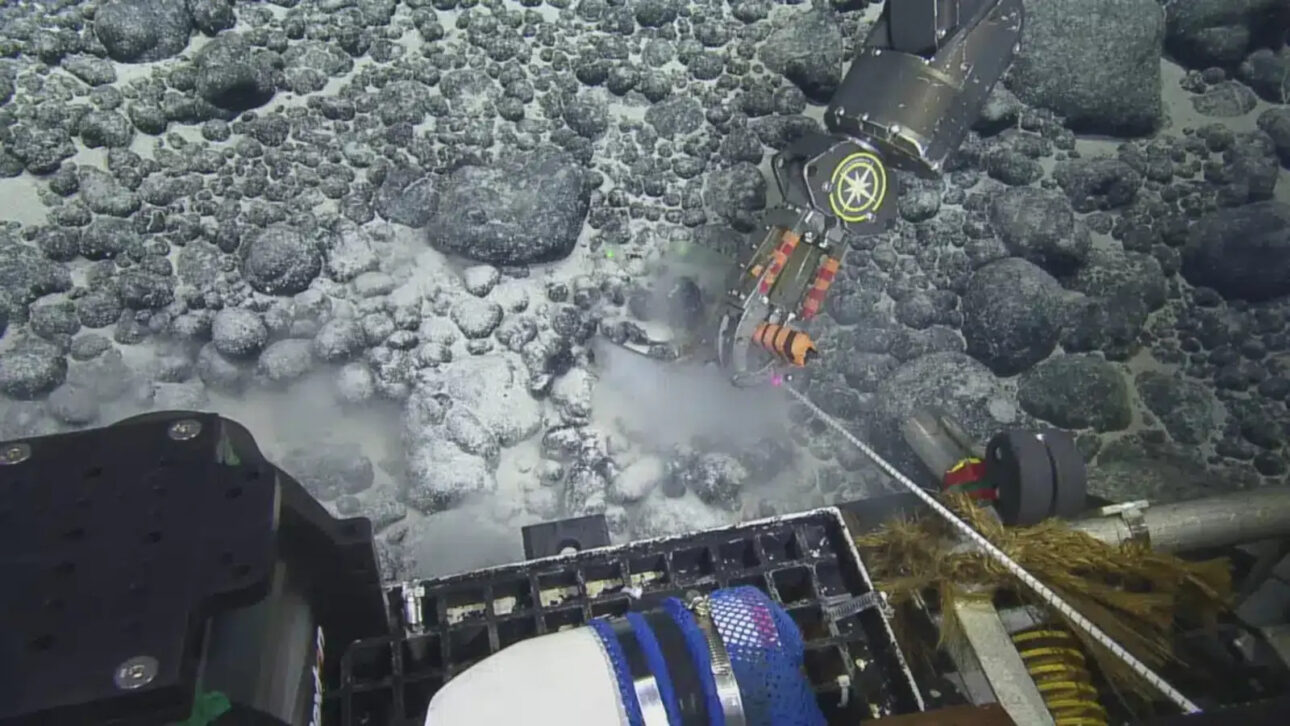
Megalodon tooth was found on remote seamount
The discovery occurred in June 2022, during an expedition of the research vessel Nautilus around Johnston Atoll, a remote region located about 1,300 kilometers south of Hawaii.
The team was studying the geology and biology of the ocean floor on a previously unknown seamount within the Pacific Remote Islands Marine National Monument.
-
Storm Chasers Get Too Close to Oklahoma Tornado, Record 128.8 mph Winds, and Attempt Drone Launch to Measure Pressure and Speed in Dangerous Operation

-
Iranian Scientists Develop Artificial Brain in Lab Using Living Human Neurons Capable of Learning and Forming Neural Networks

-
UK Selects Abandoned Nuclear Island for Rolls-Royce Reactors to Test Mini-Plant Viability Over 60 Years

-
12-Year-Old Indian Girl Invents FreshPaper, a Spice-Inspired Sheet That Extends Fruit Freshness by Four Times, Now Patented in the U.S.




To investigate the area, scientists used Hercules, a remotely operated vehicle capable of working at extreme depths.
During the dive, the equipment collected several samples more than 3,090 meters below the surface.
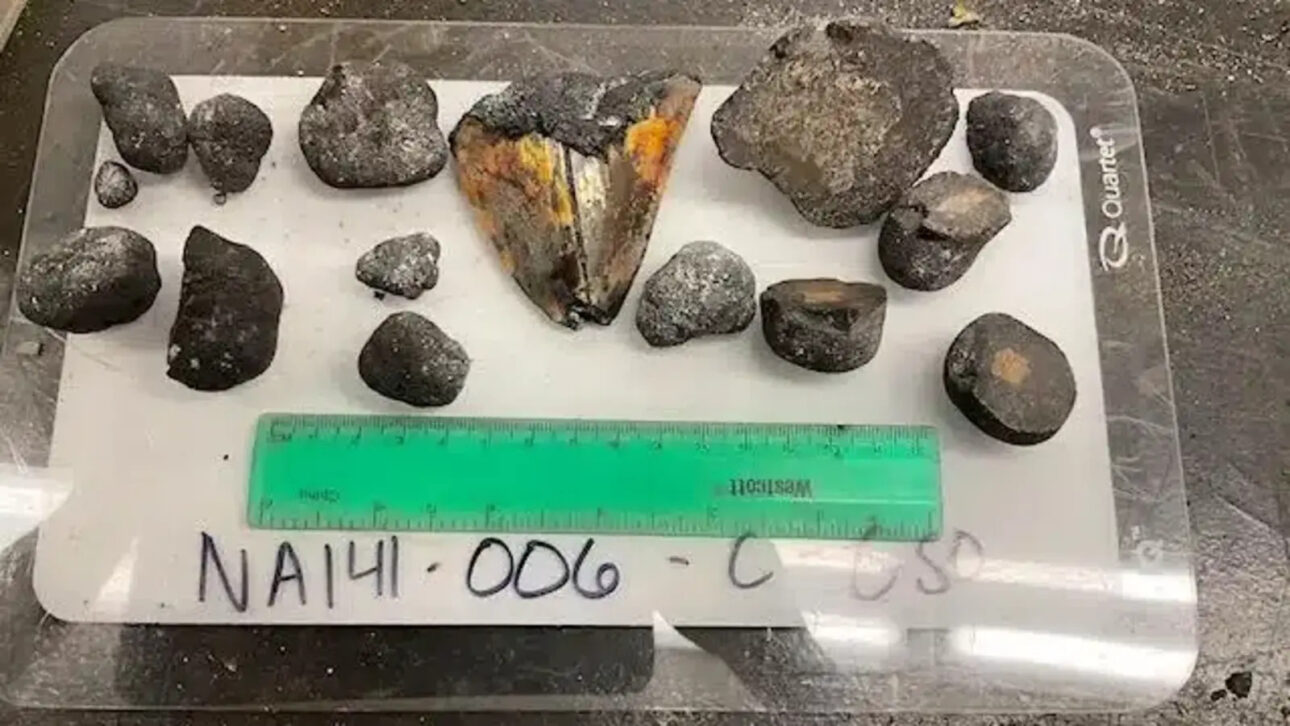
Among the material later sent to the University of Rhode Island was a fossilized golden-colored tooth, 6.8 centimeters long. The initial suspicion was that the fossil belonged to a megalodon.
The identification was later confirmed by shark expert Dave Ebert from the Moss Landing Marine Laboratories in California.
Video showed the fossil before collection on the seabed
The most important point of the discovery came after the identification. Upon reviewing the images taken by Hercules during the dive, the researchers realized that the tooth was visible in the sand before being collected.
This record allowed the fossil to be directly linked to the place where it was found, something rare in deep-water discoveries.
According to the researchers, many fossils of this type are obtained through trawling operations on the seabed.
This method usually makes it difficult to determine the exact origin of the material, as the fossil can be displaced before reaching the scientists. In this case, the team managed to observe the tooth still in its original location.
The results were published in the journal Historical Biology. In the study, the researchers described the find as the first in situ observation and collection of a megalodon tooth in deep waters.
Why the find in deep waters is so unusual
Megalodon teeth are relatively common fossils, but they generally appear on land, in rivers, coastal areas, or ancient deposits near the shore. The documented presence of a tooth at great depth makes this case different.
The Ocean Exploration Trust highlighted that the fossil was found in a very remote region of the Pacific. For the research, this increases the scientific value of the material, as teeth of the species are rarely documented in deep waters.
Nicolas Straube, co-author of the study and researcher at the University Museum of Bergen, Norway, described the discovery as “incredible” in a statement released by the Ocean Exploration Trust.
According to him, the fossil was found in a remote deep-water location. Straube also noted that the partial encapsulation with manganese suggests that fossilized shark teeth can serve as an ideal base for the accumulation of this material.


Find helps to understand where the megalodon roamed
The discovery also offers a new clue about the distribution of Otodus megalodon, the enormous shark that lived in the oceans for millions of years.
According to the data presented in the study, the species existed from about 20 million years ago until its extinction, approximately 3.6 million years ago.
The researchers estimate that the megalodon reached at least 15 meters in length and could grow up to 20 meters. Each shark had about 276 teeth, which helps explain why their fossils appear relatively frequently.
Even so, most records come from environments close to the coast. Therefore, the tooth recovered in the Pacific reinforces the importance of knowing exactly where the fossil was before collection.
Jürgen Pollerspöck, author of the study and researcher at the Bavarian State Collection of Zoology, stated that the fossil provides important information about the distribution of the megalodon.
According to him, the specimen suggests that the megalodon was not purely a coastal species and moved through ocean basins, similar to modern sharks like the great white shark.
This article was prepared based on information from the Ocean Exploration Trust and the journal Historical Biology, with data, numbers, and statements preserved as per the consulted material.