






 Portuguese
  Spanish
  4 min of reading
  0 comments


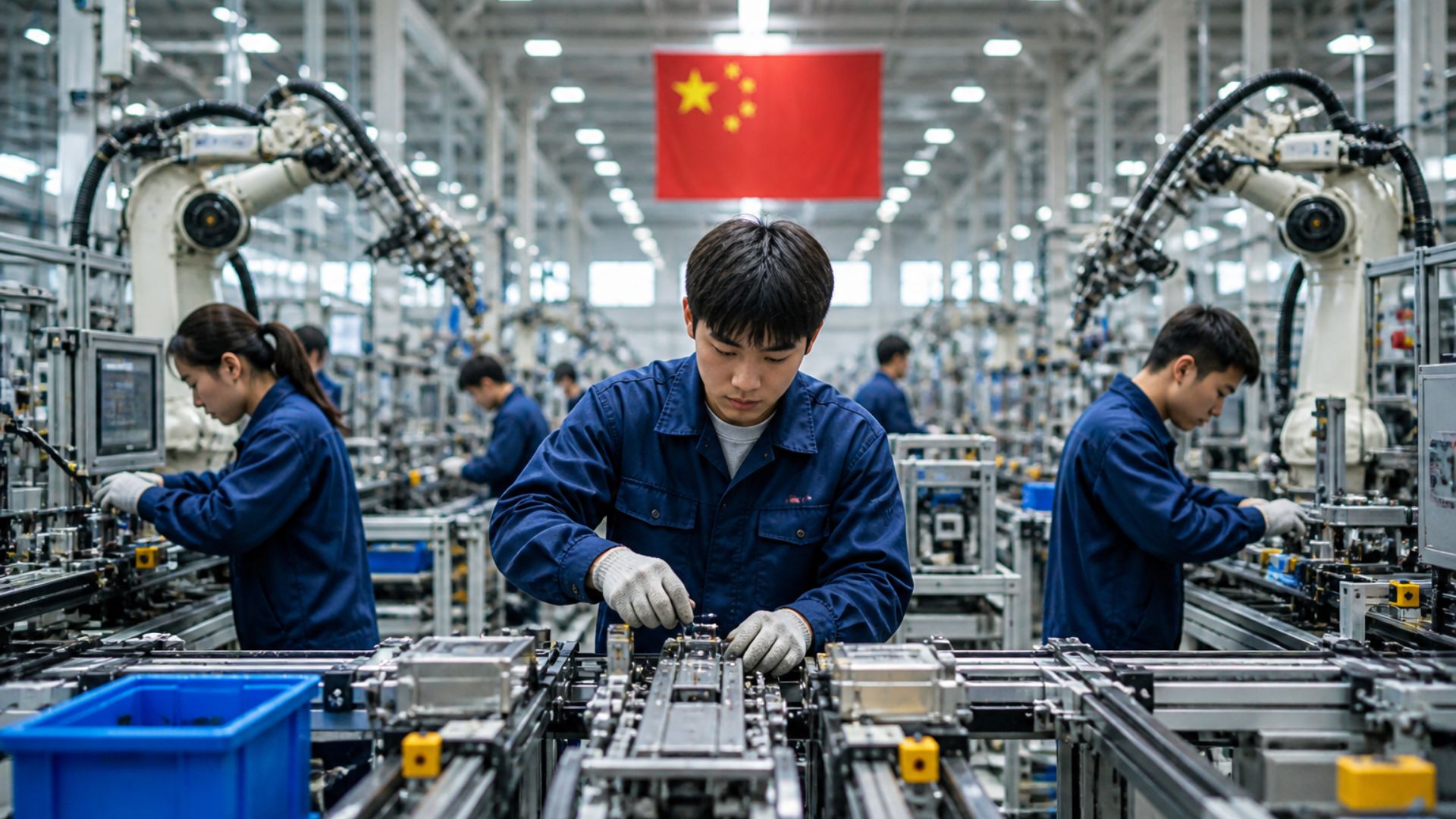
Record pressure for jobs, large-scale technical reskilling, and a change of direction for graduates expose the structural challenge of the Chinese market, with millions of young people competing for vacancies in strategic and industrial sectors.
China has launched a new offensive to connect unemployed young people, including recent university graduates, with technical courses and industrial vacancies, in the face of a market pressured by the entry of 12.7 million graduates expected to compete for opportunities throughout 2026.
Within this plan, authorities announced the reskilling of 1 million young people in strategic areas such as artificial intelligence, advanced manufacturing, new energy vehicles, and low-altitude economy, aligning professional training with industrial priorities considered central by the government.
Youth unemployment in China pressures public policies
Amidst this scenario, the measure comes accompanied by clear signs of tension in the urban labor market, especially among younger people who face increasing difficulty in securing their first professional opportunity after completing higher education.
-
Survivor of 1966 SS Daniel J. Morrell Shipwreck in Lake Huron Recounts 38-Hour Ordeal in Extreme Cold

-
The Greatest Hoax in World Cup History? The Film That Denied Brazil’s 1958 Victory and Exposed How Fake Evidence Can Seem Convincing on TV
-
Fake South Korean Online Stores Offer Shopping Thrill Without Spending Money or Receiving Products
-
The War of Jenkins’ Ear: How a Severed Ear Sparked One of the 18th Century’s Most Unusual Conflicts


Official data shows that, in March 2026, the unemployment rate among Chinese people aged 16 to 24, excluding students, reached 16.9%, highlighting the mismatch between the pace of academic training and the market’s absorption capacity.
Given this, the government is trying to reduce the misalignment between university degrees and business demands, concentrating efforts on sectors considered strategic, while also seeking to transform academic training into a workforce more compatible with industrial reality.
Technical courses return to the center of economic strategy
As part of this movement, authorities have begun to encourage local governments to create technical programs specifically aimed at unemployed graduates, with the objective of complementing university education through practical skills required by emerging industries.
In the Chinese capital, this model has already begun to be applied with the creation of six full-time programs in technical schools aimed at graduates, structured in cycles that combine one year of theoretical training with another dedicated to supervised internships.
At the same time, the initiative integrates a broader employment stimulus package, which includes subsidies, tax incentives, and internship programs, seeking to expand hiring in sectors such as technology, advanced manufacturing, and services considered strategic.
Young people criticize return to technical training
Despite the official discourse, the proposal has faced resistance among young people on social media, where questions have arisen about the value of higher education in the face of policies that encourage a return to technical training after years of academic dedication.
“I’m speechless.
I worked hard from vocational school to undergraduate and master’s degrees, only to be told to go back to a technical college.”
This reaction highlights the symbolic weight of a university diploma in China, historically associated with social mobility, financial stability, and family recognition, factors that reinforce frustration in the face of changes in professional expectations.
At the same time, the accelerated growth in the number of graduates has not been accompanied by the creation of equivalent vacancies, increasing competition and reducing the chances of placement in positions compatible with academic qualifications.
Saturated market challenges recent graduates
In this context, young people seeking their first job face an increasingly competitive environment, exacerbated by economic changes that have led companies to reduce hiring since the pandemic period, especially in private sectors more sensitive to the slowdown.
Without finding stable opportunities, many graduates have started investing in postgraduate courses as a strategy to postpone market entry, while others resort to temporary jobs or the informal sector as an immediate income alternative.
Pressure is expected to increase with the arrival of new professionals, as the country is projected to register 12.7 million university graduates in 2026, further intensifying competition for entry-level positions in various fields.
Industry gains prominence in Chinese strategy
From an economic perspective, reskilling also responds to a broader strategy of industrial strengthening, focusing on reducing external dependencies and advancing sectors considered essential for China’s global competitiveness.
With this objective, the government has set a goal of creating more than 12 million urban jobs by 2026, in addition to keeping the general urban unemployment rate around 5.5%, combining economic growth with social stability.
More than an emergency response, the investment in technical courses is part of a long-term project that seeks to integrate universities, vocational schools, and industry, connecting educational training to the country’s productive needs.
Even so, the social impacts remain sensitive, especially for young people who dedicated years to higher education and now find themselves facing professional paths different from those originally planned within their academic trajectories.
In practice, the country tries to balance the absorption of millions of qualified young people with the need to supply industrial sectors, creating a dynamic that redefines professional expectations and reorganizes the relationship between education and the labor market.





Be the first to react!