






 Portuguese
  Spanish
  4 min of reading
  0 comments


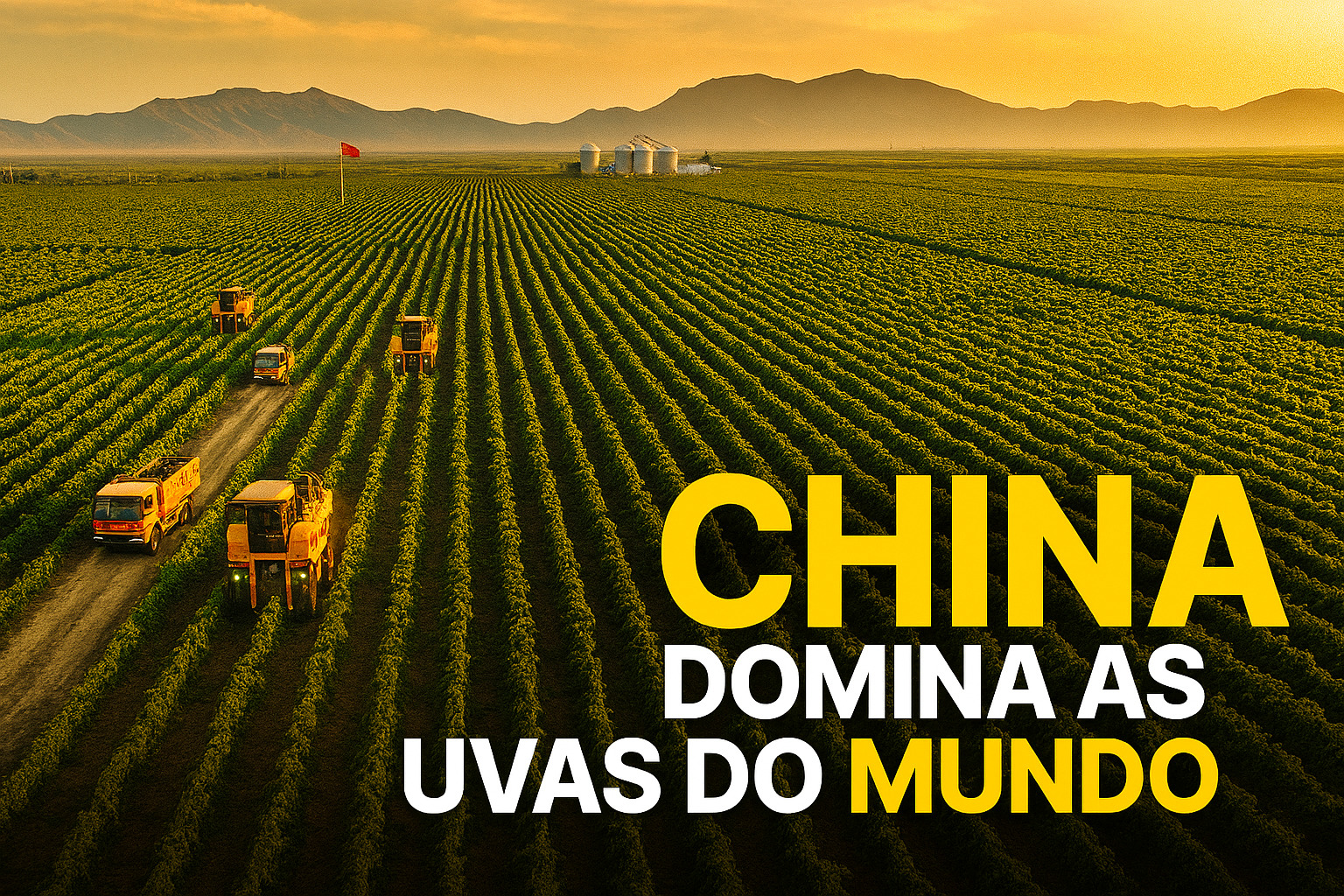
China Leads Global Grape Production With Over 10 Million Tons Per Year, Provinces on a Continental Scale, and an Internal Market That Consumes Almost Everything It Produces.
In the last two decades, global viticulture has undergone a silent but profound change. Countries historically associated with grapes, such as Italy, France, and Spain, remain relevant, mainly in wine. However, when the criterion is total volume produced, leadership is no longer in Europe. Today, China is the largest grape producer on the planet, with an annual production that exceeds 10 million tons, reaching in some years the range of 11 to 14 million tons, depending on the harvest.
This volume places the country on a completely different level than any other individual producer, not only for the absolute number but for the territorial scale and internal supply capacity.
Direct Comparison: Who Produces More Grapes in the World
To understand the extent of Chinese dominance, just compare the main global producers. The difference is not only in ranking position but in the production logic of each country.
-
In Virginia, a family of small-scale farmers refused to swap the countryside for the city and transformed their milk production into award-winning artisanal cheese from Mantiqueira de Minas.

-
The alligator that was once illegal game has become a business in the Pantanal: Caimasul, the largest alligator slaughterhouse in the world, slaughters nearly 100,000 per year and exports alligator leather and alligator meat.
-
At 17, Andressa swapped the city for life in the countryside with her father on a farm in Minas Gerais, where they take care of 15,000 fish in aquaculture, cows, and other animals.
-
Organic grape juice from São Roque surprises experts, scores over 90 points in a blind test, and wins a national award after six years of agroecological research.




| Country | Approximate Annual Production (million tons) | Dominant Profile |
|---|---|---|
| China | 10–14 | Internal consumption, table grapes, and raisins |
| Italy | 6–8 | Wine and industrial grapes |
| France | 6–7 | High value-added wine |
| United States | 5–7 | Table grapes, raisins, and wine |
| Spain | 5–6 | Wine and export |
| Turkey | 4–5 | Table grapes and raisins |
| Chile | 3–4 | Export of table grapes |
| Brazil | ~1.5 | Internal consumption and regional export |
The table makes it clear that no other country produces, alone, volumes close to those of China. Even summing major European producers, the logic is completely different: more fragmented production, greater focus on wine and export, lower internal consumption.
Chinese Provinces Function as Producing Countries
Another factor that makes China unique is the fact that some of its provinces produce grapes in volumes equivalent to entire countries. Xinjiang, for example, alone rivals major global producers.
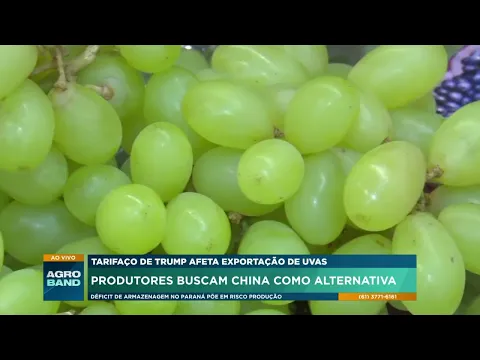

The region of Xinjiang, in the west of the country, has become a symbol of this scale. Despite the arid climate and proximity to desert areas, the province offers ideal conditions for large-scale viticulture: high sunlight, low humidity, cool nights, and strict irrigation control.
The result is continuous vineyards that extend across entire valleys, focusing on table grapes and raisin production.
In addition to Xinjiang, provinces such as Hebei, Shandong, Henan, and Liaoning have rapidly expanded their planted areas, creating distributed viticulture, which reduces climate risks and ensures production stability.
Chinese Production Does Not Depend on the External Market
Unlike countries such as Chile, Spain, or South Africa, China does not produce grapes primarily with export in mind. The engine of the system is the internal market, driven by a population of over 1.4 billion people.
The majority of harvested grapes are consumed:
– fresh
– as raisins
– in juices and derivatives
– in wines aimed at the domestic market
This explains why, even being an absolute leader in volume, China does not appear as a protagonist in the international trade of fresh grapes, a role occupied by smaller but highly exporting countries.
Varieties and Standardization on an Industrial Scale
Chinese viticulture has also influenced the global market by popularizing specific varieties. The Kyoho, for instance, has become the most planted grape in the world precisely because of China.
This is a variety of large grains, very sweet, and adapted to internal consumption, occupying vast areas of cultivated land.
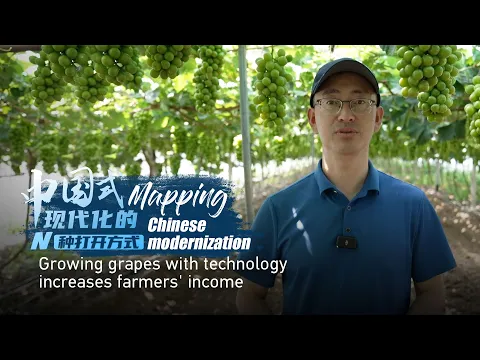
This focus on few varieties facilitates standardization, mechanization, and logistics, which is essential when working with millions of tons per harvest.
Producing More Doesn’t Mean Producing Better, and China Knows This
Despite leading in volume, China recognizes that it does not lead in value added, especially in the premium wine segment. France, Italy, and Spain continue to dominate this market.
Therefore, in recent years, the country has begun investing in:
– vineyards focused on quality winemaking
– enological technology
– international partnerships
– specific regions focused on wine, such as Ningxia
Still, the heart of Chinese viticulture remains volume, internal supply, and food security.
An Agricultural Model That Is Impossible to Replicate
What makes China a unique case is not only producing a lot but being able to sustain this volume continuously. Few countries combine:
– vast agricultural territory
– abundant labor
– massive internal market
– long-term state planning
While Europe and the Americas deal with climatic limitations, unique harvests, and unstable external markets, China has built a viticulture focused inward, with indirect global impact.
Chinese leadership in grape production shows that, in modern agribusiness, volume, territory, and internal consumption can be as strategic as tradition and export.
And you, reader: in the future, will global agricultural power be in the hands of those who export more or those who can produce enough to feed their own country on a continental scale?


-

-

-

-

9 people reacted to this.