Portuguese
  Spanish


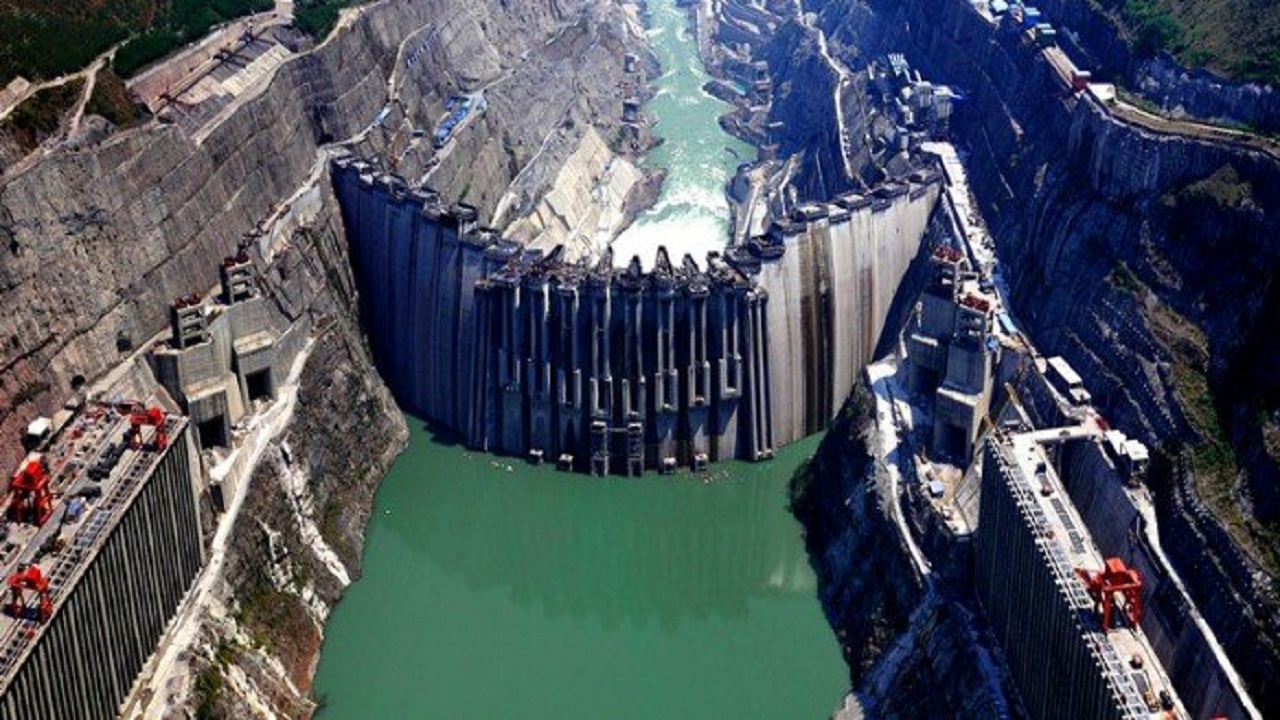

China, Which Already Holds the World’s Largest Hydroelectric Power Plant, Completed Its Second Largest Hydroelectric Power Plant, Known as Baihetan, in May.
The project drew attention from around the world both for its size and the speed of construction. On the last day of May, the 31st, China completed the Baihetan plant, which is considered the second largest hydroelectric power plant in the world.
Also Read
Discover the Second Largest Hydroelectric Power Plant in China
The hydroelectric plant captured the attention of people worldwide due to its speed and efficiency in construction, utilizing various advanced technologies, including artificial intelligence. Another noteworthy fact is that the plant was built in a mountainous, geologically active area, which raised concerns for some.
The second largest hydroelectric power plant in China is expected to become operational at the beginning of next month, July. Its mission is to help Beijing reduce its carbon dioxide emissions by over 50 million tons per year.
-
More than 6,000 trucks poured nearly 70,000 cubic meters of concrete without interruption for 72 hours to create the largest continuous concrete pour in history and erect a megaproject in Saudi Arabia.

-
28-meter, 156-ton titans traveled 20,000 km from China to the port of Santa Catarina: Portonave received 7 fully electric megacranes, part of a R$ 210 million package, to double container handling.
-
They exchanged the idea of a large house for a 35 m² warehouse, spent US$ 12,000 on the structure, and created a tiny house in Colorado with space to live and work.

-
A newly opened terminal in the middle of the Amazon has begun transporting soy and corn through Amapá, eyeing the queue of ships that is congesting the ports in the South.




Tensions Generated by China’s Hydroelectric Power Plant
The project created tensions with the population of the Tibet Autonomous Region as well as with India. China’s relationship with these countries has not been at its best and has worsened each year. Some people wonder whether investments in hydroelectric plants are indeed a reasonable long-term response to promote sustainability and combat climate change.
Bruno Gastal, an expert, states that hydroelectric plants can benefit the environment in some areas; however, they can also exacerbate the concentration of sediments in rivers, leading to severe imbalances in surrounding ecosystems.
“Any form of energy production from hydroelectric plants is always welcome, as it is one of the most reliable, affordable, and efficient renewable energy sources on the market. However, this does not mean that it is always a sustainable alternative,” emphasizes Gastal.
Discover the Largest Hydroelectric Power Plant in the World
Currently, the largest hydroelectric power plant in the world is also located in China, on the Yangtze River. Inaugurated in 2008, it is approximately 2,335 meters long, and its construction took about 14 years to complete. Thus, in addition to being one of the largest electric power generators in the world, the hydroelectric plant is also used to control floods occurring in the region.
The plant, known as the Three Gorges, produces about 22,500 MW of energy per day. Brazil also plays a part, as the position of the third-largest plant belongs to the Itaipu plant, located on the border between Paraguay and Brazil. The Brazilian plant has the capacity to generate about 14,000 MW of energy.