






 Portuguese
  Spanish


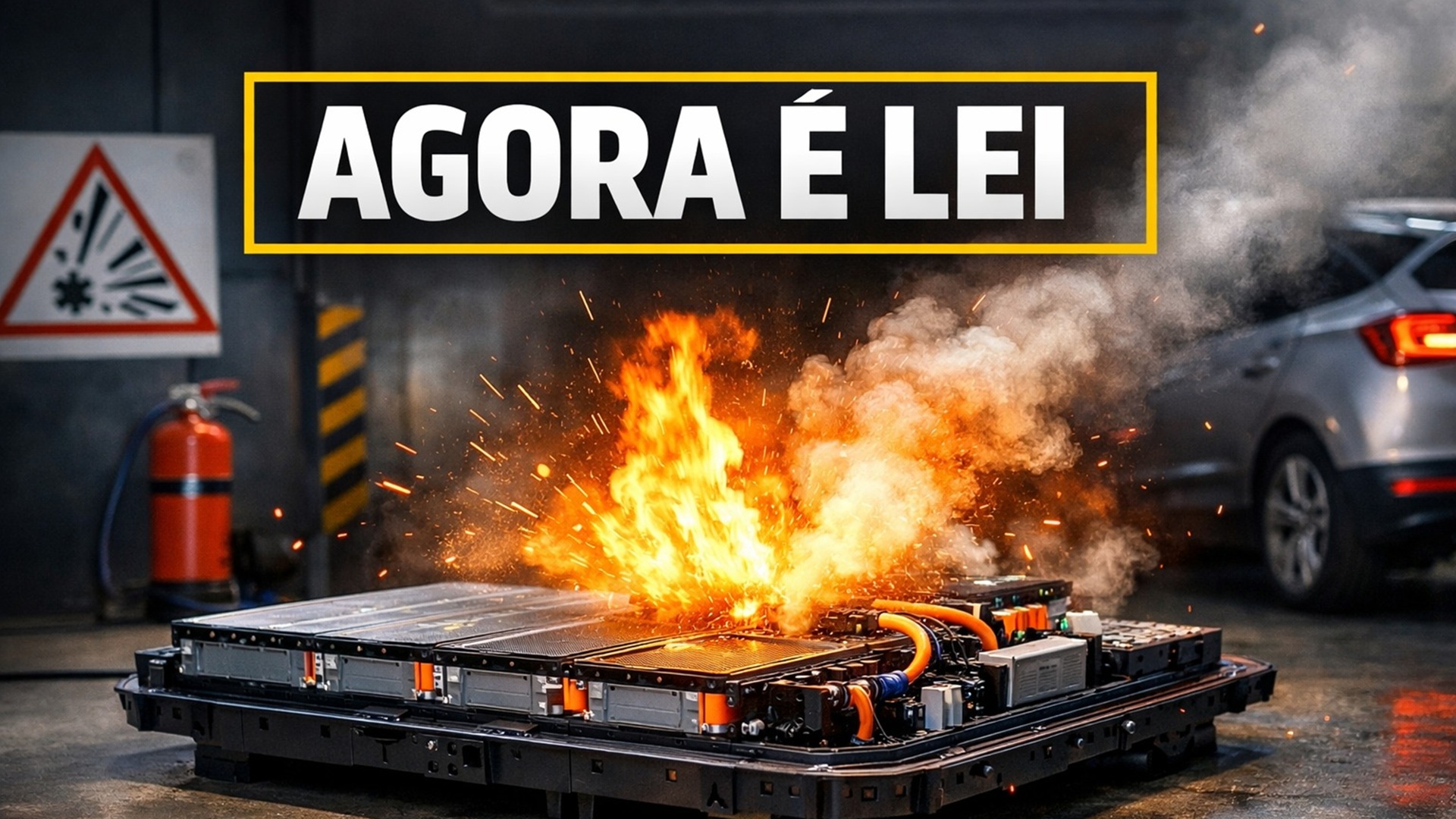


With Focus on Consumer Safety and Industrial Modernization, the Chinese Government Implements an Unprecedented Regulatory Package That Makes Full Fire Prevention in Batteries Mandatory, Sets New Technical Approval Deadlines for Automakers, and Reinforces Circular Economy.
China has finalized mandatory regulations prohibiting fires in electric vehicle batteries. The measure is part of a plan from seven government departments to modernize 13 industrial sectors and promote safety and sustainability starting in 2026.
Technical Requirements and Mandatory Safety
China has completed the revision of regulations in 13 key industrial sectors. A highlight is the elevation of safety requirements for electric vehicle batteries to mandatory status for the first time in the country.
The rules explicitly require that batteries do not catch fire or explode. These safety limits have become national technical requirements, reinforcing oversight and raising the compliance standard for manufacturers in the market.
-
Pennsylvania Mine Creates Ice in Summer Heat and Melts in Winter, Turning a Mountain Crevice into a Reverse Natural Refrigerator

-
China Accelerates Global Expansion of Robotics: From Smart Vacuums to Industrial and Humanoid Machines, Millions Exported to Over 150 Markets
-
Polar Air Mass to Hit Brazil: Temperatures to Plummet in Nine States, Near Freezing in the South with Frost Risk Until Monday
-
Chinese “dark factories” produce electric cars 24/7 with minimal human intervention, as Zeekr assembles 800 units daily, raising concerns in Brazil.




Implementation Timeline for Norm GB 38031-2025
The implementation timeline for the new safety framework has been recently clarified. The revised national standard, GB 38031-2025, will officially come into effect nationwide starting July 1, 2026.
All new vehicle approvals must comply starting from that date. Vehicles already approved under previous standards will have extended deadlines, in most cases until July 1, 2027.
Liu Hongsheng from the State Administration for Market Regulation stated that the rules will require design improvements. Automakers will need to enhance thermal management to ensure safer new energy vehicles.
Industrial Modernization and Energy Efficiency
The measures are part of the Action Plan to Promote Equipment Renewal. The goal is to guide industrial modernization and renew the consumer market through much stricter regulatory guidelines.
Seven central government departments jointly announced the coordinated action plan. The standards have already been approved and published, covering areas such as energy efficiency, product quality, and resource recycling systems.
A total of 113 national standards have been approved and published. They include more stringent mandatory limits on energy consumption, aiming to accelerate the phasing out of obsolete and inefficient production equipment.
The package of updates focuses on energy efficiency and emissions reduction in the industrial base. Authorities have revised standards for coal-fired power generation, steel production, and construction materials.
The regulatory framework imposes efficiency requirements on commonly used industrial equipment. The list includes boilers, electric motors, and transformers, which must meet the newly established energy performance criteria.
Standards for Recycling and Circular Economy
Regulatory bodies have also implemented 115 national standards focused on daily consumer demand. The sectors covered range from automobiles and appliances to furniture and various consumer products emerging in the market.
China has approved 66 national standards dedicated to resource recycling and circular utilization. The new framework addresses the entire lifecycle of recovery, including collection, dismantling, processing, and regeneration of goods.
The rules apply to sectors such as appliances, furniture, and electronics. Photovoltaic systems and wind energy equipment are also included in the effort for a more circular and resource-efficient economy.





Pois é, e os milhões de carros já produzidos, adivinhem para onde vão ir?
Sim e os milhões de carro que eles fabricaram fica como?
Quem já comprou torce pra não pegar fogo!👍🏻