






 Portuguese
  Spanish


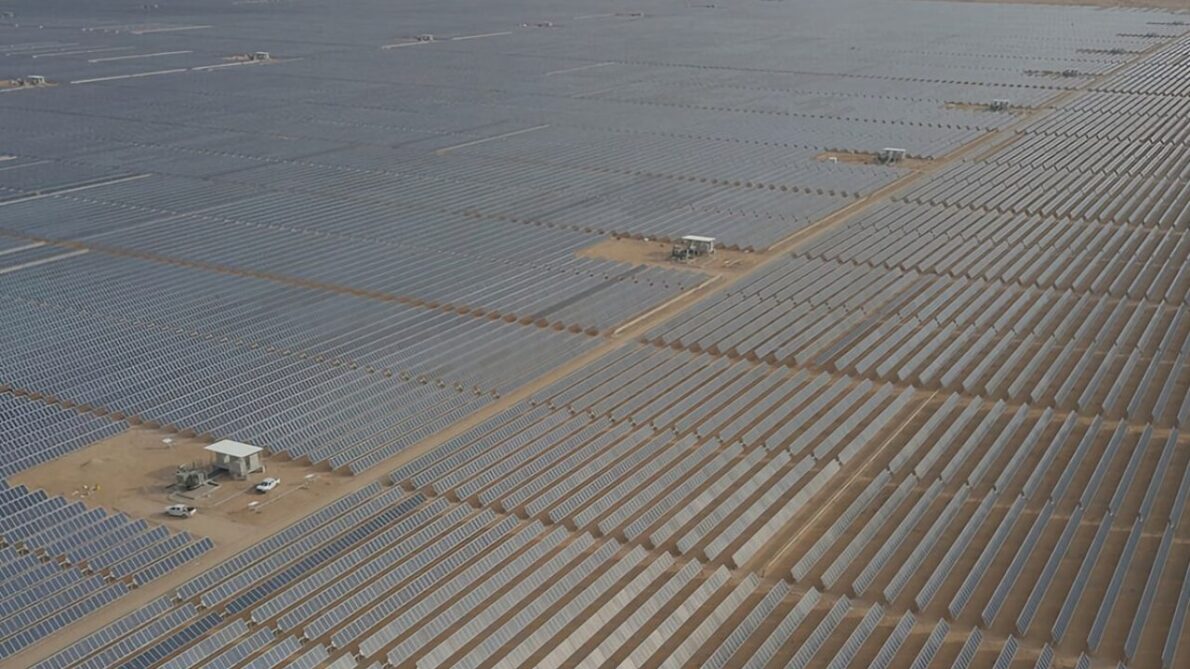

With an Investment of 3 Billion Dollars, China Globalizes Its Solar Energy Production in Saudi Arabia, Building Factories with a Capacity of 30,000 MW and Diversifying the Saudi Economy
China is the world’s largest oil importer and has been strengthening ties with Saudi Arabia for years. Now, the agreements are flowing in the opposite direction. The weakened Chinese solar industry has found in Saudi Arabia the ally it needed. China seeks to globalize its production bases to circumvent the internal crisis, while the Saudi kingdom needs to boost its renewable energy, especially solar energy, to develop its economy beyond oil.
Solar Energy: Chinese Factories in Saudi Arabia
Two major Chinese solar energy companies have signed agreements worth over 3 billion dollars to build new factories in Saudi territory. TCL Zhonghuan Renewable Energy Technology, the second largest solar silicon wafer manufacturer in the world, has teamed up with the Saudi sovereign fund Public Investment Fund (PIF) to build a 2.08 billion dollar plant with a capacity of 30 GW.
For its part, solar panel giant Jinko Solar will create, along with PIF, a joint factory valued at 985 million dollars. The Saudi company Vision Industries will be a shareholder in both.
-
Solar energy reaches 55 GW, becoming the second largest power source in Brazil’s energy mix

-
France Revamps 530 Social Housing Units with Large Balconies and Glass Facades Without Demolishing Existing Buildings
-
10-Year-Old Max Makes History with Paris Fashion Show, Launches Own Brand, Hires Staff, and Sets World Record as Youngest Runway Designer

-
Bolivian Female Construction Workers Form Association to Combat Discrimination and 38% Pay Gap in the Industry



25 Billion Dollar Renewable Power
Chinese renewables have found in Saudi Arabia the partner they needed to globalize their production, as oversupply, low profits, and trade tensions with the United States and Europe affect the business.
TCL and Jinko will soon be joined by wind turbine manufacturer Envision Energy and electric battery supplier Ganfeng Lithium Group. The Chinese giant Sungrow Power Supply is also working with the Saudi investment firm Algihaz Holding on an energy storage project.
These contracts were signed after a meeting between Chinese Vice Premier He Lifeng and Saudi Minister of Investment Al-Falih, during which over 60 agreements were signed, with a potential value of 25 billion dollars in sectors beyond energy.
China is the world’s largest importer of fossil fuels and has been strengthening ties with the Saudi oil industry for years. Now, the agreements are flowing in the opposite direction. The Chinese solar energy industry has landed in Saudi Arabia with benefits such as low-cost electricity, a strategically central location between Europe, Asia, and Africa, and good relations with various countries.
Moreover, these agreements come at a time when Chinese companies are trying to protect their businesses from tariffs by the United States and its partners, as well as from the internal crisis due to overproduction.
What Saudi Arabia Gains
The investment of Chinese renewables in the Saudi industry serves the kingdom to develop its economy beyond oil, its largest source of revenue. China dominates the supply chain of solar energy panels, wind turbines, and batteries for electric vehicles, which will now have factories in a strategic location for the energy sector.
Saudi Arabia wants to become a superpower in solar, wind, and green hydrogen energy, and having such an experienced political ally in all three sectors like China can greatly facilitate the path.






Boa noite
Sou encarregado de usina solar STI e construção civil