Portuguese
  Spanish


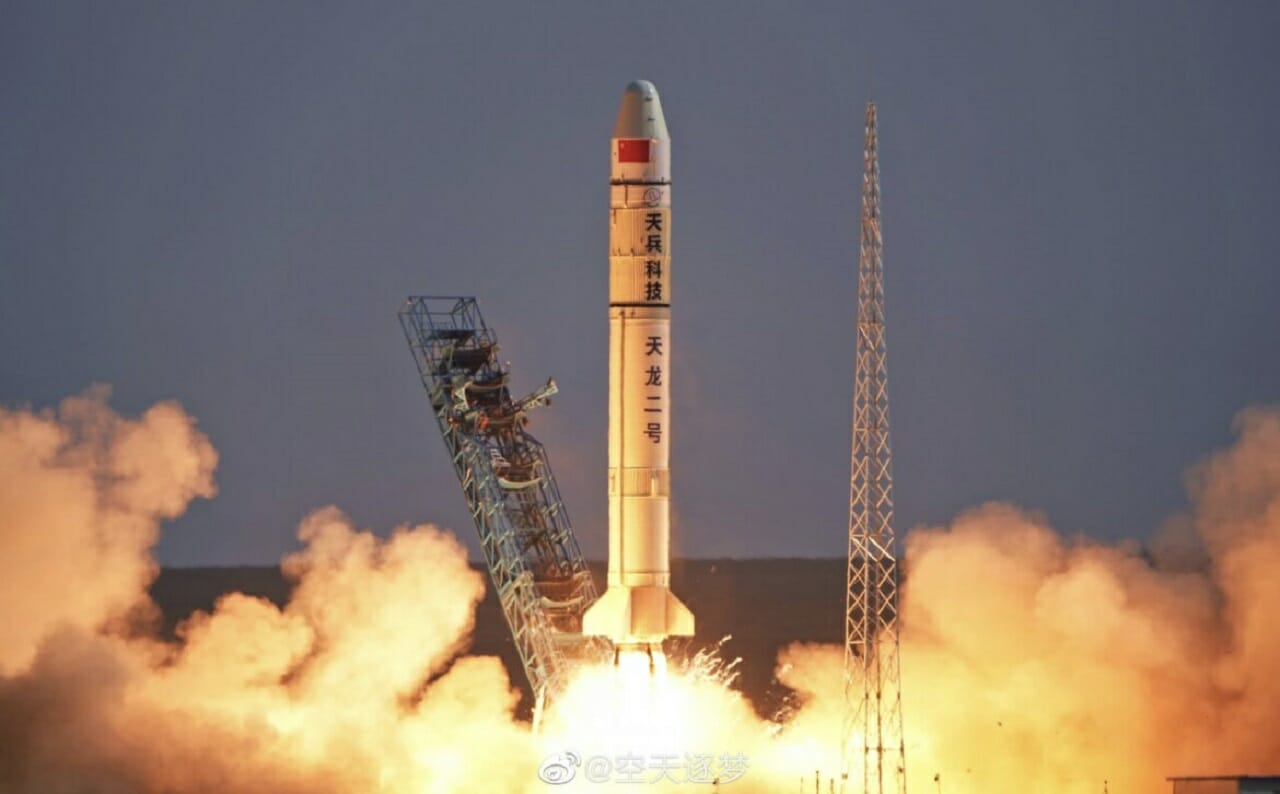

China Develops And Launches Coal-Powered Rocket That Could Change The Aerospace Sector. The Creation Of The Product Aims To Reduce Dependence On The Country’s Limited Oil Reserves.
The launch of the Tianlong-2 rocket, which took place last month, marked a milestone in China’s space history, as it was the first kerosene rocket produced from coal. In general, rockets use a specific fuel and traditional kerosene. Both can only be refined from high-quality oil in a complex extraction process. However, in the case of the Tianlong-2, the extraction of kerosene was done through the liquefaction of coal.
Rocket Fuel Has Similar Properties To Aviation Kerosene
This solution of the coal-powered rocket is interesting for China, as the country has limited oil reserves and the difficulty of accessing the raw material slows down rocket fuel production.
At the same time, the country is the largest coal producer in the world. Thus, Beijing has supported years of studies and experiments in state and private agencies for the development of coal-based kerosene. During the process, scientists discovered that the innovation has properties similar to aviation kerosene that derives from oil.
-
Pennsylvania Mine Creates Ice in Summer Heat and Melts in Winter, Turning a Mountain Crevice into a Reverse Natural Refrigerator

-
China Accelerates Global Expansion of Robotics: From Smart Vacuums to Industrial and Humanoid Machines, Millions Exported to Over 150 Markets
-
Polar Air Mass to Hit Brazil: Temperatures to Plummet in Nine States, Near Freezing in the South with Frost Risk Until Monday
-
Chinese “dark factories” produce electric cars 24/7 with minimal human intervention, as Zeekr assembles 800 units daily, raising concerns in Brazil.



According to Du Zonggang, one of the leading researchers, in an interview with the South China Morning Post, due to its special composition and the physical and chemical properties of aerospace kerosene derived from oil, it would not be possible to find a suitable oil source for a long time.
The discovery to develop the coal-powered rocket paves the way for a significant leap in China’s space industry. The 165th Research Institute of CASC (China’s state space agency) has already announced a production line for coal-based kerosene.
Coal-Powered Rocket Features YF-102 Engine
According to CASC’s Deputy Director Fu Quanjun, China plans to increase annual production from 5,000 to 30,000 tons by 2025. In comparison, 5,000 tons of coal-based kerosene generate enough energy to conduct 30 flights.
According to China Space News, the official site of CASC, last Tuesday (23), the success of this research expands the fuel supply source for China’s aerospace industry, ensures the country’s energy security, and establishes a solid foundation for the launch of China’s new generation of carrier rockets.
The coal-powered Tianlong-2 rocket features the YF-102 engine, developed by the Sixth Academy of Aerospace Science And Technology Of China. Other models, such as Long March 5, Long March 6, and Long March 7, also use this series of engines, which means that the coal-developed kerosene functions similarly in these vehicles.
Zero Carbon Space Travel Could Become A Reality
With the rise of companies interested in joining the space race, concerns among climate researchers regarding rocket carbon emissions are also increasing. Thus, some companies launching rockets into space are developing clean fuel aimed at preserving the environment.
At SpaceX, Elon Musk’s company, for example, a single flight of the Falcon 9 rocket emits about 336 tons of CO2, equivalent to a car driving around the world 70 times. This is an estimate from former NASA biologist and CEO of SynBioBeta, John Cumbers, who was consulted by Fortune magazine.
Some projects for clean green hydrogen fuel for rockets are currently being undertaken, aimed at improving the sustainability of the combustion of liquid hydrogen, which is the main fuel used by NASA in its missions and also emits tons of CO2.