Portuguese
  Spanish


The new five-year plan reorganizes Chinese urban infrastructure with underground works, replacement of old networks, and reinforcement in risk control
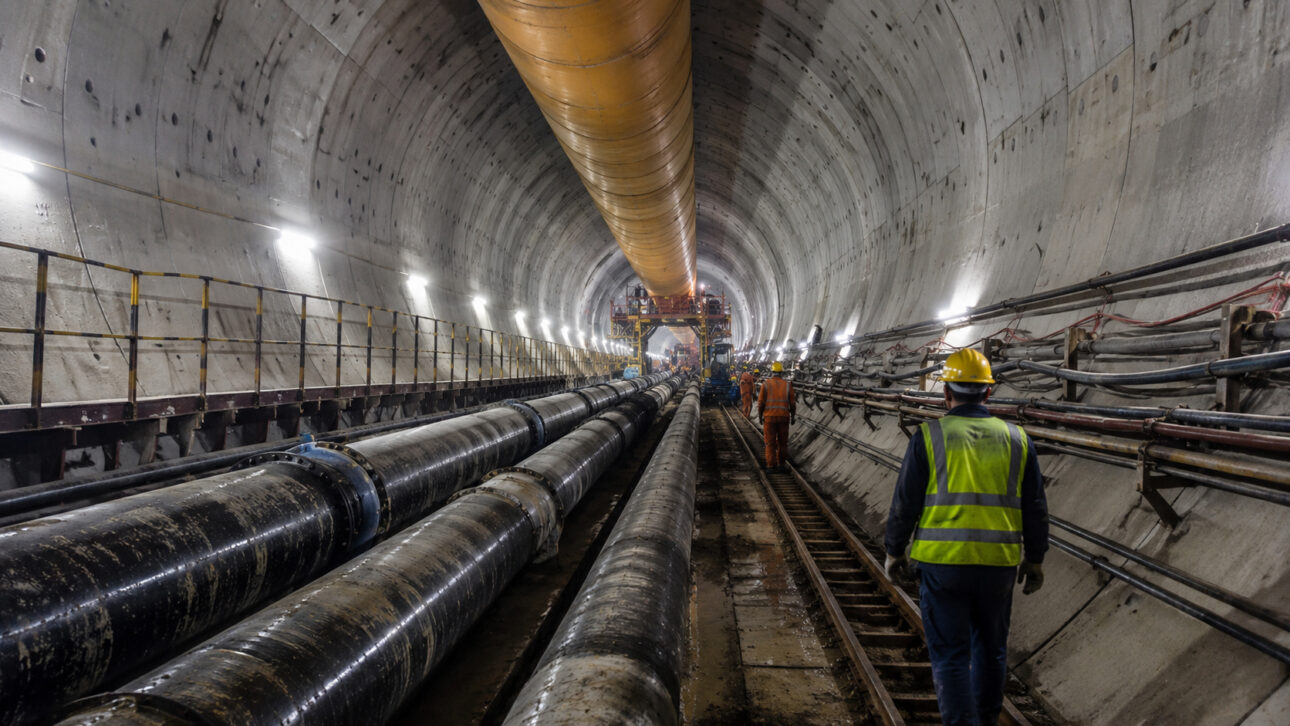
China announced a comprehensive urban infrastructure plan for the period from 2026 to 2030, within the 15th Five-Year Plan. The country will build and modernize about 770,000 km of urban underground pipes, according to information presented on June 8 during a press conference by the State Council of China. The initiative targets essential networks for city operations and involves drainage, sewage, water, gas, heating, and smart monitoring. Currently, China has about 3.9 million km of urban underground pipelines and approximately 7,700 km of integrated public service tunnels, according to Chen Shaopeng, an official from the Ministry of Housing and Urban-Rural Development.
Technical modernization reveals direct impact on cities
The change is part of a strategy focused on urban safety and the efficiency of public services. The plan will focus on improving drainage and sewage networks, mainly to strengthen flood control. The replacement of old water and gas pipelines is also among the priorities, as these networks support basic services and require constant updating. Urban heating systems, in turn, will undergo modernization to enhance operational efficiency and reduce risks associated with aging infrastructure.
Underground networks gain monitoring technology
Intelligent systems will be installed to monitor the risks of urban infrastructure throughout the process. This step adds a technological layer to the plan, as it allows for observing failures, maintenance needs, and sensitive points of the underground networks. The measure also reinforces the technical management of cities, as drainage, sewage, water, gas, and heating ducts form an essential structure for large urban centers. Thus, modernization is not limited to the physical replacement of pipes but also advances in the digital control of systems.
-
Detroit Microhouse Village Offers Former Homeless Residents Ownership After 7 Years: First 3 Tenants Receive Deeds

-
Brazilian Factory in Ivoti Produces 500 Modular Steel and Fiberglass Concrete Homes Following 2024 Floods, Securing $13 Million Contract
-
Brazilian Startup Develops Recycled Plastic Bricks, Cutting Construction Costs by 40% and Speeding Up Building by 90%

-
Tarcísio Opens New São Paulo Metro Line After 18-Year Wait, Offering Free Rides at 6 Stations and Aiming to Cut Commute to 23 Minutes for 633,000 Daily Passengers



Billion-dollar investment reinforces national priority
The National Development and Reform Commission reported that the projects receive support through ultra-long Treasury special bonds. Guan Peng, an official from the commission, stated at the press conference that 160 billion yuan will be allocated to these projects in 2026, an amount equivalent to about US$ 23.5 billion. The amount represents an annual increase of 25 billion yuan and shows the priority given to underground infrastructure in the new Chinese planning cycle. This funding is expected to support construction, replacement, and modernization of urban networks.
Old pipelines enter the center of planning
The replacement of aging networks plays an important role because old pipelines can increase operational risks and compromise the safety of urban services. The Chinese government intends to replace water and gas pipelines, as well as improve sewage and drainage systems. This combination aims to reduce vulnerabilities and increase the capacity of cities in the face of floods. The modernization of heating systems is also part of this effort, focusing on efficiency and safety.

The plan in a broader context
The initiative guides part of China’s economic and structural priorities. The goal of 770,000 km encompasses the construction and updating of urban underground pipes on different fronts. The country already operates an extensive network, with 3.9 million km of pipelines, but intends to reorganize old structures and expand the management capacity of services. Integrated public service tunnels are also part of this context, as they concentrate different networks in planned underground spaces.
The future of Chinese urban infrastructure
The announced modernization indicates that China intends to treat underground infrastructure as a central piece of urban safety. The investment planned for 2026 reinforces this direction at the beginning of the new planning cycle. Drainage, sewage, water, gas, heating, and intelligent monitoring form the core of the project. From this set, the country seeks to make urban networks safer, more efficient, and prepared for risks.
Do you believe that large cities should prioritize the replacement of old networks first or invest more quickly in intelligent monitoring of underground infrastructure?