Portuguese
  Spanish


Chinese drone BZK-005 receives new electronic intelligence systems and expands monitoring capability in strategic regions.
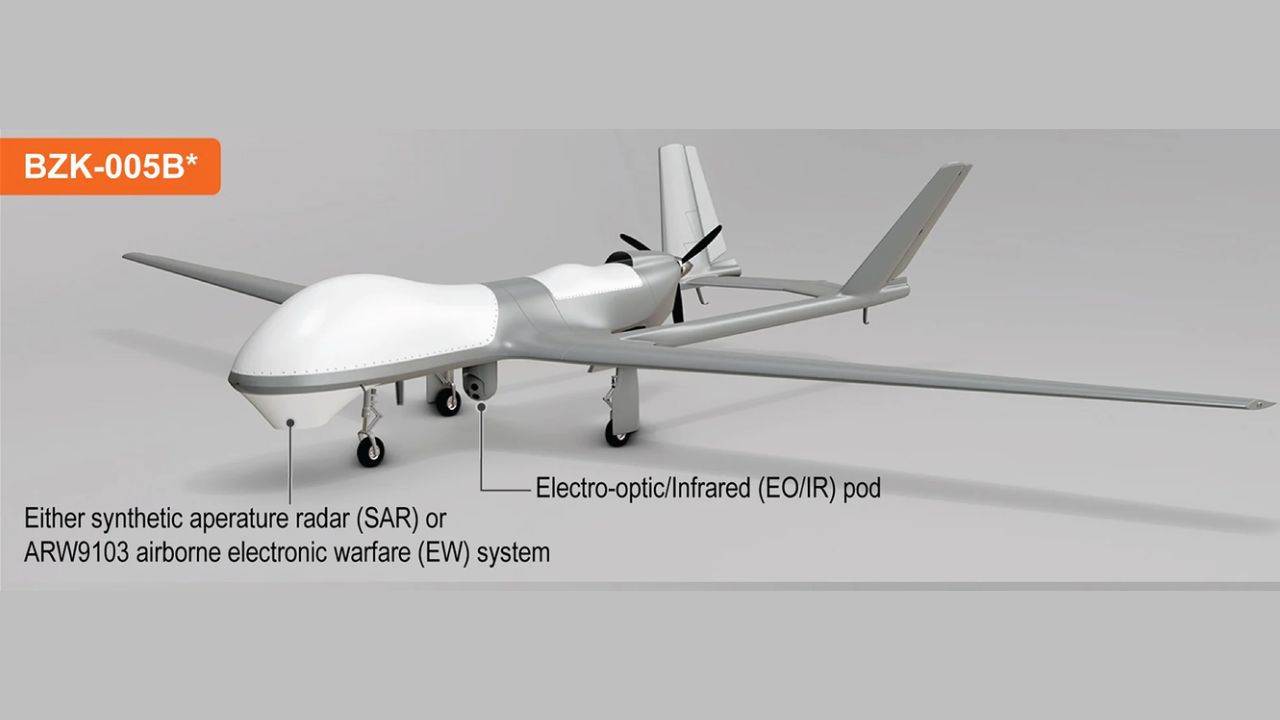
China has expanded the capabilities of one of its main reconnaissance drone models by incorporating new systems aimed at electronic intelligence and electronic warfare. The updates have been identified in different variants of the BZK-005, an unmanned aircraft used in long-range surveillance missions. The modernized versions have already been observed operating near Japan, the Taiwan Strait, and the Western Pacific, regions considered strategic for Chinese interests.
The modifications allow the equipment to detect, locate, and analyze signals emitted by radars and communication systems. Thus, the drone no longer acts solely in visual observation and takes on a broader role in the collection of electronic information used in military operations.
New capabilities expand the role of the drone
The BZK-005 was already employed in intelligence, surveillance, and reconnaissance missions. However, the updated versions received features that significantly increase its operational capacity.
-
Amateur Detectorist Discovers 3,400-Year-Old Bronze Age Gold Treasure with 121 Pieces in Transylvania, Including a Unique Ring

-
Italian Designer Develops Solar-Powered Terracotta Water Purifier Producing Up to 5 Liters of Drinking Water Daily Without Electricity

-
New Hydrogel Made from Algae and Shrimp Shells Absorbs 60 Times Its Weight in Water to Combat Drought in Spanish Agriculture
-
Scientists Discover Unexpected Intelligence in Solitary Octopus During Jar-Opening Challenge


In addition to the extended flight autonomy, a well-known characteristic of the platform, the new onboard systems allow for the identification of electronic emissions, radar tracking, and communication network analysis. This enables the equipment to gather information considered strategic for military operations planning.
The changes reflect a growing investment by the People’s Liberation Army in technologies aimed at long-distance monitoring and electronic data collection.
How does the new onboard technology work?
The drone belongs to the MALE category, an acronym used for medium-altitude, long-endurance aircraft. This type of equipment is designed to remain in operation for long periods, performing intelligence and observation activities.
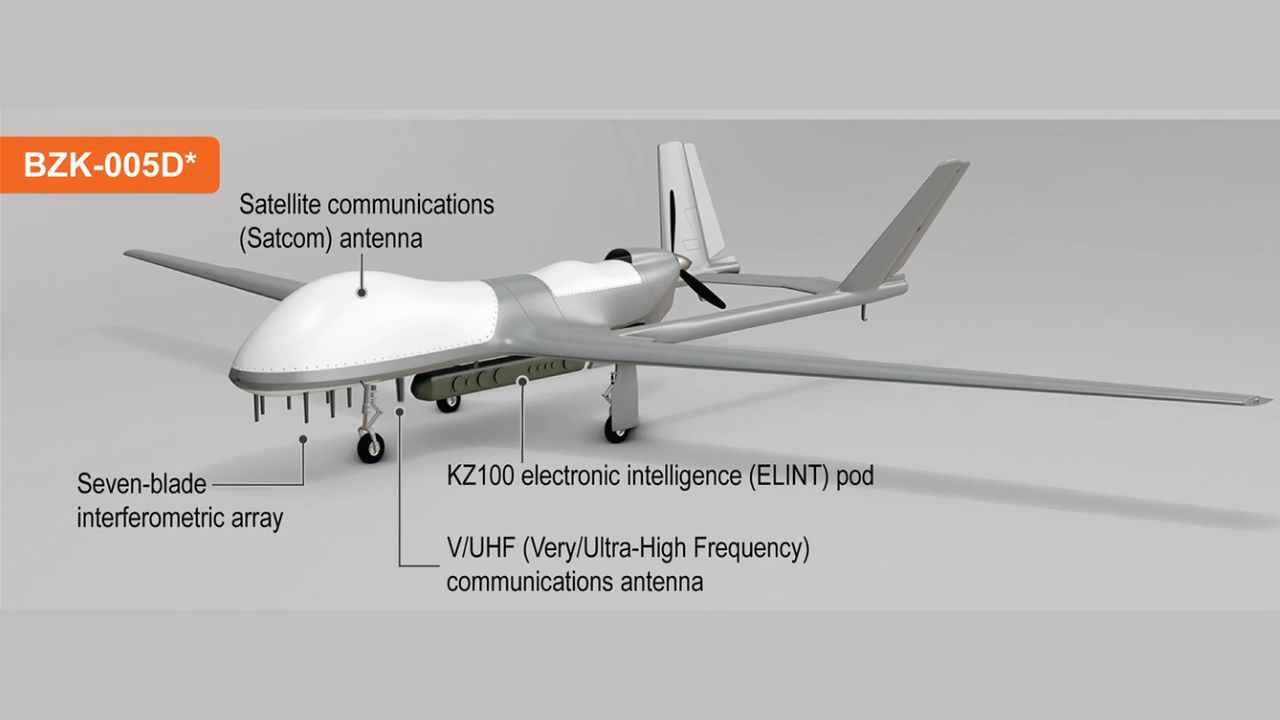
One of the identified versions, called BZK-005D, received a specialized module capable of detecting electromagnetic signals emitted by radars. The technology allows for the collection of technical information about these systems and determines their location.
In practice, this enables the creation of detailed maps of existing electronic defense structures in certain monitored areas.
Among the incorporated features are:
- Detection of electronic emissions;
- Radar location;
- Communication network mapping;
- Identification of radiofrequency emitters;
- Geolocation of communication equipment;
- Collection of technical parameters of electronic targets.
Communication systems also come under the radar
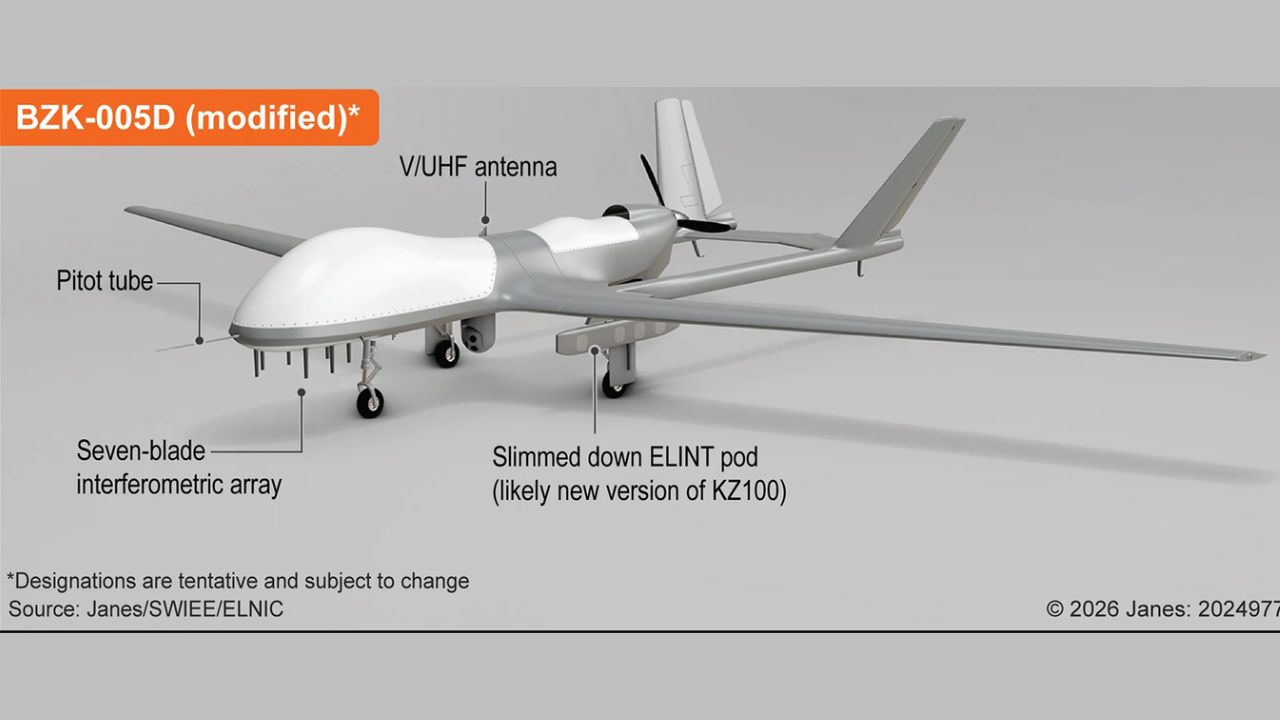
Another new feature observed in the latest versions is the adoption of interferometric antennas aimed at communications intelligence, known by the acronym COMINT.
These systems are capable of identifying, tracking, and determining the position of radiofrequency emitters used in communication networks and military equipment.
With this expansion of functions, the drone not only observes movements on land or at sea but also monitors electronic activities carried out by different defense and communication systems.
Drone can also operate in electronic warfare
Some variants of the BZK-005 have been adapted to perform tasks associated with electronic warfare, a segment that gains relevance as military forces increasingly rely on radars, sensors, and digital communication systems.
One of the identified configurations combines radar reconnaissance functions, alerts about electronic threats, and active interference capability against adversary systems.
The equipment operates over a wide frequency range and offers coverage in all directions. This allows for the detection of different types of signals, including surveillance radars and systems responsible for fire control.
The latest versions also present changes in the positioning of the sensors. Instead of concentrating all the equipment in a single central module, engineers have started to distribute the systems in smaller pods installed under the aircraft’s wings.
This change brings two main advantages. The first is the reduction of electromagnetic interference between the onboard equipment itself. The second is the increased accuracy in identifying and locating emitters detected during missions.
The updates elevate the role of the BZK-005 within reconnaissance operations. In addition to monitoring movements on land and at sea, the drone acts as an advanced electronic intelligence platform.
With the new features, the aircraft can map radars, identify communications, and provide relevant information for air, naval, and joint operations. The improvements demonstrate the evolution of the platform’s electronic capabilities and reinforce its importance in intelligence-gathering missions in areas considered strategic.
With information from Xataka