






 Portuguese
  Spanish


International Recognition Places João Pessoa on the Map of Creative Tourism by Valuing Traditional Handicrafts, Naturally Colored Cotton, and Cultural Identity Linked to the Easternmost Point of the Americas, Expanding Global Visibility of the Paraíba Capital Beyond the Beach Route.
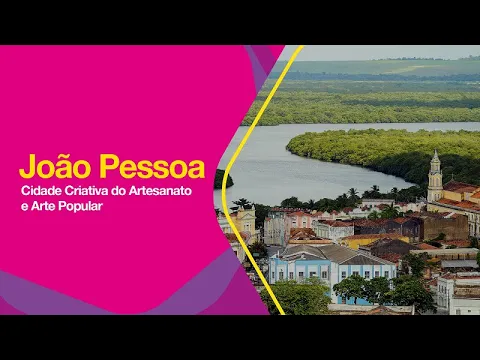
João Pessoa, capital of Paraíba, is part of the UNESCO Creative Cities Network in the Crafts and Folk Arts category, an international recognition granted to municipalities that embrace creativity as part of public development strategies, with commitments to cooperation and cultural strengthening.
The framing provided by UNESCO connects two traits that are already present in tourist materials and now gain institutional validation: the artisanal tradition found in urban daily life and the symbolic appeal of the nickname “Porta do Sol”, associated with the city’s coastline at the easternmost point of the continent.
Official data helps to measure the territory that now appears on this global map: IBGE’s estimate for July 1, 2024, indicates 888,679 inhabitants in João Pessoa, a figure frequently rounded in tourist communication to “almost 900 thousand,” without altering the municipality’s magnitude.
-
Couple Sold Everything to Restore a 300-Year-Old Abandoned Mansion, Uncovering Ancient Books and Untouched Rooms

-
Couple Builds Sustainable Home from Straw Bales, Wood, and Clay in Brazil
-
At 64, Grandma Sônia Turned Homemade Recipes into a Family Business, Growing Casa de Bolos to Over 600 Locations and Expanding to Portugal

-
Brazilian Couple Builds Underground Bunker in Santa Catarina Amid Fears of Crises and Shortages, Spending $10,000 and Learning Construction from Scratch, Videos Go Viral


UNESCO Seal and Cultural Tourism in João Pessoa

The Creative Cities Network brings together cities from different countries in areas such as crafts and folk arts, design, gastronomy, music, cinema, literature, and media arts, with the aim of stimulating technical exchange and urban policies that value the creative economy sustainably.
In the case of João Pessoa, the seal does not rely on isolated events, but on continuous cultural practices linked to the production and circulation of artisanal goods, which tends to interest travelers seeking experiences beyond the coastal landscape.
Although the network does not transform destinations into static showcases, the designation often works as an international credential, capable of enhancing the visibility of cultural routes, fairs, and demonstration spaces for techniques, with the potential to bring visitors closer to artisans and local work networks.
This logic also provides predictability to the agenda, as UNESCO maintains an official page dedicated to the city, with the assigned category and a summary of the elements highlighted in the process, which facilitates public verification of the reason for the recognition.
Traditional Handicrafts and Local Creative Economy
In its institutional presentation, UNESCO describes João Pessoa as a relevant regional center for artisanal trade and production, citing activities such as pottery, embroidery, and crochet, techniques present in different areas of the municipality and associated with the transmission of knowledge across generations.

By bringing handicrafts to the center of recognition, the discourse shifts the travel focus from isolated “attractions” to processes, as the visitor’s interest begins to include how things are produced, who produces them, and where they are sold, elements that connect culture to work and income.
This movement helps explain why the city appears in reports that try to go beyond the beach route, as the everyday cultural experience allows for the construction of guided visit narratives, direct purchases, and technique demonstrations without relying on a specific season.
For domestic tourism, the seal tends to reposition João Pessoa as a short- to medium-term destination with complementary layers, where enjoyment of the coastline coexists with routes of studios, markets, and fairs, in a travel design that combines consumption and context.
Naturally Colored Cotton and International Projection
In addition to traditional techniques, UNESCO mentions the recent prominence of a range of organic cotton with naturally brownish coloration, a reference that often arouses curiosity by associating sustainability and productive uniqueness with a recognizable raw material in any country.
The relevance of this point, in the context of cultural tourism, lies not only in the final product but in the narrative it allows to be constructed, as the naturally colored fiber is often presented as an alternative that reduces the need for industrial dyeing to achieve certain shades.

This type of information, when mediated by demonstration and direct sales spaces, tends to transform purchasing into experience, as the visitor is led to relate texture, color, and origin, understanding how the chain is organized and how handicrafts circulate in the local economy.
Even without replacing the coastline’s prominence, the combination of UNESCO recognition and an unusual input functions as an editorial and tourist differential, increasing the chance of João Pessoa appearing outside the usual circuit of Brazilian destinations associated only with the sea.
Porta do Sol and the Easternmost Point of the Americas
The nickname “Porta do Sol” gains strength because it is anchored in a territorial marker: the Ponta do Seixas region, associated with the easternmost point of the American continent, a recurring argument in travel materials when discussing the place where “the day rises first.”
When mentioned in an official presentation linked to cultural recognition, the geographical element operates as an accessible hook for audiences unfamiliar with Brazil, as it dispenses with prior knowledge and transforms the location into a narrative invitation to understand the city beyond the beach.
In practice, what is reinforced is a layered understanding of the destination, where the coastline and the symbolic landmark open the gateway, while handicrafts and their modes of production sustain the stay, offering visitors an itinerary based on living culture.
Although expressions like “easternmost point” may vary depending on technical delineations used in different sources, the tourist usage of Ponta do Seixas remains established, and the nickname “Porta do Sol” continues as a popular synthesis of a recognizable geographical feature.
What It Means to Integrate the Creative Cities Network

Joining the Creative Cities Network implies formalizing public commitments to cultural policies, institutional articulation, and participation in cooperation initiatives, which includes the exchange of practices with other cities, participation in forums, and support for projects linked to the creative economy.
In João Pessoa’s case, the very date of entry helps contextualize that this is a consolidated process: UNESCO listed the municipality among the cities admitted on October 31, 2017, in the Crafts and Folk Arts category, alongside destinations from various countries.
The most visible consequence tends to be reputational, as the seal creates an international credential that can be activated by public agencies, guides, and cultural entrepreneurs, without replacing the need for local policies to support artisanal work in the long term.
With the city positioned in this global showcase, the challenge becomes organizing information in a way that is useful for travelers, connecting the recognition to concrete routes of production and purchase, and explaining, without exaggeration, what the seal represents in urban daily life.







Bela João Pessoa.
Sou residente nesse município a 45 anos , esta deixando a desejar em segurança, praias poluídas com esgotos , trânsito caótico, transporte público precário, custo de vida deixa a desejar etc ;
Esse comentário só pode ser de carioca, que só dá valor pro rj, não reconhece o valor das outras cidades.