






 Portuguese
  Spanish


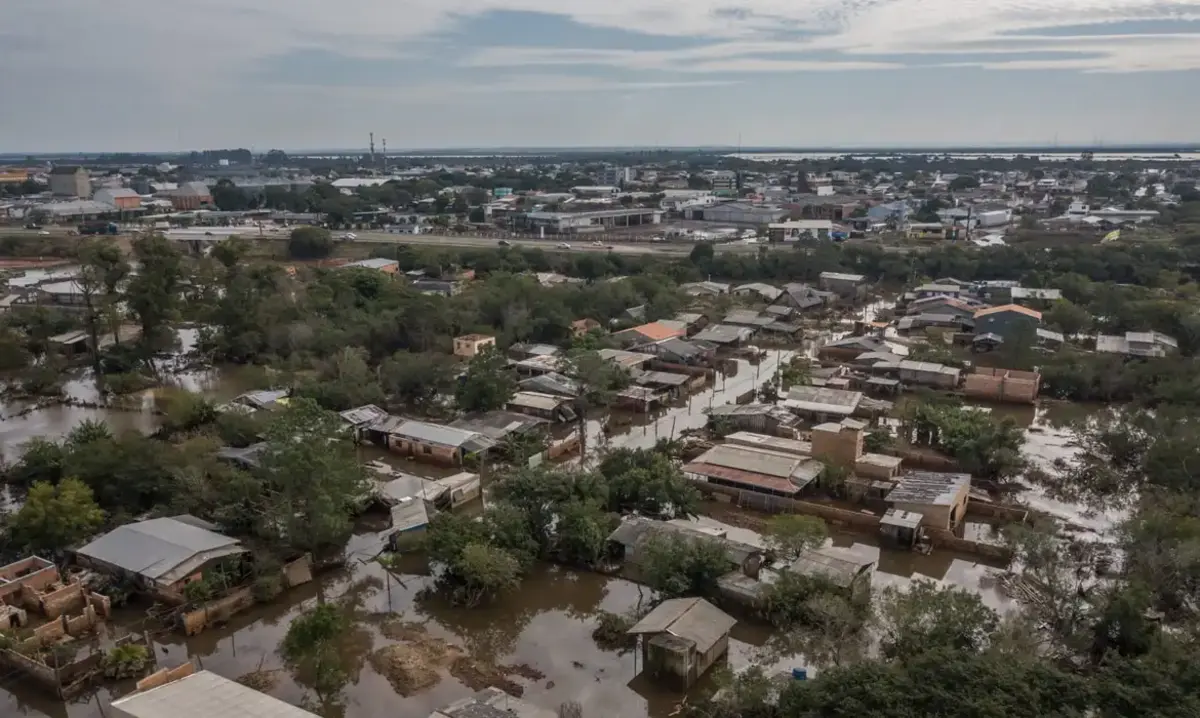

Data Center Project Promises To Transform Eldorado Do Sul Into A Tech Hub, But Environmental Impacts Raise Concerns
A year after the floods that devastated the state, the government of Rio Grande do Sul is betting on a new project to boost economic recovery. The municipality of Eldorado do Sul, which was completely destroyed by the natural disaster, was chosen to host the so-called Scala AI City, a city of data centers.
The venture is led by the company Scala, which forecasts an initial investment of R$ 3 billion. According to data accessed by Repórter Brasil, the total investment may reach R$ 500 billion.
The initiative was celebrated by the Secretary of Economic Development of the State, Ernani Polo (PP), who declared: “This is the opportunity to transform Rio Grande do Sul into the new Silicon Valley in Brazil.”
-
China Develops Custom 140-Ton Electric Mining Truck with 770 kWh Swappable Battery, Deploys 290 Units in Xinjiang’s Largest Zinc Mine

-
Meta to Launch Arena, a New Prediction App Targeting 3.56 Billion Users, Competing with Polymarket and Kalshi

-
Scientist Challenges Famous Human Evolution Theory, Argues Homo Sapiens Evolved Gradually Over Thousands of Years
-
15-Year-Old American Builds Ocean Generator with PVC Pipe and 3D-Printed Propeller for $12, Wins National Prize, Presents at White House, and Makes Forbes 30 Under 30 List




With the growing popularization of Artificial Intelligence, the demand for data storage and processing infrastructure has increased. The construction of Scala AI City promises to position the state prominently in the national technological landscape.
Environmental Concerns Come To The Fore
Despite the optimism, experts warn of potential environmental impacts. In Brazil, there is still no specific legislation for the environmental licensing of data centers.
This type of venture consumes large volumes of water and energy, in addition to generating a significant amount of electronic waste.
The hydrologist Iporã Brito Possantti emphasized to Repórter Brasil the importance of rigor in environmental studies.
“This type of impact needs to be anticipated in the licensing process. It is important that there is no exemption from these studies because later it will be society, and the governments, who will have to pay to correct and mitigate the impacts. It is a matter of economy and justice,” he stated.
The expectation is that the installed capacity of Scala AI City will reach 4.75 GW, surpassing the generation of Brazil’s fourth largest hydroelectric plant, Jirau, in Rondônia.
With information from Diário do Comércio.





