






 Portuguese
  Spanish


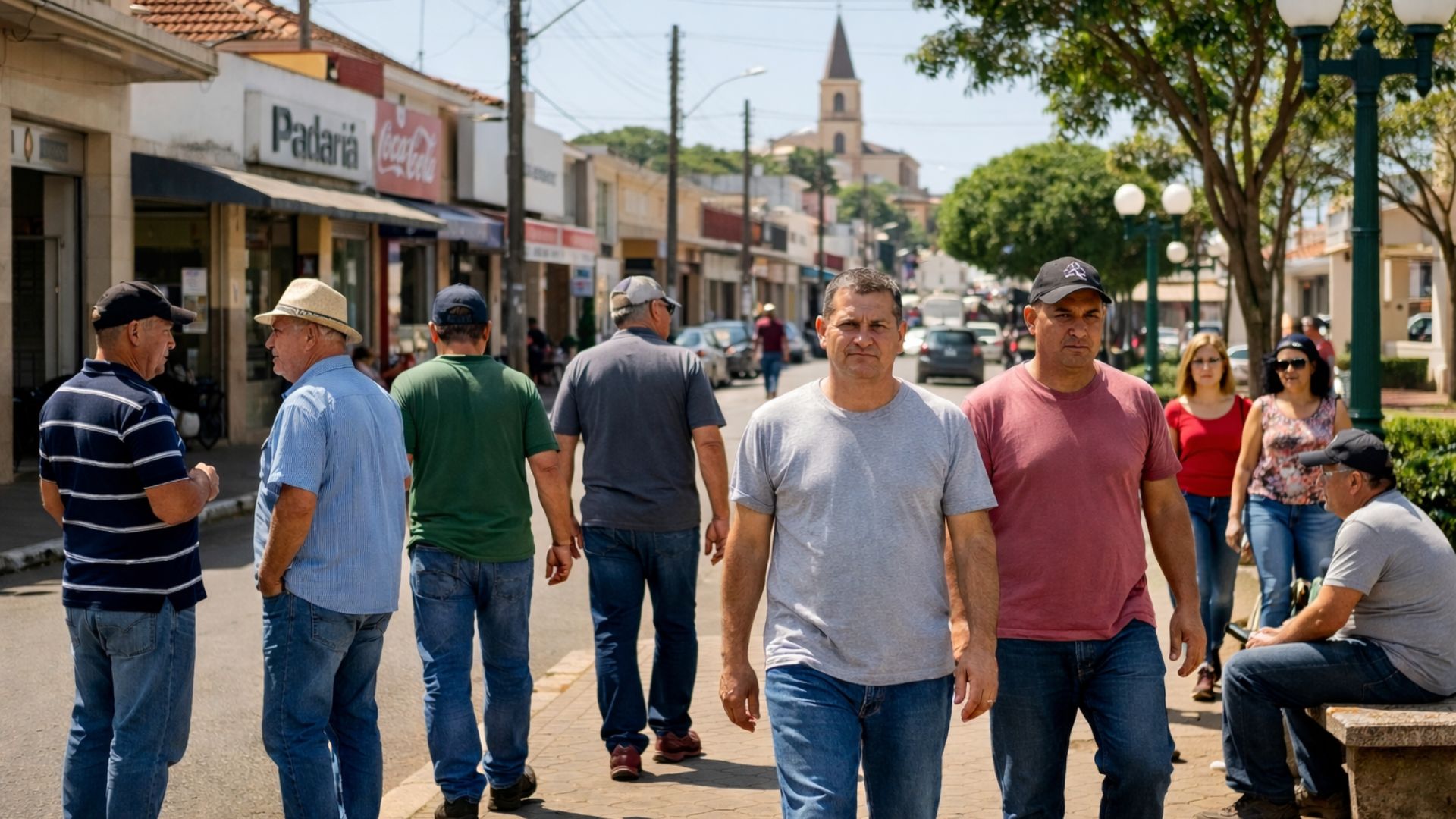


Outlier Number Puts Balbinos at the Top of a National IBGE Snapshot and Exposes a Rare Demographic Contrast in the Interior of São Paulo, with a Ratio Far Above the Brazilian Average. Census Indicator Measures the Sex Ratio and Demonstrates How Local Characteristics Can Influence Population Statistics.
Balbinos, a small municipality in the interior of São Paulo, appears at the top of a national snapshot from the Brazilian Institute of Geography and Statistics (IBGE) for an unusual reason: the extreme difference between the number of male and female residents.
Balbinos tops the “sex ratio” ranking with 443.64 men for every 100 women, the highest proportion recorded among Brazilian municipalities.
This indicator is part of the results of the Demographic Census and measures how many men exist in relation to a group of 100 women in a given area.
-
Crab Trapped in Plastic Bottle for 62 Days Near Okinawa Highlights Little-Known Impact of Marine Pollution on Small Animals

-
Esperanza’s Bamboo Barrier in Oaxaca Redirects River and Reduces Erosion by 85% in Five Years

-
Family Builds Homemade Wind Turbine to Power Off-Grid Home, Video Reaches 555,000 Views on Ngô Thị Huyền’s Channel
-
Indian Brand Creates Sneakers from Recycled PET Bottles and Discarded Tires, Repurposing Over 1 Million Bottles and Raising $4 Million for Expansion




In practice, the number for Balbinos corresponds to about 4.4 men for every woman, a figure that is very far from the standard observed in the country as a whole.
What Is “Sex Ratio” and Why Does the Data Stand Out
The comparison with the national average helps to gauge the scale of the deviation.
In the Census results, Brazil reports 94.2 men for every 100 women, reflecting the female majority in the country’s population composition and a historical trend of declining sex ratio over the decades.

The same publication notes that, as municipalities become more populated, the ratio of men tends to decrease, reaching 88.9 in municipalities with more than 500,000 inhabitants.
Small Population Amplifies the Contrast in the Interior of São Paulo
Balbinos, on the other hand, is on the opposite end in terms of size.
The municipality has a population of 3,887 inhabitants, according to the Census itself, and is part of the Bauru Geographic Region.
In very small towns, the IBGE reports that the average sex ratio usually exceeds 100, but Balbinos’ case diverges not only from large centers but also from the average of this group of municipalities.
Top 10 of the National Snapshot and the Distance to the Runner-Up
The ranking that places Balbinos in first place highlights that the disparity is not a phenomenon spread uniformly across the territory.
In the list of the ten municipalities with the highest sex ratios, nine are in São Paulo, and the difference between the leader and the others is significant: after Balbinos come Lavínia (286.63), Pracinha (250.27), and Iaras (209.51), followed by Álvaro de Carvalho (204.50), Pacaembu (195.35), São Cristóvão do Sul (184.57), Florínea (181.92), Serra Azul (178.54), and Marabá Paulista (165.72).
The gap between the first and second place alone indicates an uncommon statistical behavior.
Santos at the Other Extreme of the IBGE Ranking
At the opposite end of the same snapshot, the IBGE points to Santos (SP) as the municipality with the lowest sex ratio, with 82.89 men for every 100 women.
The contrast between Santos, a large urban city, and Balbinos, with a small population, helps illustrate how the indicator can vary according to local characteristics, demographic dynamics, and residents’ age composition.
How the Census Counts Residents in Collective Dwellings


The way the Census counts the resident population is also central to understanding the interpretation of these numbers.
The IBGE statistic considers as a resident the person who has that location as their usual home, and this count is not limited to houses and apartments in private households.
The institute also includes residents living in institutions and establishments classified as collective dwellings, a category where cohabitation is organized by rules of administrative subordination.
Therefore, in small municipalities, the result can be sensitive to the presence of groups concentrated in certain types of housing and the relatively small size of the total population.
In areas with a few thousand residents, specific changes in the number of people in certain situations can significantly alter the final ratio, unlike in large cities where effects tend to dilute across the population.
What Are These Indicators Used for in Practice
The IBGE snapshot highlighting Balbinos also serves as a reminder that demographic statistics are used beyond mere numerical curiosity.
Indicators such as the sex ratio come into play in public and private planning, guiding readings on service demand and helping to compose population portraits that influence management decisions, from health and education policies to infrastructure and social service analyses.
At the same time, extreme numbers tend to attract attention precisely because they challenge the reader’s intuition, especially when they appear in lesser-known municipalities.
In the case of Balbinos, the combination of a small population and the highest sex ratio in the country puts the city in the spotlight and reinforces how Census snapshots can reveal local inequalities and peculiarities that go unnoticed in the national debate.
In a municipality where the ratio of men to women strays so far from the Brazilian standard, what does this data reveal about the local reality—and how might it influence how the city is perceived by those who live there, by those who govern, and by those considering moving there?


Então,a melhor fonte de renda pra quem está querendo morar em Balbinos, seria uma casa de saliência!
Só não falou que em balbinos tem 2 presídios masculino!