Portuguese
  Spanish


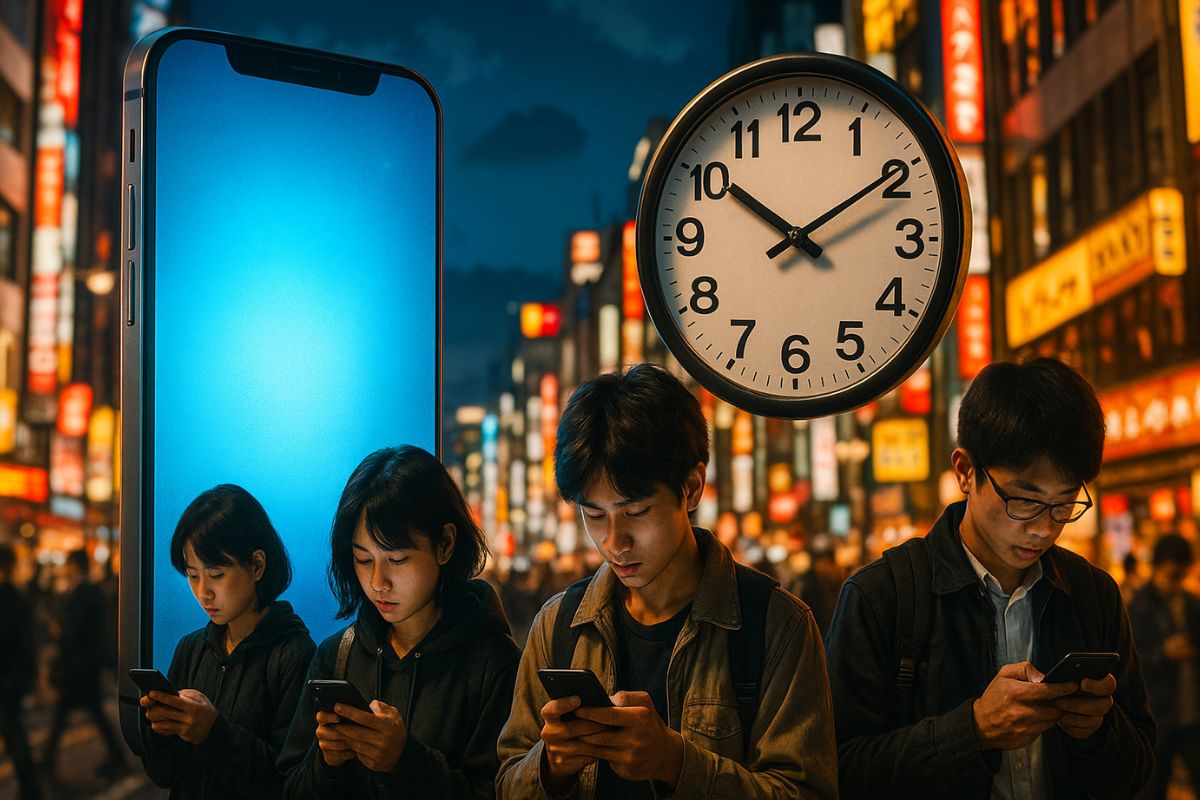

Japanese City Wants to Limit Smartphone Use to Two Hours Per Day. Proposal in Toyoake Aims to Reduce Health Impacts, but Public Criticizes the Measure for Being Considered Unrealistic.
A Japanese city wants to limit smartphone use to two hours per day outside of the work or school environment. The proposal originated in Toyoake, in central Japan, and aims to reduce risks associated with excessive technology use, such as sleep disturbances and physical and mental health problems.
According to Mayor Masafumi Koki, the regulation aims to prevent smartphones from compromising rest habits and social interaction, especially among young people. However, the project does not foresee sanctions, which reinforces its character as a recommendation rather than an obligation.
Who Is Involved in the Decision
The text was developed by the Toyoake city hall focusing on students and families. Elementary school children would be advised not to use their phones after 9 PM, while high school students and adults would be recommended to stop using them by 10 PM.
-
Australia deploys poisoned sausages and uses traps, shooting, and fences in a battle against invasive cats that kill over 1.5 billion native animals annually, threatening more than 200 species.

-
NASA Rover Captures “Tired Face” on Mars, Highlighting Human Brain’s Tendency to See Faces in Rock Formations

-
Ancient Stone City in the Desert, Once Home to 30,000, Puzzles Scientists with Nabateans’ Water Mastery 2,000 Years Ago

-
Ancient Creature Thought Extinct Since Dinosaur Era Reappears, Baffling Scientists




The mayor argues that the initiative is a way to promote awareness. However, reactions on social media were mostly negative, with residents and internet users from other regions stating that the rule is “impossible to follow” in modern daily life.
How Much Time Would Really Be Allowed
The limit established by the regulation is two hours per day of smartphone use outside of work and school. This means that activities such as leisure, social media, and entertainment would have to be drastically reduced.
Digital health specialists state that, although excessive screen time poses risks, such a rigid restriction is unlikely to be sustainable in practice, especially in a highly connected country like Japan.
Where the Measure Should Apply
The proposal is restricted to the city of Toyoake, located in Aichi Prefecture, which has just over 70,000 inhabitants. If approved, the regulation will come into effect in October of this year, becoming the first local regulation of its kind in Japan.
Still, the non-mandatory nature indicates that it will be more of a moral guideline than a law with effective enforcement.
Why Limit Smartphone Use
According to the city hall, the intention is to reduce sleep problems, lack of attention in the classroom, and digital dependence. Mayor Masafumi Koki emphasized that, despite the usefulness of smartphones, balance is essential to preserve citizens’ mental and physical health.
The discussion also reflects a global debate: to what extent should governments or cities intervene in the digital habits of the population to preserve collective well-being?
Despite the proposal, many residents question the feasibility of the limit. “Screen time is a decision for each family,” said a Japanese user on social media. Others point out that modern life, based on transport apps, digital banking, and communication, makes the measure difficult to comply with.
Do you agree that a city wants to limit smartphone use to two hours per day? Do you believe that this proposal truly helps with health or just interferes with personal life? Leave your opinion in the comments.