






 Portuguese
  Spanish



Science Has No More Doubts: We Are in a New World. Understand What a 3°C Warming Means for Your Life and Why Change Is So Difficult.
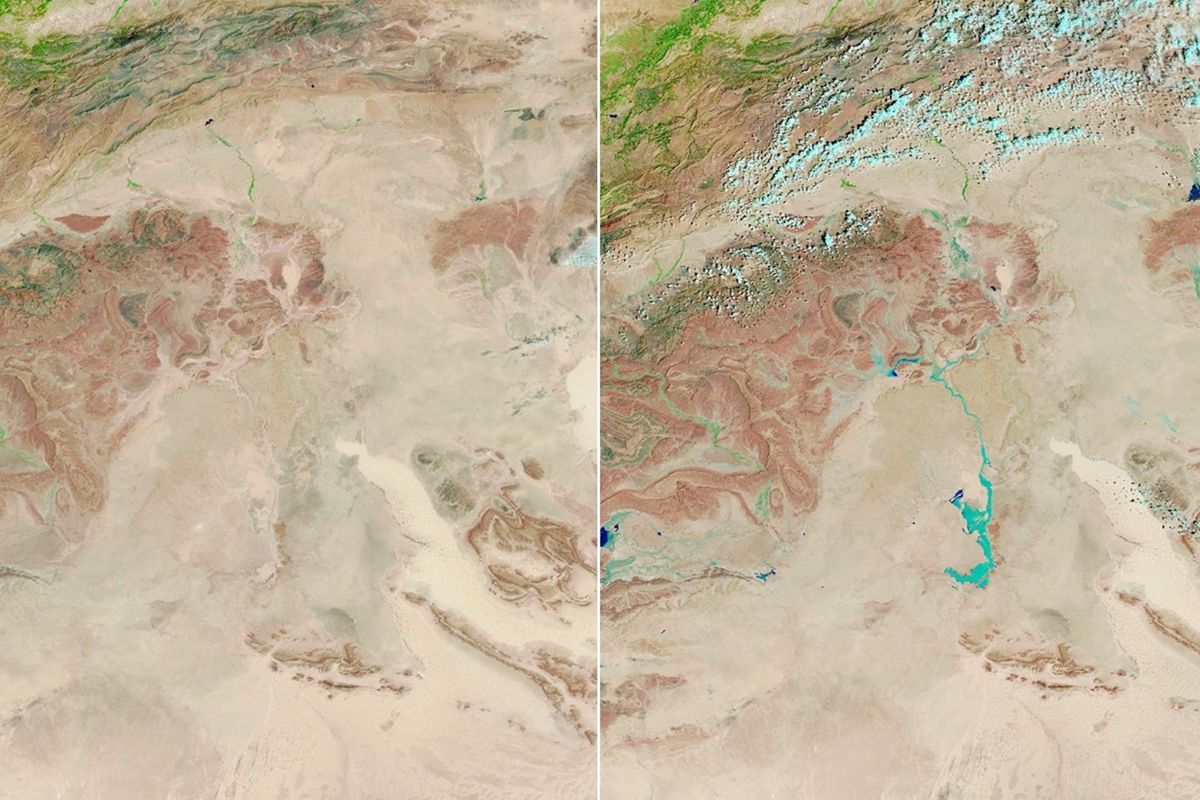
Recent satellite images show events that seem out of a science fiction script. Green patches appearing in the middle of the Sahara Desert after torrential rains. Scars from massive wildfires in Siberia. The patch of water and mud covering entire cities in Rio Grande do Sul. These are not isolated phenomena. They are symptoms. They are the visible signs that planet Earth has entered a new climatic state.
The question that echoes amidst anxiety and perplexity is: are we living the end of the world? The scientific answer is clear: it is not the end of the world, but it is the end of the world as we knew it. We are entering unknown and dangerous territory, and the consequences are already being felt.
The Scientific Diagnosis: The Planet on the Path to +3°C
The reports from the Intergovernmental Panel on Climate Change (IPCC), the highest scientific body on the topic, are categorical. Based on current government policies and global industrial emissions, the planet’s trajectory points to an average warming of approximately 2.7°C to 3.1°C by the end of the century compared to pre-industrial levels.
-
How to Prevent Brown Recluse Spider Bites: Common Hiding Spots and Free Tips to Reduce Risks

-
Natto: The Unusual Japanese Superfood Gaining Popularity on Social Media and Driving Record Exports
-
Brazilian Mayor Goes Undercover as Homeless for 24 Hours to Assess Public Services

-
15-Year-Old Entrepreneur Malu Lira Publishes 20 Children’s Books on Financial Education, Earns $500,000, and Expands Her Project to the Amazon Rainforest




A number that seems small on paper represents, in practice, a violent and chaotic transformation of the systems that sustain life. And for continental and tropical countries like Brazil, the impact is even more amplified.
The Human Consequence: A Brazil 4°C to 4.5°C Hotter

A global warming of 3°C does not mean that the temperature in all places will rise by 3°C. In continental areas, this increase can be much greater. For Brazil, projections indicate an average increase of 4°C to 4.5°C. This places us in an extreme risk zone.
The real danger is not just the heat, but the combination of heat and humidity, measured by the “wet bulb temperature.” When this measure exceeds 35°C, the human body simply loses the ability to cool down through sweating, leading to overheating and death within hours, even for young and healthy individuals.
- Uninhabitable Zones: Scientific projections indicate that, with such a warming magnitude, cities like Rio de Janeiro and large parts of Brazil’s equatorial and coastal regions could become seasonally uninhabitable, with over 300 days per year exceeding the limits of human survival outdoors. Life would only be possible in climate-controlled environments or at high altitudes.
The Anatomy of Inertia: Why Is Change So Slow?
If science is so clear and the consequences so drastic, why do solutions not advance at the necessary speed? The answer lies in the immense economic and political inertia of our society, sustained by the fossil fuel industry.
Investigations and reports from independent organizations have shown how, at each UN Climate Conference (COP), the number of lobbyists from oil and gas companies present exceeds that of delegations from most countries. The political and economic influence of this industry actively works to slow the energy transition, protect subsidies, and delay the implementation of more ambitious climate policies.
Anxiety as a Driver of Change
In the face of this scenario, the feeling of anxiety and distress is a natural and even necessary response. As researchers point out, it should not be a sign of paralysis but rather a catalyst for action. It is the recognition of urgency that can mobilize society to demand from governments and industries the responsibility and speed that the crisis demands.
The story that satellite images tell us is not about the end, but about a profound transformation. It is up to our generation to decide whether this transformation will be a chaotic collapse or a planned transition to a more resilient and sustainable future.
In light of this scenario, what concerns you the most: extreme weather events or the slow pace of political and industrial responses? Share your thoughts.








A lentidão da resposta política, não podemos parar a mudança no sistema climático ma sim achamos uma maneira de o recente impacto global é a morte do nosso planeta com o aquecimento global se não pararmos agora com o desmatamento e a explosão do planeta Terra 🌎 o sol vá nos engolir e será o fim da humanidade e estamos vivendo o verdadeiro apocalipice e o grande fenômeno da natureza humana e sua resposta. Alessandro pinto