






 Portuguese
  Spanish


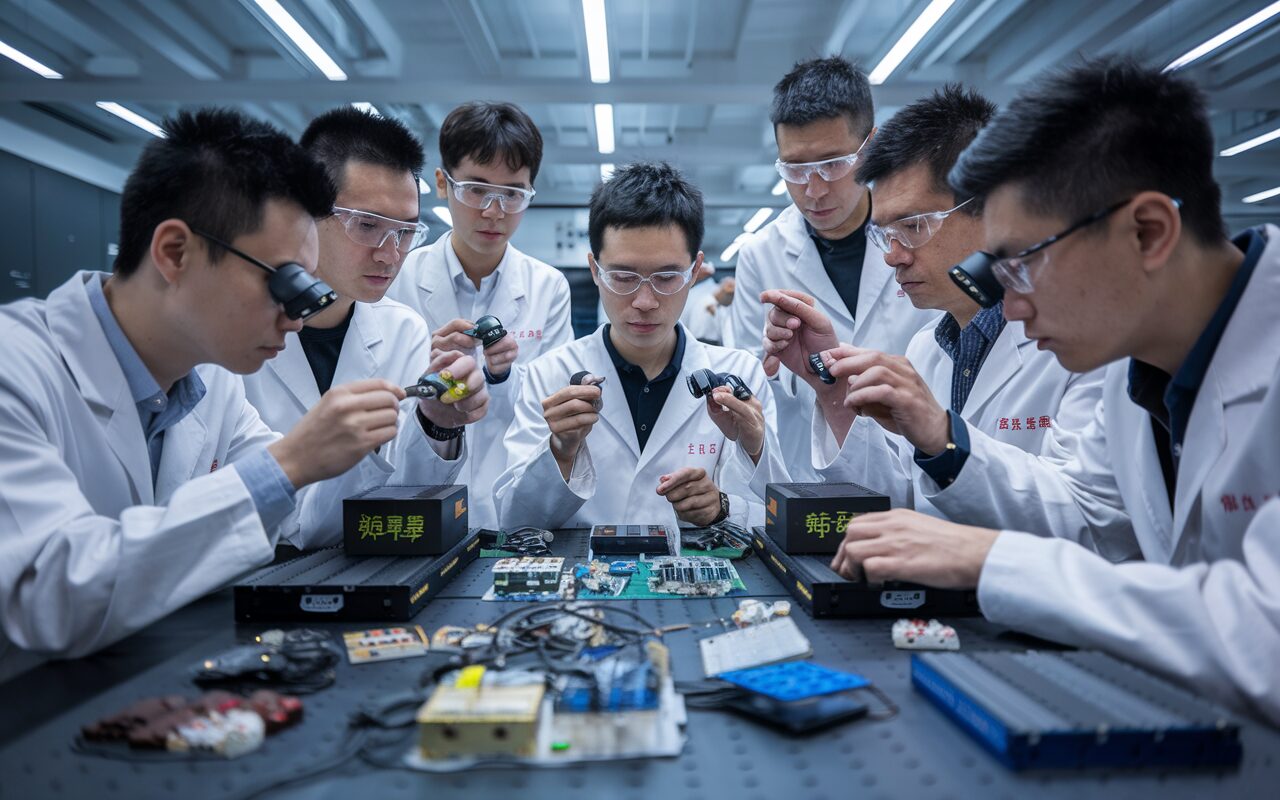

Research Developed in Shanghai Promises to Change Data Storage in Cell Phones, Computers, and Artificial Intelligence – Check Out the Details of the New Technology.
China might be just a few steps away from leading a new technological revolution in the hardware sector. Scientists from Fudan University in Shanghai announced the first successful tests of Phase-change Oxide (PoX) technology, an extremely fast and non-volatile storage memory. According to the team of scientists, the new technology is capable of performing write and read operations in an impressive 400 picoseconds – a time so small that it equals one trillionth of a second.
The innovation represents a significant leap compared to current memories. For comparison, the fastest memories in use today, such as SRAM and DRAM, operate in the range of 1 to 10 nanoseconds. On the other hand, traditional flash memories, like those used in SSDs, operate in milliseconds — meaning they are millions of times slower than the new material developed in China.
How Does Phase-change Oxide (PoX) Memory Work?
The PoX memory uses a phase change principle in oxide materials, which allows switching between high and low electrical resistance states at extremely high speeds. This rapid switching capability is crucial for the performance of new applications in artificial intelligence, real-time data processing, and embedded systems in mobile devices.
-
Teen’s Weight Gain and Cushing’s Disease Revealed by Ankle Injury: Doctors Discover Tiny Pituitary Tumor in 113-Kilo Brazilian Adolescent

-
19-Year-Old Develops Fishing Game on Roblox from a Trailer in Canada, Now Earning $400,000 Monthly with Lego and Walmart Advertising on Digital Rods

-
University of Sydney Student Creates Artificial Cosmic Dust in Lab to Help Uncover the Origins of Life

-
Table Salt Sodium Emerges as Billion-Dollar Bet for Cheaper Electric Vehicle and Energy Storage Batteries


In addition to its impressive speed, Phase-change Oxide has another important advantage: it is non-volatile, meaning it retains stored data even without electrical power. This feature is essential for creating devices that combine the best of both worlds — the speed of RAM and the permanent storage security of SSDs.
According to researcher Liu Chunsen, one of the project leaders, the next step will be to integrate PoX into commercial smartphones and computers.
“Now we can manufacture a small-scale and fully functional chip. The next step involves integrating it into the devices we use daily to eliminate speed bottlenecks, delays, and overheating,” he stated in an official interview.
Impacts on the Technology and Artificial Intelligence Market
If successfully implemented, PoX memory could radically transform the hardware architecture of electronic devices. Currently, much of the performance limitations in cell phones, laptops, and artificial intelligence servers is due to the data access and transfer time between the processor and memory.
With the new technology, it will be possible to create:
- Faster smartphones with lower energy consumption.
- Computers capable of processing large volumes of data without overheating.
- Much more powerful and autonomous embedded artificial intelligence applications.
- A drastic reduction in the need for cloud computing for processes requiring high speed.
Furthermore, Phase-change Oxide memory could pave the way for the development of new computing architectures that integrate processing and storage on the same chip, eliminating the data movement bottleneck between CPU and memory.
China Accelerates Global Race for Dominance in the Next Generation of Hardware
The advancement of PoX memory reinforces China’s strategy to invest heavily in technological self-sufficiency, especially in areas deemed critical such as semiconductors, artificial intelligence, and high-performance computing. With over US$ 92 billion invested in digital infrastructure, the country aims to reduce its dependence on Western technologies and lead the next wave of innovations.
The announcement from Fudan University occurs in a context of fierce global competition for leadership in the semiconductor market, especially after trade restrictions imposed by the United States in recent years. The creation of proprietary storage technologies, such as PoX, could place China at an advantage in the scenario of the next decade.
When Will Phase-change Oxide Reach the Market?
Although Phase-change Oxide memory is still in the early testing phase, the Chinese team is already working with industry partners to facilitate large-scale production. There is no official date for the commercial release of the technology yet, but the researchers aim to introduce prototypes in mobile devices and computers within the next few years.
If the integration is successful, experts believe that PoX could be one of the key technologies for advancing smart cities, autonomous vehicles, augmented reality applications, and new generations of smartphones.
For now, what is already known is that China has taken a significant step forward in the global race for next-generation technologies, showing that the future of data storage may be much faster — and much closer — than previously imagined.


