





 Portuguese
  English
  Spanish
  4 min of reading
  0 comments


Scientists Developed A Memory Crystal Capable Of Preserving The Human Genome For Billions Of Years, Ensuring That Our Legacy Survives Even After An Extinction. Discover How This Incredible Technology Works!
Should humanity become extinct, scientists have a new solution to preserve our existence: a 5D memory crystal that can store the human genome for billions of years. This futuristic innovation, developed by researchers from the University of Southampton in England, may ensure that in a distant future, intelligent species or machines can recreate humans from this stored information.
The Technology Behind This Crystal Is Impressive. It is made of a type of fused quartz glass that, in 2014, won the Guinness World Record for being the most durable data storage material.
At its largest size, the crystal can store up to 360 terabytes of data and withstand extreme conditions, such as temperatures ranging from well below zero to 1,832 degrees Fahrenheit, in addition to resisting cosmic radiation and extreme pressure.
-
Scientific breakthrough surprises by achieving ammonia production up to 3 times higher with the application of a magnetic field, paving the way for more efficient chemical technologies, reduced environmental impact, and new large-scale fertilizer solutions.

-
Lenovo launches “indestructible” tablet with a removable 10,200 mAh battery, military resistance, full protection against water and dust, Snapdragon 7s Gen 3, and 2.5K display; meet the Lenovo ThinkTab X11

-
Once again China: company launches a private robot that goes to the user by itself, automatically eliminates waste, and promises more autonomy for the elderly.
-
Scientists may have found an absurd clue about how life began on Earth: mineral nanoparticles might have used light, heat, and electricity to transform non-living matter into the first biological building blocks.


This makes the crystal capable of remaining stable for an impressive 300 quintillion years, which is 21 billion times the current age of the universe.
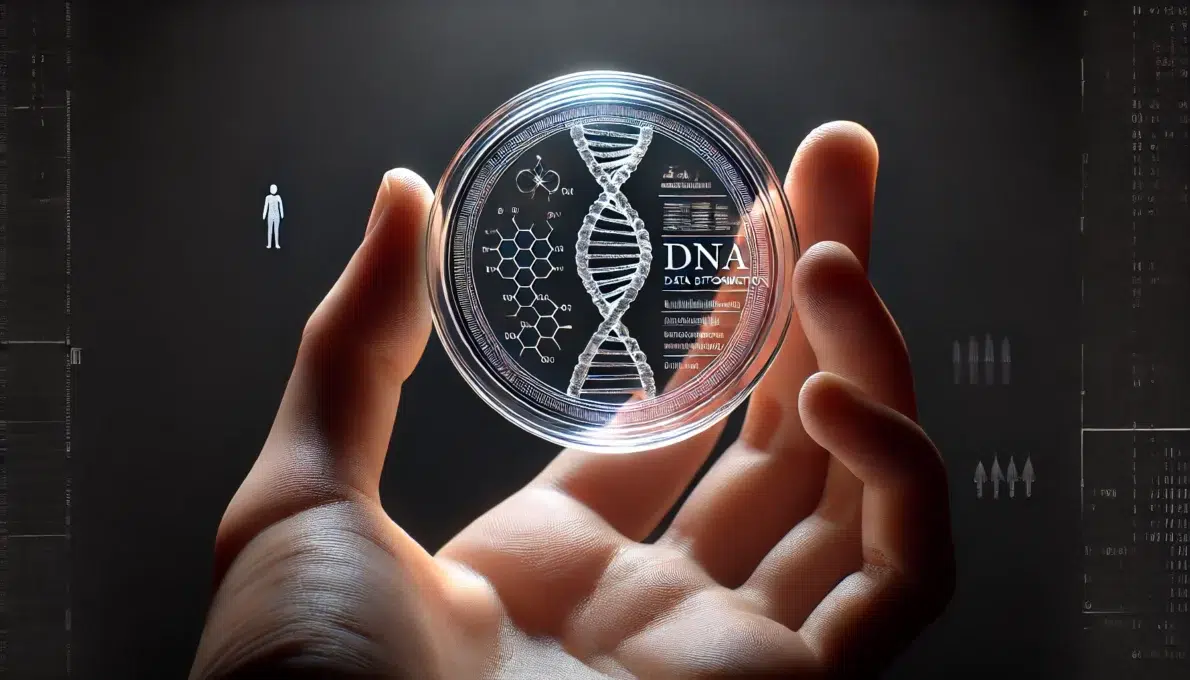
How The Memory Crystal Works
The human genome was transcribed onto the crystal using ultrafast lasers that encode the data into nano structures as small as 20 nanometers. This information is recorded in five dimensions, including height, width, length, orientation, and position.
The 5D memory crystal goes far beyond traditional storage methods, offering unprecedented information density and durability that transcends imagination.
On the surface of the crystal, scientists engraved a visual key. It includes representations of the basic elements of life, such as hydrogen, oxygen, carbon, and nitrogen atoms, as well as the double helix structure of DNA and its four nucleotide bases.
Additionally, there is also an analysis of the molecular structure of a chromosome and how it fits into a cell. Drawings of a man and a woman were included to help future civilizations or species interpret the information.
Peter Kazansky, an optoelectronics expert and leader of the research, explains that this visual key offers an important clue to the discoverer of the crystal about the stored data and how to use it. The idea is that even in a distant future, when intelligent beings find the crystal, they may be able to understand the content and perhaps recreate human life.
Project Challenges
Despite the incredible promises of this technology, there are still considerable challenges. Thomas Heinis, a data expert from Imperial College London, questions how beings from a distant future could know how to interpret the crystal and build a device to read its information.
He draws an analogy with the difficulty of connecting devices from just ten years ago, highlighting the problem of technological obsolescence.
Moreover, although advances in synthetic biology suggest that recreating organisms, including humans, from genetic information may one day be possible, we are not there yet. Currently, science still does not allow for the recreation of living beings solely based on their genetic data, whether they are humans, plants, or animals.
Safeguarding Biological Information
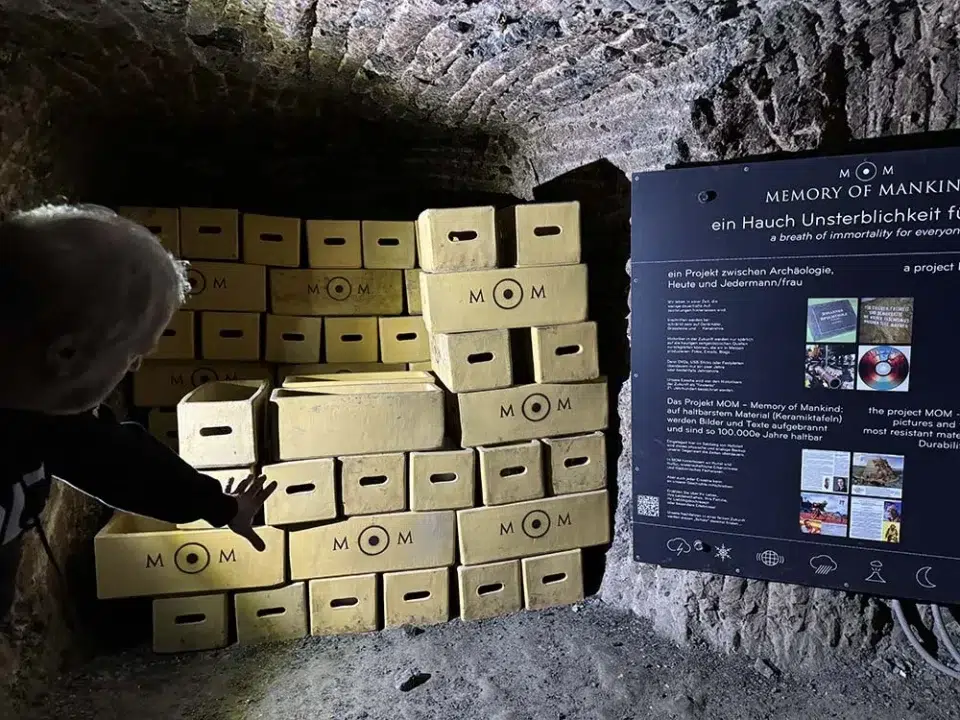
Even with these challenges, scientists around the world are contemplating ways to ensure the preservation of biological information in the event of global disasters.
One idea under discussion is to store frozen animal cells in lunar craters, a sort of biological backup of Earth, which could help restore biodiversity in the future.
Mary Hagedorn, a researcher at the National Institute of Conservation Biology and one of the leaders of the lunar biodiversity repository project, believes that regardless of what happens, it is important to be prepared for the future.
And the 5D memory crystal may be one of the most fascinating and enduring ways to preserve humanity’s genetic legacy for civilizations we have yet to imagine.
This innovation presents an impressive vision of how humanity can ensure its existence even in the face of extinction. While the path to recreating humans from a 5D crystal is still long, the mere fact that we are developing technologies with this potential is a testament to humanity’s desire to perpetuate itself.




Be the first to react!