






 Portuguese
  Spanish
  3 min of reading
  0 comments


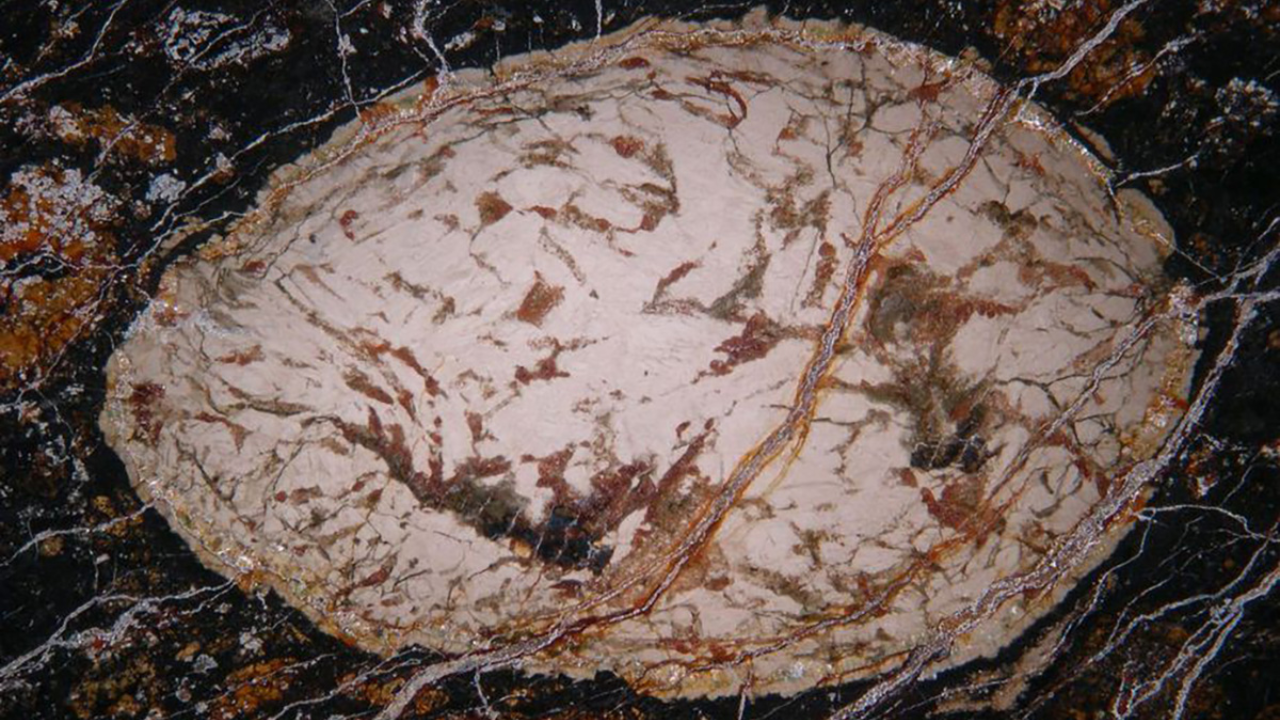
Meet Krotite, a Rare and Ancient Mineral Discovered by Scientists That Could Change Our Understanding of the Formation of the Universe.
A fascinating discovery is attracting the attention of scientists: an extremely rare and ancient mineral found in meteorites that have traveled for billions of years. Krotite, as it is called, is not only rare but also a very ancient mineral that challenges our understanding of the formation of the universe and the history of the Solar System.
The discovery of this rare and ancient mineral offers scientists a unique insight into the early moments of the formation of the Solar System.
The Discovery of the New Mineral in Meteorites
In 2011, scientists made an extraordinary discovery by finding krotite, a rare and ancient mineral, in a meteorite called NWA 1934.
-
A doctor from Minas Gerais warns that sleeping with the fan pointed at the body all night is not as harmless as you think; it dries out the respiratory tract, causes mucus buildup, spreads dust mites, and can even irritate the cornea of the eyes.

-
Ecuadorian volcano at 6,268 meters is more than 2,000 meters closer to space than Everest, which is 8,848 meters, because the Earth is wider at the equator.
-
Public school students in the hinterlands of Maranhão create a bioinsecticide with neem and castor to protect corn crops, transform rural waste into biogas and biofertilizer, and bring sustainable technology to producers at ExpoSertão.

-
Ötzi, the 5,300-year-old mummy found in the Alps, reveals a still active microbiome, and the Iceman’s yeast points to an energy-saving fermentation.


This meteorite had traveled through the cosmos for billions of years before landing on Earth.

The discovery of this rare and ancient mineral is crucial for understanding the conditions of deep space and how minerals began to form.
Krotite, a mineral with a unique composition, could only have formed at extreme temperatures, higher than those found on our planet, making it a rare and ancient mineral here on Earth.
Click here to read the article!
Characteristics and Formation of Krotite
Krotite is a mineral composed of calcium, aluminum, and oxygen.
This mineral forms only under exceptional conditions, with temperatures so high that they are comparable to those found in star formation regions or in the disk that gave rise to our Sun.
These extreme conditions are typical of ancient places, such as the solar nebula, where the Solar System began to form about 4.6 billion years ago.
This rare and ancient mineral offers a privileged view of the environment that existed at the dawn of the Solar System.
The Relevance of the Mineral to Scientists
For scientists, krotite is a unique window into the early days of the Solar System, being a rare and ancient mineral that reveals secrets about how planets and other celestial bodies formed.
Meteorites like NWA 1934 act as time capsules, preserving minerals like krotite in their original state, allowing scientists to study these rare and ancient minerals as they were billions of years ago.
By studying these minerals, scientists can better understand the formation of our own planet.
Krotite and Its Secrets
The discovery of krotite is one of the most important in modern science.
This rare and ancient mineral not only provides clues about the early Solar System but also connects us to Earth in unexpected ways.
For example, certain types of aluminous cement have a composition almost identical to that of krotite, a rare and ancient mineral that has existed for billions of years.
Through this discovery, scientists can learn more about how the Solar System formed and even about new possibilities for materials here on Earth.
Krotite reminds us of the cosmic forces that shaped the universe and how rare and ancient minerals can reveal much about the formation of our planet.
Source: SoCientifica





Be the first to react!