






 Portuguese
  Spanish


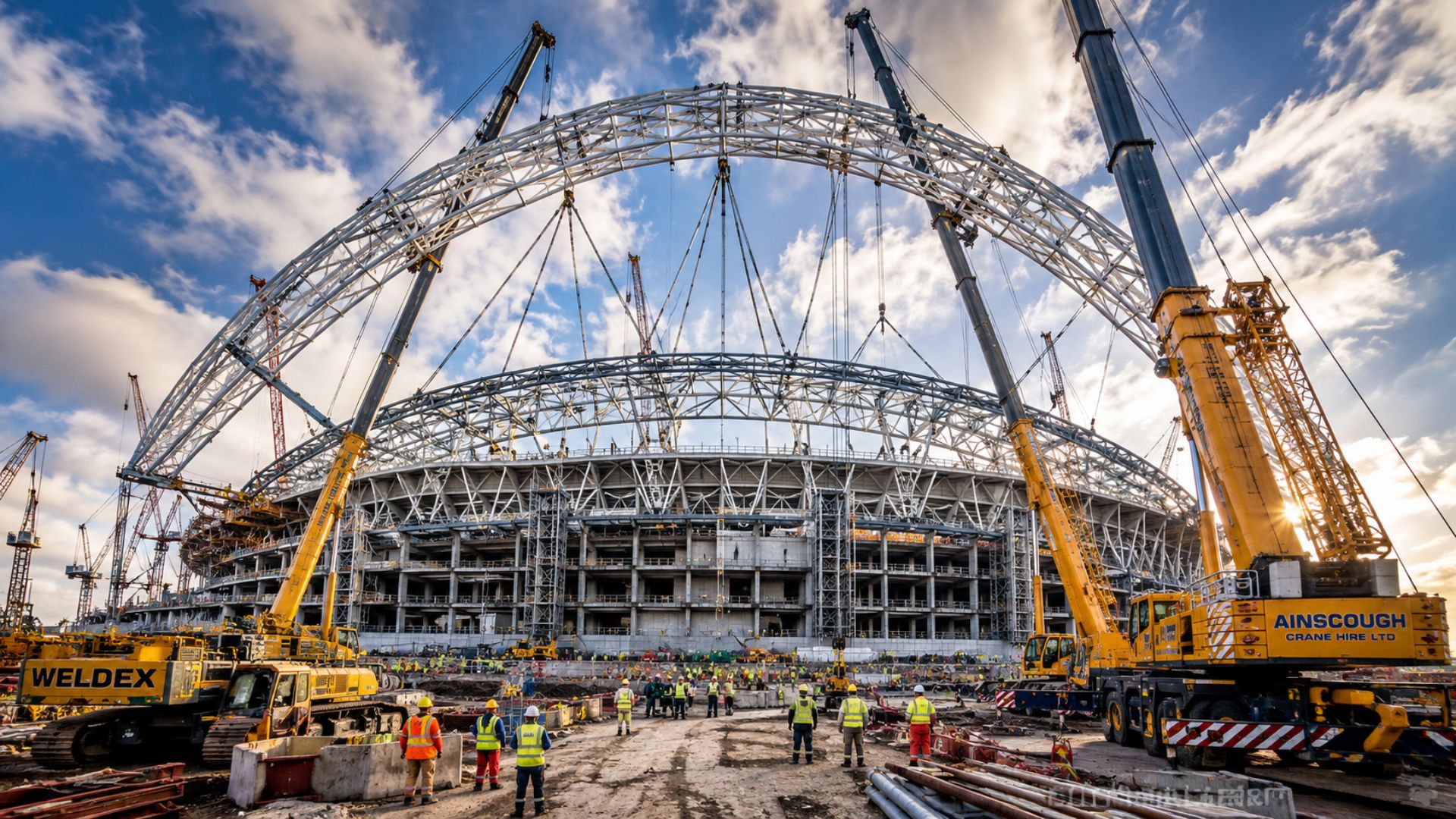

The largest stadium in the United Kingdom by seating capacity, the British Wembley houses 90,000 fans under the most imposing steel arch in the world of sports architecture, a structure that supports the roof without any internal pillar and can be seen from various points in London.
Wembley is the largest football sanctuary in the United Kingdom, with a capacity for 90,000 fans, crowned by a steel lattice arch 134 meters high — the largest free span roof in a sports stadium on the planet.
The current arena was built on the site of the old and legendary twin towers stadium, maintaining the status of home for the English national team, in a project signed by architect Norman Foster with the mission to modernize the infrastructure without losing the mystique of the original location.
Hosting the finals of the national cup organized by The FA (Football Association), the arena does not belong to any specific club and functions as a neutral and monumental stage for major sports finals, boxing matches, and the biggest music concerts in the European continent.
-
In Los Angeles, Young Adult Opts for Garage Living with Bed, Kitchen, and Bathroom to Avoid Rent, Highlighting Comfort and Organization Challenges in Compact Housing

-
Brazil Faces Crisis as New Data Reveals Alarming Rates of Youth Unemployment and School Dropouts, with Joblessness More Than Double the National Average and High Informality Among Teens

-
Former Flamengo player and coach Filipe Luís gives up $1.4 million Rio mansion with 5 suites, private soccer field, and pool with hot tub to pursue a dream.
-
New Tourist Complex in Brazil’s São Paulo Coast Features 500-Meter Pier, James Bond-Themed Museum, Parking for 600 Vehicles, and 3,000 Jobs Expected After Opening


The history of Wembley dates back to 1923, when the first stadium was inaugurated to host the FA Cup Final, becoming the main football stage in the United Kingdom before being demolished to make way for the impressive modern complex designed by Norman Foster.
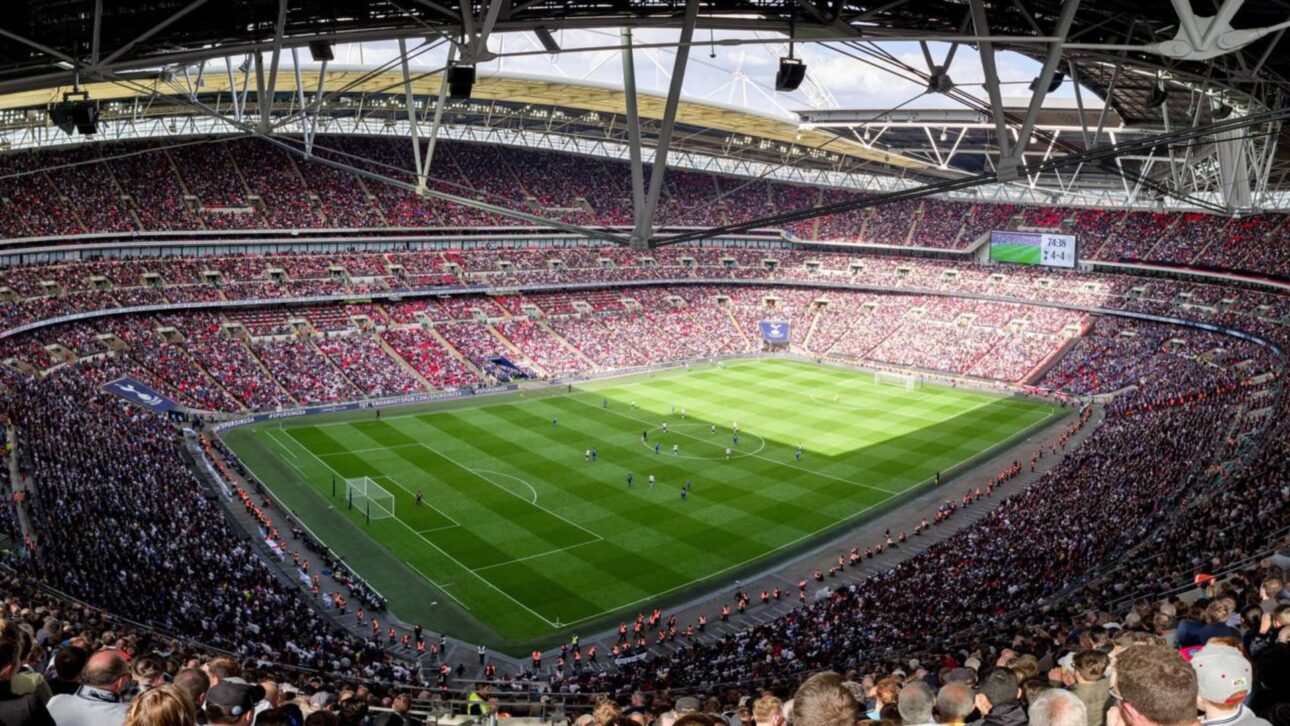
The construction process of the new stadium was completed in 2007, after four years of works and a budget that exceeded 750 million pounds sterling, a value that made it one of the most expensive sports infrastructure projects ever undertaken in the world up to that moment.
The English national team has had Wembley as its official home for decades, a stage of iconic moments such as England’s only world title, won in 1966 at the old stadium, as well as numerous continental competition finals and historic games that shaped British football culture.
The engineering of the arch and the comparison between the old and the new Wembley
The iconic steel lattice arch is not just an aesthetic element — it is the structural heart of the roof, supporting the entire north cover and much of the south, eliminating internal pillars that would compromise the view of the 90,000 spectators in the stands.
The reconstruction represented a radical transformation in engineering and fan experience, which can be observed in the direct comparison between the old and new Wembley, highlighting the technological leap of almost a century of sports architectural evolution.
| Attribute | Old Wembley (1923) | New Wembley |
|---|---|---|
| Visual symbol | Two white concrete towers at the entrance | Gigantic illuminated steel lattice arch |
| Visibility | Blind spots due to roof pillars | Unobstructed view in all 90,000 seats |
| Coverage | Partial, leaving fans exposed to rain | Roof covering all seats without blocking the field |
Besides football, Wembley hosts concerts by global artists, rugby competition finals, and athletics events, consolidating its position as one of the largest multi-purpose centers in the world and attracting tourists and fans from different cultures all year round to London.
Logistics for 90,000 spectators and behind-the-scenes tours
The logistics to safely move a crowd of 90,000 people require wide corridors, high-speed electronic turnstiles, and an efficient connection with the London public transport system, elements planned from the beginning of the new stadium’s reconstruction.
Among the main access routes to the complex is the Wembley Way, a huge elevated pedestrian-only walkway connecting the subway to the stadium, three train and subway stations operating simultaneous lines, and wide spiral ramps that prevent bottlenecks in the flow of people.
Even without scheduled events, Wembley is one of the most visited tourist spots in Europe, with behind-the-scenes tours that allow fans to walk through the players’ tunnel, visit the Royal Box, and see the locker room where the English team prepares.
The tours include the Players’ Tunnel, where the sound of 90,000 cheering fans is simulated, the Royal Box, where captains receive trophies after major finals, and the English team’s locker room, where the national team’s official jerseys are displayed.


The luminous arch as an architectural landmark and symbol of London
The Wembley luminous arch can be seen from various high points in London, functioning as a night beacon indicating when a global event is happening in the British capital, with LED lighting that changes color to celebrate social campaigns and sporting victories.
The combination of massive capacity and intelligent engineering ensures that Wembley is the ultimate destination for European entertainment, a complex that synthesizes architectural grandeur with the operational functionality necessary to host the biggest spectacles in world sports and music.
In the global sports context, Wembley remains the crown jewel of contemporary sports architecture, a reference for how a stadium can transcend its primary function to become a cultural, tourist, and architectural symbol of a city and an entire country.


