Portuguese
  Spanish


In the interior of Ceará, ByteDance, owner of TikTok, builds its largest data center complex outside China: a R$ 200 billion project developed by the Brazilian company Omnia. The project promises cheap renewable energy and digital sovereignty but already faces resistance from the Anacé indigenous community.
Seen from the highway, half-hidden by palm trees, rows of 5.5-meter columns resemble ruins of the Roman Empire. They are not. According to Bloomberg Línea, they mark the site of the largest data center complex of TikTok’s owner, the Chinese ByteDance, outside China, a R$ 200 billion (US$ 39 billion) project built in a remote corner of the interior of Ceará.
According to Bloomberg Línea, the project is developed by the Brazilian company Omnia and symbolizes the new frontier of the global technological dispute. More than a cluster of servers, TikTok’s data center places Brazil in the middle of a geopolitical board that pits the United States against China for leadership in artificial intelligence.
5.5-meter columns that resemble Roman ruins
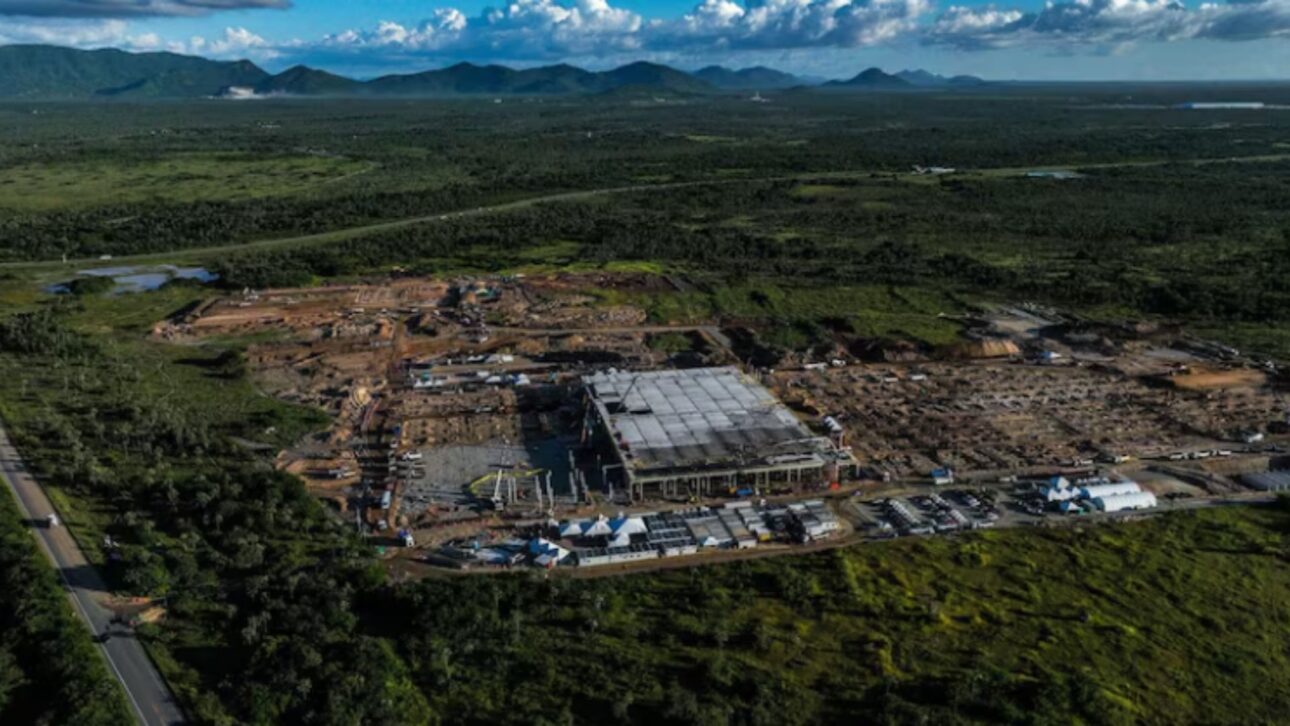
From afar, the site impresses with its unexpected aesthetics. The symmetrical rows of 5.5-meter pillars, partially hidden by vegetation, evoke grand Roman constructions but, up close, reveal a modern monument to China’s geopolitical ambitions. Not by chance, the Brazilian government treats projects like this as a matter of digital sovereignty.
-
The automotive industry found in the taxi market a customer who takes a brand new car with more than a 30% discount: manufacturers like Chevrolet, Fiat, Honda, and BYD compete in the category that combines factory discounts and zero taxes.

-
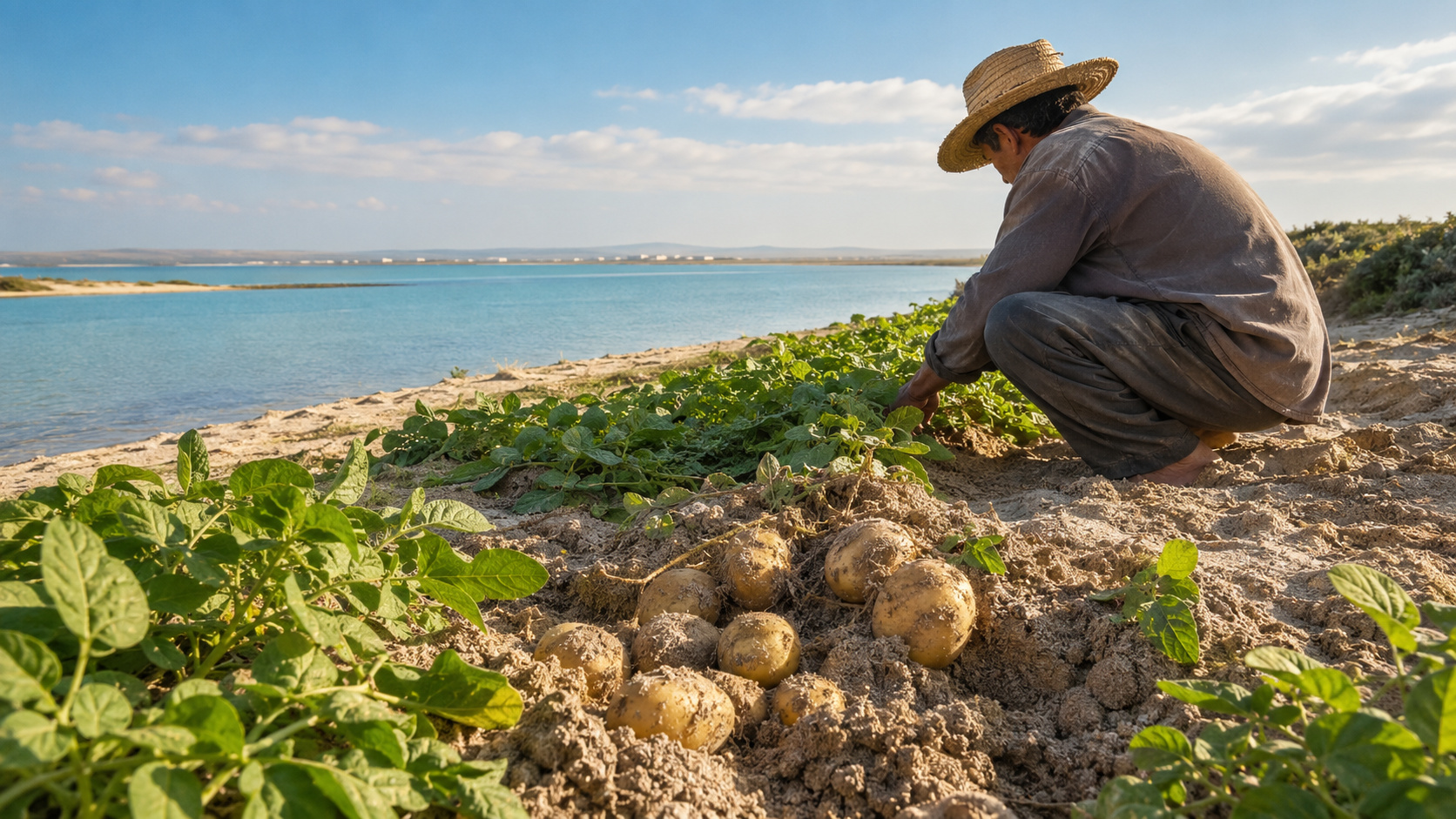
It seems impossible, but farmers in Tunisia plant potatoes on sand surrounded by saltwater, use rain and tides for irrigation, and harvest up to 30 tons per hectare.

-
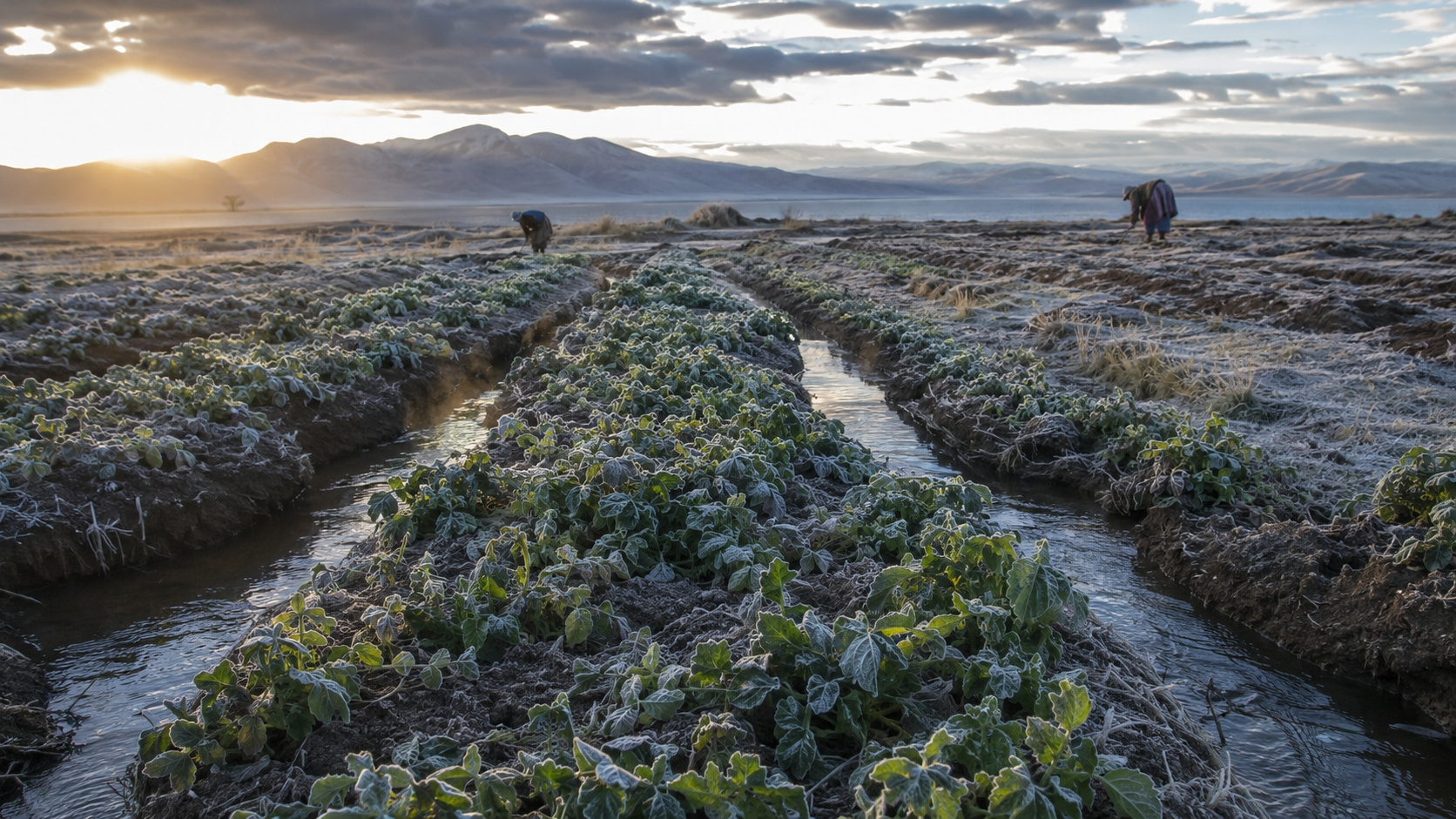
Without industrial fertilizers or pesticides, farmers in Peru are reclaiming 3,000-year-old fields that use water to warm crops during frosty nights at an altitude of 3,800 meters.
-
While imposing a 25% tariff on Brazilian products, the Trump administration is visiting 9 cities in Brazil to convince companies to open operations in the US and turn commercial pressure into an offensive to attract investments, factories, and branches to the American market.


The project is managed by Omnia, a Brazilian company specialized in developing and operating data centers. “This was all wilderness,” summarizes the construction chief, Wellysson Costa, amidst cranes and concrete blocks the size of bathtubs. It was Omnia that presented the project to ByteDance and installed it in a free zone created to bypass high import tariffs on IT equipment — and, in less than six months, transformed the scrubland into a structure of steel and concrete.
R$ 200 billion, 20 data halls, and up to 1 gigawatt
The scale of the project is what makes it unique. With an estimated cost of R$ 200 billion, it will be the largest data center complex owned by TikTok’s parent company outside of China, organized into 20 “data halls”. At the current pace of construction, the pillars are being closed, and the roof of the first of these warehouses is already beginning to be erected.
The energy numbers give the real dimension of the enterprise. The complex will start with a computational capacity of 200 megawatts, with the potential to reach 1 gigawatt — enough to supply the servers and network equipment of a true data processing factory. The first data center is expected to become operational by the end of 2027.
Why China chose Brazil
The decision was not by chance. Brazil offers abundant and cheap renewable energy — hydroelectric, solar, and wind account for almost 90% of all generation in the country — a significant advantage for facilities that consume electricity like entire cities. Add to this the country’s position as a telecommunications hub in the hemisphere, connected by submarine cables to North America, Europe, and Africa.
The potential is still underexplored. The country already hosts more than 100 data centers, according to BloombergNEF, but this is a fraction of the nearly 1,700 in the United States, leaders in the sector. “Brazil has all the attributes to become a data center hub,” says Rodrigo Borges, from the consultancy Aurora Energy Research, which projects the national capacity to exceed 4 gigawatts at the beginning of the 2030s. It’s no wonder that cities like Fortaleza, through which 16 submarine cables pass, accounting for about 90% of the country’s international internet traffic, already attract hundreds of startups.
TikTok is not alone in the race
ByteDance’s bet has paved the way for other giants. Alibaba plans to rent space in data centers in São Paulo to run artificial intelligence loads, while Brazilian company Ascenty, with 40 facilities in Latin America, is investing US$ 1.2 billion in the sector. Companies like Elea and Scala, backed by American capital, are also preparing large-scale projects and courting both Chinese and American hyperscalers.
The movement reflects a much larger race. While exporting infrastructure, Chinese companies are investing even more at home: the Beijing government has outlined a plan to invest 2 trillion yuan (US$ 295 billion) in a national network of interconnected computing centers. The race for data processing capacity has become a central piece of the new AI economy.
Brazil in the middle of the tech war between the USA and China
For President Lula, ByteDance’s data center is the result of decades of rapprochement between Brasília and Beijing. China is currently Brazil’s largest trading partner, having imported nearly $100 billion in oil, iron ore, sugar, soybeans, and meat last year, and the country was the main destination for Chinese foreign investment in 2025, according to the American Enterprise Institute. The project diversifies this presence, previously concentrated in hydroelectric plants, transmission lines, and ports.
But the board has another side. The venture directly challenges Donald Trump’s intention to reaffirm American hegemony in the Americas, amid trade tensions the US president even announced a 50% tariff on Brazilian products, later overturned by the Supreme Court. “The Chinese take certain risks; an American is more conservative,” observes Eduardo Menossi, from Grupo EBM. Still, he notes that conflicts like the war with Iran that damaged data centers in the Middle East — could make Brazil, far from tension zones, the “Plan B” for American giants themselves.
Digital sovereignty: the bet and the paradox
Behind the enthusiasm, there is a strategic urgency. About two-thirds of Brazilian data is processed outside the country, making the construction of data centers a government priority. “It is our main national vulnerability: digital sovereignty,” states Luis Fernandes, Deputy Minister of Science, Technology, and Innovation.
However, there is an uncomfortable paradox. TikTok’s own data center will not reduce this dependency, as it will serve users outside the United States and Europe, and not Brazilian internal traffic. Meanwhile, the country stumbles over its own feet: a program that would reduce import taxes on servers is stalled in Congress, and a battery storage auction, essential to support solar and wind energy, has been postponed.
The resistance of the Anacé community
Not everyone celebrates the arrival of the complex. When Lula went to Ceará to announce the investment in December, members of the Anacé indigenous community blocked roads in protest and have since staged sporadic pickets in front of the construction. For them, the data center is the latest chapter in a long history of expropriations: in the 1990s, families were removed from their lands for the Pecém port complex; in the 2010s, Petrobras’ refinery plan displaced others. The refinery failed, and it was this land that was left for ByteDance.
The wound is also practical. The complex will consume as much energy as a medium-sized city, while the Anacé experience frequent blackouts in their reserve. “Honestly, I don’t see anything positive for our community. I don’t support the project,” says tribal leader Andrea Coelho. Omnia claims to train hundreds of residents to work as electricians and plumbers, and the Ceará government treats the construction as just the beginning: “When the first data center is ready, others will follow,” predicts Economic Development Secretary Fábio Feijó, for whom “the whole world is watching.”
And you, do you think Brazil comes out winning in this dispute?
Columns that look like Roman ruins, R$ 200 billion at stake, and an indigenous community resisting: the data center of TikTok’s owner concentrates, in a single construction site in Ceará, promises of investment and real dilemmas. Do you think projects like this put Brazil in a strategic position in the tech war between the US and China, or does the country risk becoming just a digital backyard for the great powers? And what about those who live next to these constructions? Leave your opinion in the comments.