Portuguese
  Spanish


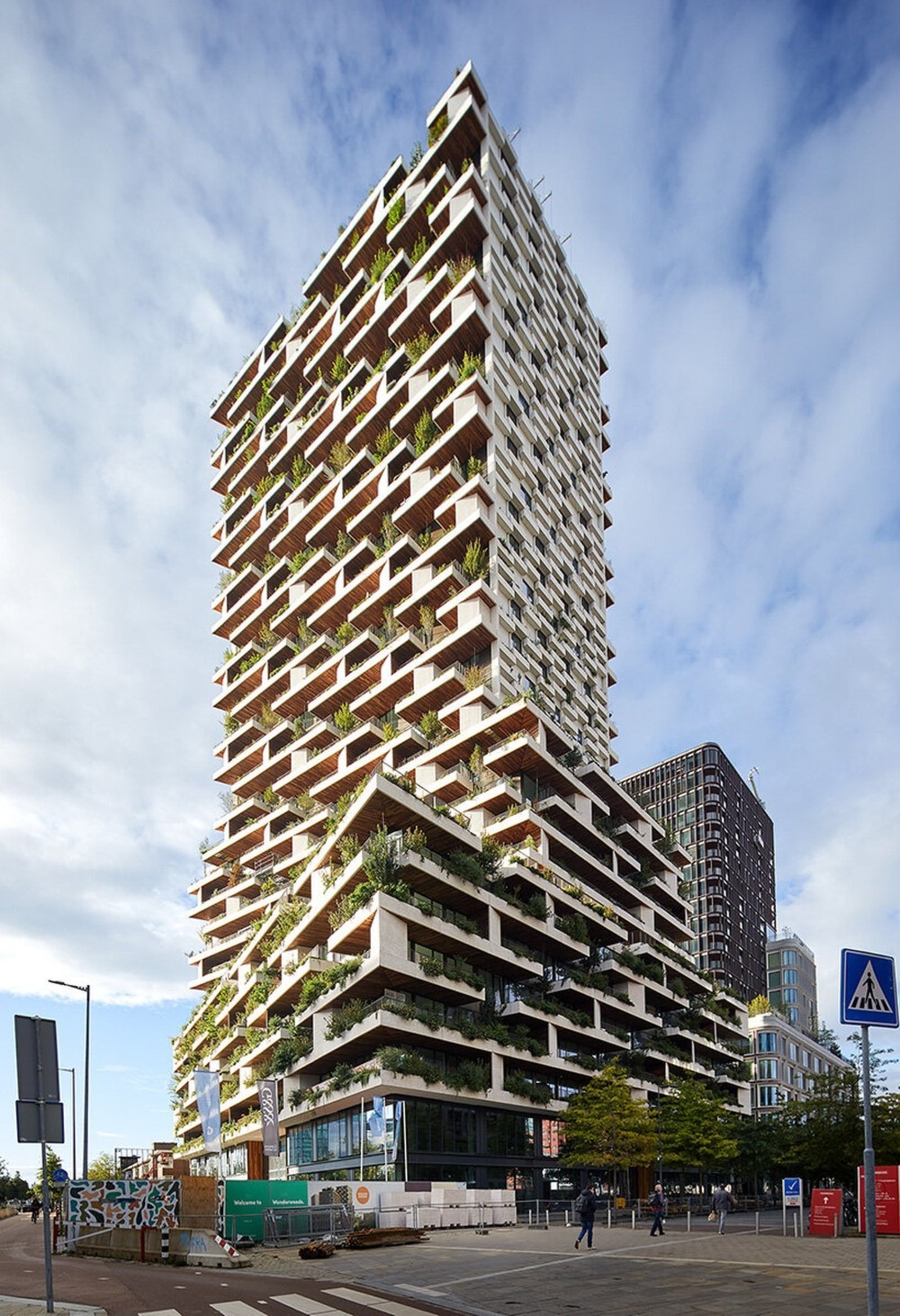


With 104 Meters in Height and Over 360 Trees, the Wonderwoods Vertical Forest in Utrecht Combines Engineering, Nature, and Sustainability in a Tower That Redefines Urban Coexistence in the Netherlands, Designed by Stefano Boeri Architetti
The Wonderwoods Vertical Forest, designed by the firm Stefano Boeri Architetti, redefines the concept of sustainable architecture in the Netherlands. Standing at 104 meters tall, the building has become the tallest vertical forest in the country, integrating nature and urban life in an unprecedented way in Utrecht, in the Beurskwartier district, near the city’s central station.
Urban Ecosystem in Tower Format
The project houses 360 trees and approximately 50,000 plants distributed among balconies and terraces. These green areas have been designed to function as a vertical ecosystem, promoting biodiversity and environmental comfort.
In addition to residences, the building includes offices, commercial spaces, exhibition areas, and hospitality services, making it a multifunctional gathering point.
-
Green Roofs on Homes Gain Popularity for Reducing Heat, Noise, and Rain Impact in Brazil

-
Brazilian promises his children to save a river, creates an eco-barrier in his backyard, has already removed more than 40 tons of trash from the water, and even inspires the idea in other states of the country.

-
How a Brazilian company created a system that transforms broken pallets of any brand into new assets, recycles 80 tons of plastic per month, and found a profitable solution to a problem that challenges industries across the country.
-
Invasive bullfrog capable of devouring other amphibians and laying up to 20,000 eggs is found in Florianópolis, raising an alert about the threat to native fauna.


The façade features openings that serve as shelter for local birds, reinforcing its integration with the natural environment.
The 30 species of native plants chosen ensure variations of color and texture throughout the year, making the tower a living and dynamic element in the urban landscape.
Intelligent and Sustainable Structure
The Wonderwoods was constructed with a prefabricated system of balconies and façades.
Its shape also draws attention: the tower rotates along its own axis, divided into four overlapping blocks. This rotation improves the incidence of sunlight and offers panoramic views of the city.
On the seventh floor, a green walkway connects the building to the neighboring tower, designed by MVSA Architects.
The space hosts restaurants and viewing platforms, enhancing interaction between the two blocks of the complex.
Integration with the City
The ground floor and basement house public areas and an exclusive parking space for bicycles, reinforcing the focus on sustainable mobility.
Around the tower, the project created an area solely for pedestrians, with an underground system for capturing and reusing rainwater.
The Vertical Forest: An International Reference
With spacious balconies, automated irrigation, and adaptability for different resident profiles, the building reflects Stefano Boeri’s vision of combining city and nature.
This is why the Wonderwoods received the MIPIM award, establishing itself as a global reference in green urbanism and sustainable architecture.
With information from Casa e Jardim.