






 Portuguese
  Spanish


Innovation Created by a 14-Year-Old Brazilian Student Reuses Cassava Peels and Araucaria Branches to Produce Biodegradable Trays That Decompose in up to 30 Days.
The advancement of sustainable innovation in Brazil has gained a concrete example from basic education. In Curitiba, Paraná, student Lucas Tadao Sugahara Wernick, only 14 years old, developed biodegradable trays made from natural waste, such as cassava peels and araucaria branches.
The solution comes as a direct alternative to plastic and styrofoam, widely used materials that are highly polluting, and stands out for decomposing in up to 30 days.
The project was developed during Scientific Initiation classes and quickly gained national prominence by uniting science, waste reuse, and environmental awareness.
-
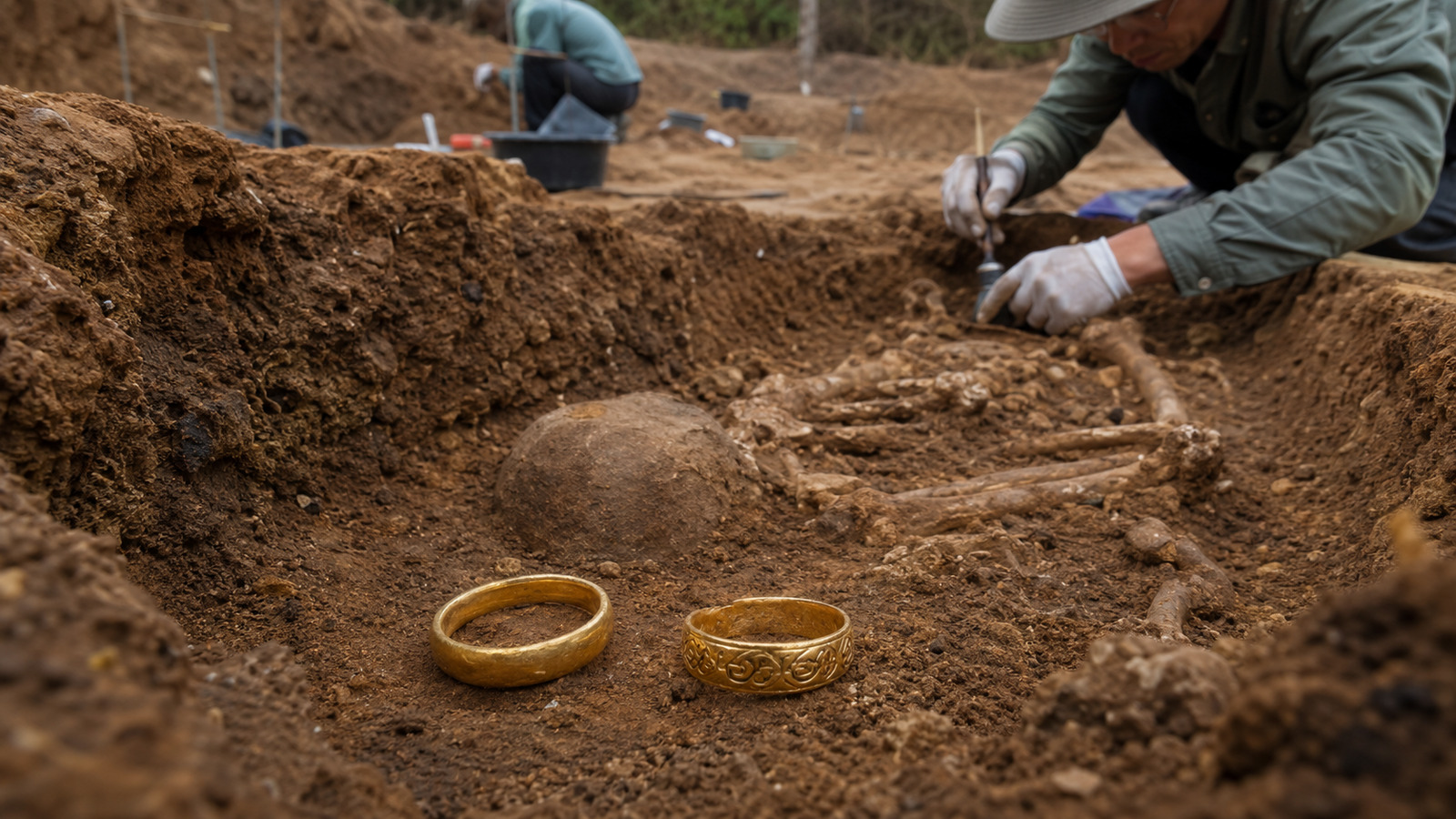
2,000-Year-Old Gold Rings Found with Human Bones in Thailand Reveal Rare Burial and Feature Ancient Indian Inscription

-
Lenovo Unveils Legion Y700 Tablet with RGB Backlighting, 5G, and SIM Card Support

-
World’s First Nuclear Hydrogen Unit Begins Operation: Copper-Chlorine Technology with Initial Capacity of 150 Liters per Hour, Aiming for 3,000 Liters per Hour
-
Mechanics Retrofit Old Fiat Uno with BYD Electric Motor for Silent, Low-Voltage Operation Reaching Nearly 60 km/h in Home Test


At a time when concern about the impact of waste on the planet is growing, the innovation created by the young student reinforces the role of education in the search for real solutions.
Practical Results Draw Attention
Even before gaining great visibility, the innovation already showed concrete results.
Lucas produced more than 30 biodegradable trays, all tested under different environmental conditions.
In the experiments, the material exhibited rapid decomposition. When buried in the soil, the trays disappeared in about 30 days.
However, when exposed to sunlight, rain, and wind, the process took approximately three months, a significantly shorter time compared to plastic and styrofoam, which can take hundreds of years to degrade.
These data reinforce the potential of the innovation as a viable alternative for disposable packaging.
Scientific and Academic Recognition
The impact of the research went beyond the school’s limits. The work earned Lucas invitations to national scientific events, along with awards and institutional recognition.
One of the milestones of this journey was the granting of a scholarship by the Federal University of Paraná (UFPR), a result considered significant for a basic education student.
The innovation of the trays, however, is not an isolated case. Prior to this, Lucas had already developed other projects using araucaria waste, which gave him experience in scientific fairs and paved the way for more advanced research.
How Did the Idea Come About for the Brazilian Student?
The idea originated from analyzing a recurring problem. During technical visits, the student observed the large volume of waste discarded by cassava processing industries, especially peels and pulp, which are not always reused.
At the same time, Lucas was already researching the use of araucaria grimpa, the dry branches of the symbol tree of Paraná, in other scientific projects.

The combination of these two fronts led to the formulation of a simple and efficient proposal: to transform abundant waste into a new sustainable material.
This practical observation was essential for the development of the innovation, showing how local problems can generate broadly applicable solutions.
How Was the Biodegradable Tray Produced?
The innovation uses an accessible and low-cost process. The cassava peels and the crushed araucaria branches are cooked in water until a homogeneous mass forms. Then, the material is molded into the shape of trays and undergoes a drying process.
The final result is a lightweight, durable, and functional product capable of replacing plastic or styrofoam packaging without losing efficiency.
Moreover, the exclusive use of natural waste makes the process environmentally responsible from the outset.
Impacts of the Biodegradable Tray Developed by the Student
The improper disposal of plastic and styrofoam is one of the main environmental challenges today. By proposing a biodegradable alternative, the innovation created by Lucas directly contributes to reducing this problem.
Additionally, the reuse of agricultural waste strengthens the circular economy by adding new value to materials that previously had no proper destination.
The low cost of raw materials also expands production possibilities at scale, benefiting local communities and small producers.
The project reinforces the importance of encouraging science from an early age. Inserted in a school environment that stimulates research, Lucas was able to transform curiosity into a concrete solution.
With the advancement of discussions about sustainability and innovation, educational initiatives like this show that young people can play a fundamental role in creating clean and accessible technologies.
Next Steps and New Applications
The goal now is to expand the use of the developed material. Lucas is studying applying the sustainable mixture in coatings for architecture, design, and decoration, further expanding the reach of the innovation.
The experience demonstrates that Brazilian innovation can emerge from classrooms, gain academic recognition, and offer real answers to urgent environmental problems.
By transforming natural waste into a practical solution, the young student points to promising pathways for the country’s sustainable future.
Source: Terra


