Portuguese
  Spanish


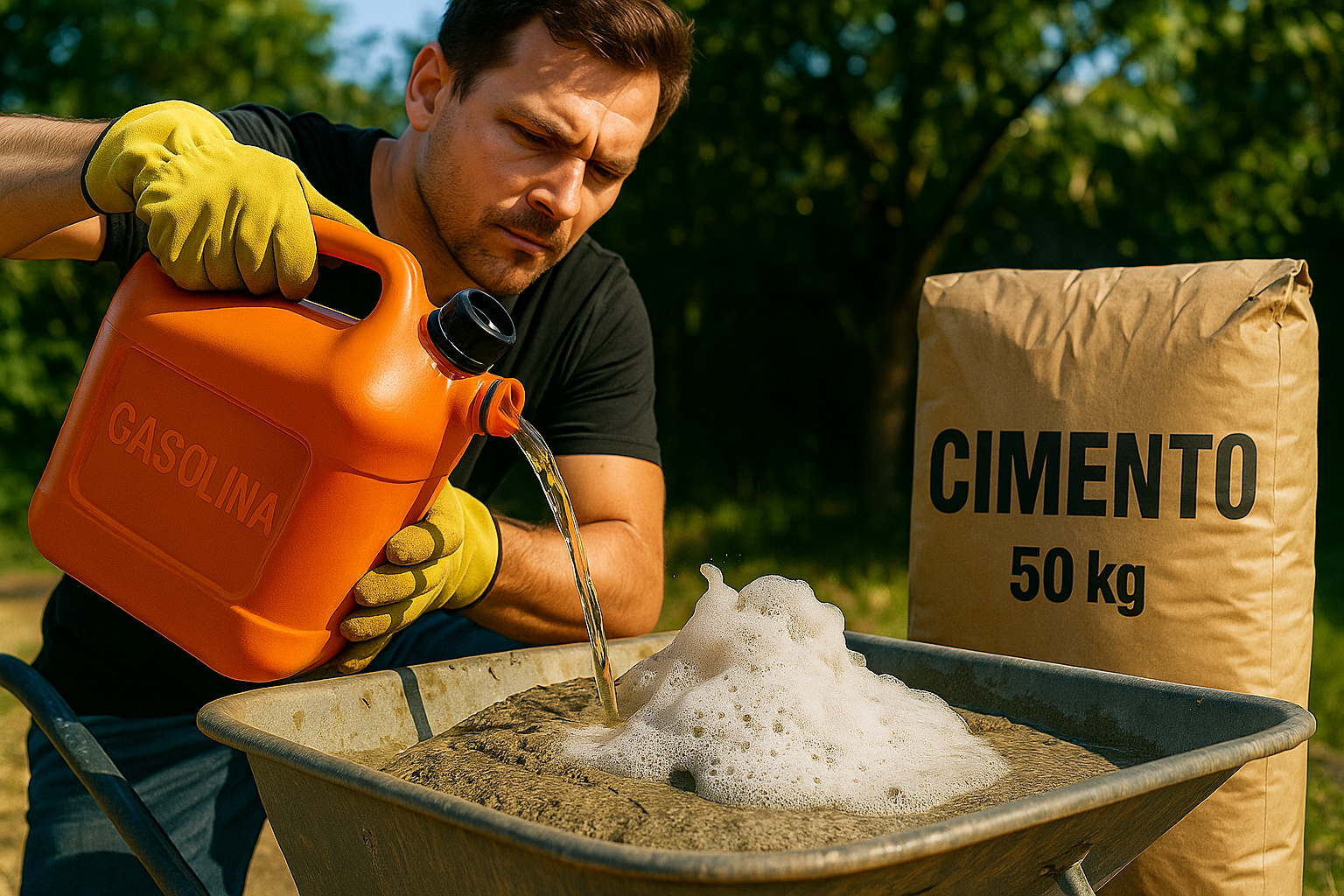


An Unexpected Combination Of Simple Materials Transforms Everyday Waste Into A Powerful Mixture, Capable Of Repairing Tiles, Leveling Floors, Filling Cracks And Delivering A Resistant And Sandable Finish Without Relying On Expensive Market Products
Have you ever imagined that gasoline, polystyrene, PVA glue, and cement — four common, cheap, and easily found items — could form a mixture capable of rivaling industrial repair compounds? At first glance, it may seem unlikely to combine a flammable fuel with polystyrene and a glue used in crafts. However, it is precisely in these improbable combinations that ingenious, creative, and extremely functional solutions for home repairs arise.
Right at the beginning of the process, I pour a generous amount of gasoline into a clean container, repurposing a can that would have been thrown away. In addition to giving new life to a discarded material, this repurposing reinforces the experimental nature of the mixture, which stems from curiosity and the initiative to turn something simple into a practical solution. As I show in the step-by-step process, it is precisely at this point that the second ingredient comes in: polystyrene.
The Surprising Chemistry Between Gasoline And Polystyrene
Many people have heard that gasoline melts polystyrene, but few observe the intensity of this reaction up close. When I start adding small pieces of polystyrene to the fuel, the transformation is immediate: the material deforms, shrinks, and turns into a dense, sticky mass, similar to thick glue. It’s almost hypnotic to watch the reaction and see how two such common materials can generate a completely new consistency.
-
15-Year-Old Entrepreneur Malu Lira Publishes 20 Children’s Books on Financial Education, Earns $500,000, and Expands Her Project to the Amazon Rainforest

-
Entrepreneur Turns Rio Cemetery Canteen into a Successful Snack Chain Generating $4.9 Million Annually and Expanding to Metro Stations

-
Rare fox feared “extinct” found alive on Caribbean island after over two decades without official sightings

-
21-Year-Old Brazilian Student Turns Homemade Popsicle Hobby into $100,000-a-Month Business





This phenomenon not only awakens curiosity but also engagement. That’s why I always invite those following the process to comment on where they are watching from, which city and country, strengthening the community and reinforcing the reach of this experience. At the point where the mixture takes on a heavy and irregular texture, it’s time to add the third ingredient: the white PVA glue.
The PVA glue, widely used in woodworking, crafts, and small repairs, plays an essential role here. Approximately 10 g of glue is enough to give fluidity to the gasoline and polystyrene compound that has already dissolved. The texture quickly changes, becoming creamier, more homogeneous, and controllable. It is this change that prepares the terrain for the main ingredient of the entire mixture: cement.
Cement Transforms The Mixture Into A Molding Mortar

It is at this moment that the chemistry changes completely. I add the cement gradually, never all at once. I mix well, assess the consistency, incorporate a little more — and so on. I use a steel spatula to make the process easier, scraping the sides, controlling the point of the mortar, and avoiding waste.
As the cement is added, the mixture goes from a viscous liquid to a sticky, firm, and moldable mass. The goal is to achieve the ideal consistency: not so liquid that it runs, nor so dry that it begins to crumble. When it reaches this balance point, the mixture is ready to be used as an extremely versatile homemade mortar.
With the mass ready, I take a corrugated fibrocement board with a hole — a problem that, in real conditions, could cause leaks, dripping, and headaches during heavy rains. To start the repair, I seal the back of the hole with adhesive tape, creating a false bottom that prevents the mixture from leaking. It’s a simple detail, but essential for an efficient finish.
With everything prepared, I apply small portions of the mixture to the damaged area using the same steel spatula. I press gently, filling every space and ensuring that the mortar adheres well to the surface of the tile. After this step, a determining factor for durability comes in: the drying time. For this formula, the minimum recommended time is 3 hours to achieve a firm surface to the touch.
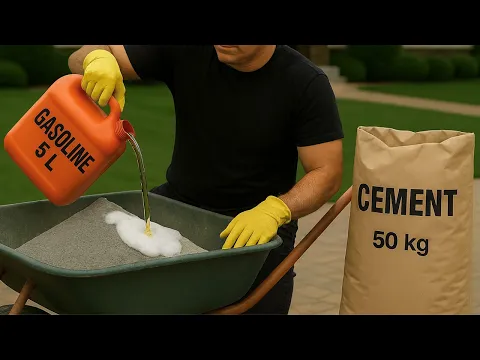

The Mixture Surprises By Repairing Concrete And Functioning As Plastic Mass
While the tile dries, I take the opportunity to show a second application: the repair of a crack in a concrete floor. In real situations, this fissure could accumulate water, loosen pieces of the surface, or harm the appearance of the environment. Before applying any material, I carry out the essential preparation: complete cleaning, removing dust, dirt, and loose particles.
When possible, I leave the area slightly damp, without exaggeration. This light moisture helps the cement in the mixture to better integrate with the original concrete, increasing adhesion and reinforcing durability. After applying the homemade mortar to the crack, I wait again for the minimum recommended period of 3 hours for superficial drying.
After that, the result is surprising. The surface can be sanded with 60 or 80 grit sandpaper to achieve a more professional, level, and visually discreet finish. The behavior of the mixture at this stage resembles that of industrial plastic mass: once dry, it can be shaped, sanded, adjusted, and prepared to receive paint, waterproofing, or any other finish.
Returning to the fibrocement tile, I remove the adhesive tape and observe how the mixture completely filled the hole, creating a solid plug integrated into the original piece. After sanding patiently, the finish becomes smooth, even, and ready for painting or waterproofing. As I emphasize, it is always important to remember: this is an experimental solution, not a certified industrial product.
However, as indicated in articles and similar content released by Click Petróleo e Gás, homemade and experimental solutions can be useful when applied sensibly, with prior testing, and technical attention. Each situation requires careful assessment, but experience shows that simple materials can result in highly creative alternatives.
This mixture does not replace professional products, but it can resolve specific problems like holes in fibrocement tiles, cracks in concrete, and adjustments in plastic or gypsum surfaces. The most interesting point is to realize how the union of such common elements results in a highly functional, cheap, and accessible mortar.
If you liked this discovery, tell us in the comments what you thought of this unique mixture that combines gasoline, cement, and creativity. Also, say where you would use this homemade mortar and how it could help in your daily life. Thank you very much for following along!